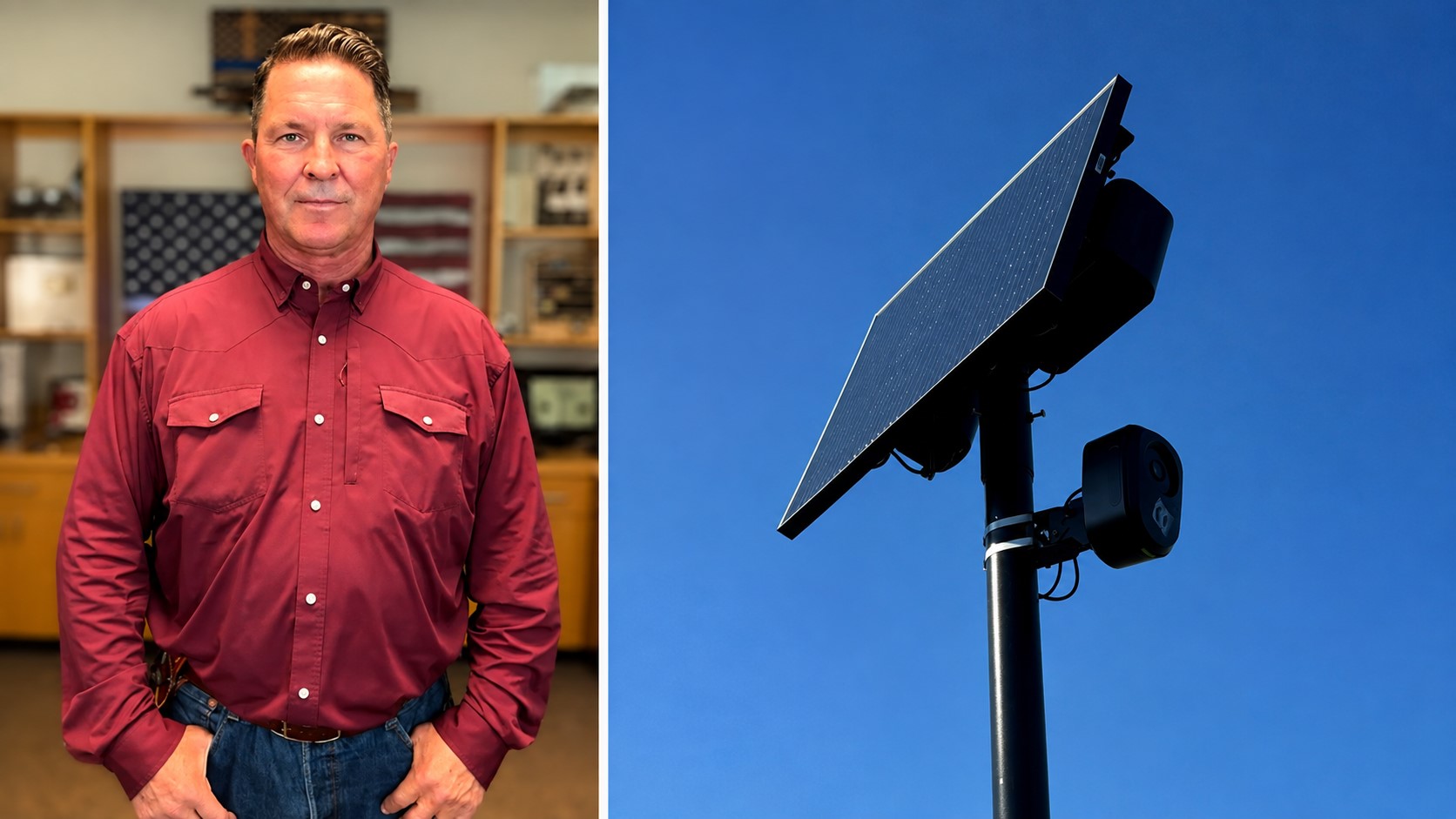
Most law enforcement agencies don’t voluntarily surrender surveillance tools. Sheriff Ross Teeple just did. Teeple notified the Pinal County Board of Supervisors that he will not renew the county’s Flock Safety automated license plate reader contract when it expires at the end of September. His reason was blunt: “serious Fourth Amendment concerns” about technology capable of mapping patterns of movement — regardless of whether the county actively uses every feature. In a national landscape where agencies keep adding cameras, one Arizona sheriff hit the off switch.
What Flock Captures – and Why Teeple Drew the Line
The sheriff’s objection isn’t about data retention policies — it’s about the surveillance architecture itself.
Flock Safety cameras are automated license plate readers. They photograph vehicles, log plate numbers, and record timestamps. Flock maintains its systems don’t use facial recognition and that data gets deleted after 30 days unless flagged for law enforcement. That sounds reasonable enough. But Teeple’s objection cuts deeper than company talking points. A system that can reconstruct where your car was on Tuesday at 3 p.m. — and every Tuesday before that — builds a portrait of your daily life without a warrant. That capability exists whether anyone accesses it or not. The concern over patterns of movement being silently catalogued has drawn scrutiny far beyond this single county.
A few key facts worth knowing:
- The contract covers cameras in unincorporated Pinal County only. Cities within the county can maintain separate Flock agreements independently.
- The contract expires at the end of September 2026.
- Pinal County joins a growing list of jurisdictions nationwide that have terminated or declined Flock renewals over privacy and civil-liberties concerns.
“Serious Fourth Amendment concerns with some of the technology that is contained in those cameras, whether or not we have access to it.” — Pinal County Sheriff Ross Teeple, per local reporting
The Flock debate has become surveillance technology’s version of a terms-of-service agreement — everyone clicks accept until someone actually reads what they’re agreeing to. When that someone is a sitting sheriff rather than a civil liberties attorney, the signal carries different weight. Multiple jurisdictions have already walked away from Flock contracts, but a law enforcement official invoking constitutional protections against his own tools is harder for the company to dismiss as activist overreach.
The Other Side of the Argument
What do Flock’s defenders say? Supporters argue the cameras solve real crimes, and this debate is far from settled.
License plate readers have helped close cases. Access controls and data retention limits exist specifically to prevent misuse. Whether Pinal County replaces Flock with something else, leaves the gap unfilled, or faces constituent pressure to bring the cameras back — all of that remains unresolved. The decision is made; the consequences are still forming. Broader concerns about surveillance technology being deployed against ordinary citizens continue to shape this national conversation.
Unincorporated Pinal County loses these cameras in September. City contracts stay untouched for now. And a sheriff citing the Fourth Amendment to justify stepping back from his own surveillance technology is a data point the industry will have considerable trouble deleting after 30 days.