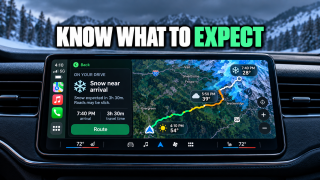
A video circulating on X shows a Ford owner doing something absurd: timing how long it takes his new vehicle to let him turn on the air conditioning. Not a quarter-mile run. Not a 0-to-60 test. Just cold air. His old car had a button. One press. Done. His new one boots a touchscreen like a budget laptop circa 2009, loading menus before he can reach climate controls. The clip touched a nerve because it captures something bigger than one driver sweating in a parking lot — a design philosophy that treats basic comfort like an app. These kinds of frustrating computer problems are no longer limited to desktops.
The Screen Ate Your Knobs
Older Fords kept climate control simple; newer SYNC-equipped models buried it inside software that has to load before you can feel it.
The 2019 Fusion Hybrid had a dedicated physical AC button — instant, tactile, zero software required. Newer SYNC-equipped models route climate control through a touchscreen interface, according to Ford’s own owner manuals. That screen needs to boot. Ford truck forums are filled with owners reporting sluggish SYNC startup behavior, with the recommended fix being firmware updates through Ford’s owner portal. When your AC solution involves the phrase “firmware update,” the problem is not mechanical — it’s a UX failure dressed up as a feature.
Here’s what the research actually shows:
- On SYNC-dependent models, AC access through the touchscreen requires the screen to finish booting — though not every current Ford model has eliminated physical climate controls entirely
- Ford documents a soft-reset procedure (hold Power + Seek) for frozen or sluggish screens — a workaround for a recognized issue; knowing a few DIY car fixes can save you a dealership trip
- Firmware updates via Ford’s owner portal can improve boot performance, but require the owner to seek them out
- Ford’s remote start feature can pre-condition cabin temperature before you get in, partially offsetting the delay
- Turning AC on immediately after ignition is mechanically safe in modern vehicles; any bottleneck you experience is purely a software and interface problem
The Irony Is Parked Right There in the Dashboard
Hands-free laws ban your phone from your hand, but the dashboard tablet gets a regulatory pass.
Most U.S. states now enforce hands-free driving laws targeting smartphones. The reasoning is straightforward: screens demand eyes and fingers, which causes accidents. Yet built-in infotainment systems face only indirect federal oversight — evaluated through manufacturer self-certification rather than the direct restrictions applied to your iPhone. Navigating SYNC menus to locate a climate icon while moving demands comparable visual and manual attention to texting. Regulators have not caught up to that contradiction, and automakers have little incentive to flag it themselves.
The viral backlash is not really about AC boot times. It’s about tech creep — the slow Netflixification of your dashboard, where everything simple becomes a menu, a subscription tier, or a future revenue stream. Several automakers already experiment with in-car app stores and software-locked features, a dynamic worth weighing when comparing what your Gas vs Diesel options actually deliver beyond the powertrain. No evidence suggests Ford currently gates AC access behind ads or paywalls. But when climate control lives entirely inside software, the architecture for that kind of monetization exists and is one OTA update away from becoming policy. People sense the direction of travel even before they can see the destination.
Physical redundancy for critical controls costs manufacturers almost nothing to implement. Other brands still provide it. Until regulators define minimum accessibility standards for essential functions — maximum tap counts, mandatory hardware fallbacks for AC and defrost — checking the dashboard before signing is on you. It also helps to know that dealers keep recommending services and features that may not always serve your best interests.