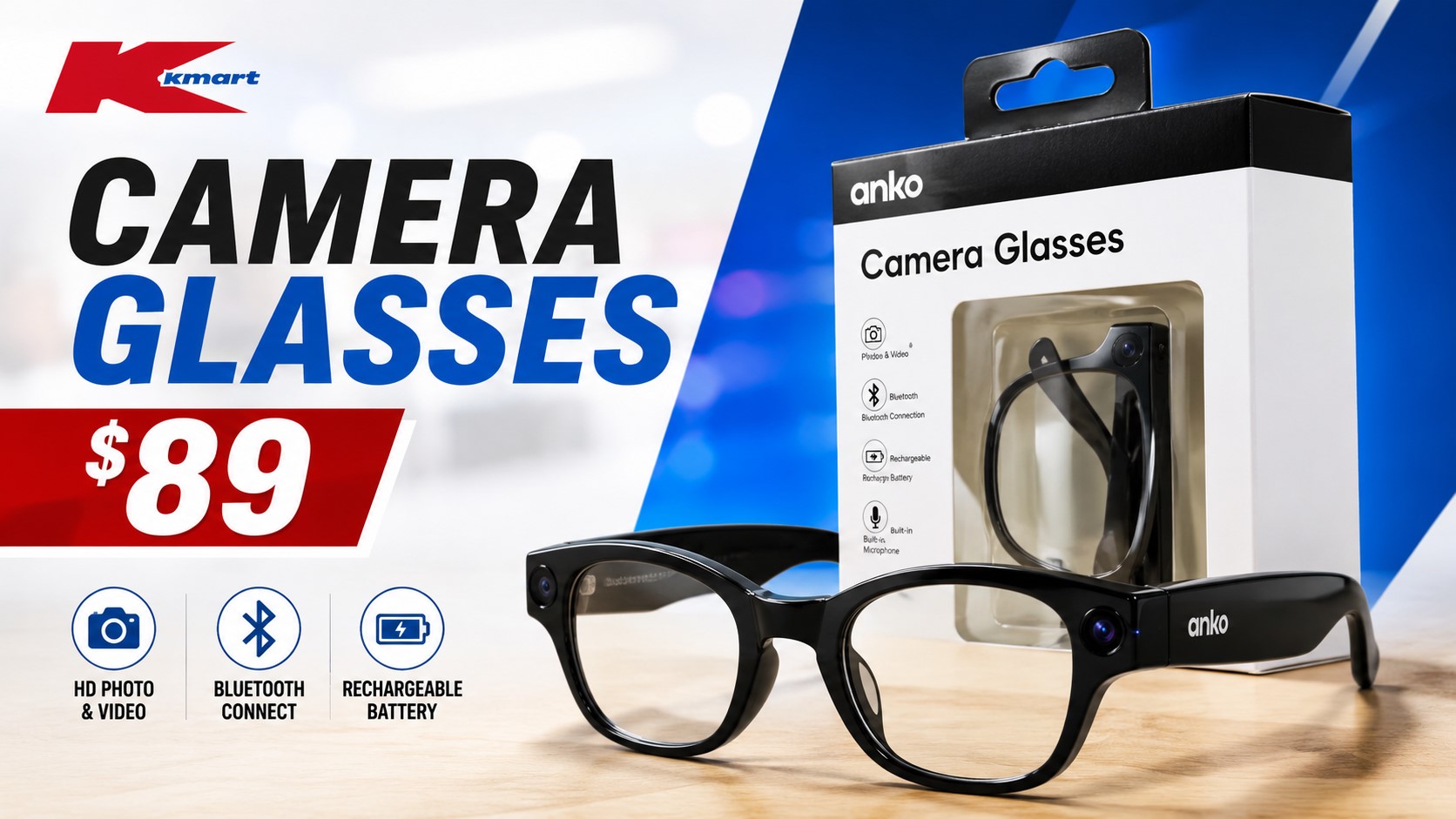
At eighty-nine dollars, the barrier to wearable surveillance just vanished from a Kmart shelf. The Anko-branded camera glasses — black-rimmed, clear-lensed, utterly ordinary-looking — have sold out online and across Australian stores as of early August 2026, according to The Guardian. They shoot 8MP photos, record 1080p video, and connect to an AI assistant through the HeyCyan companion app. Think of them as Meta Ray-Ban smartglasses at roughly a quarter of the price.
Cheap Frames, Serious Consequences
Budget pricing has quietly removed the last barrier between everyday eyewear and always-on wearable cameras.
Kmart positions these as part of an “established and increasingly mainstream category of wearable technology.” That framing does some heavy lifting. Meta’s Ray-Ban smartglasses retail between A$337 and A$469, and the company has sold more than seven million pairs globally, according to Reuters. Budget alternatives like the Anko glasses now put the same core capability — a camera on your face — within impulse-buy range for almost anyone.
The HeyCyan software powering the Anko glasses is reportedly sluggish compared with Meta’s AI stack, struggling with basic tasks like pulling the current time, according to Reddit user discussions. It’s also locked to its own ecosystem — no third-party AI apps allowed. But the camera works fine. And that’s the part causing problems.
| Item | Price | Notes |
|---|---|---|
| Anko camera glasses | A$89 | Pairs with the HeyCyan app |
| Meta Ray-Ban smartglasses | A$337–A$469 | More than seven million units sold globally, per Reuters |
Institutional bans — from New York courts to the US Air Force to hacker conventions — already restrict the Meta version on premises. Australia’s privacy regulator, the Office of the Australian Information Commissioner, says it is monitoring the rollout but is currently directing concerned individuals to seek independent legal advice.
Tom Sulston, head of policy at Digital Rights Watch, calls camera-equipped smartglasses “a privacy nightmare,” warning that Australian privacy laws haven’t kept pace with devices that can effectively record everyone around the wearer continuously, according to The Guardian.
The documented misuse is already ugly:
- Women have reported being filmed at beaches by men wearing Meta Ray-Bans.
- TechCrunch reporting revealed that intimate footage — including nudity — captured through Meta’s glasses was reviewed by workers at a Kenya-based subcontractor, identified as employees contracted for AI training purposes.
- Sulston specifically flags misogynistic influencers using smartglasses to harass women for “clout and views.”
Public reaction tracks accordingly — parents and shoppers have described the Anko glasses as “scary,” “disgraceful,” and “really concerning.”
The Law Hasn’t Caught Up
Australian privacy law currently governs organisations collecting data — not individuals quietly filming strangers in public.
Kmart’s official line: “we expect customers to use the product responsibly, respectfully and in accordance with applicable laws and community expectations around privacy.” That’s a remarkable amount of trust to place in strangers wearing hidden cameras.
A Monash University survey of over 1,000 Australians found a sharp cultural divide — smartglasses owners see them as enhancing self-image and social connection, while non-owners express strong privacy and societal disruption concerns. Surveillance and harassment laws vary by state, meaning what’s filmed legally in one jurisdiction may not be in another.
Remember Google Glass? It cost $1,500 and flopped partly because people hated being recorded. The Anko glasses cost $89 and sold out. The technology didn’t fundamentally change. The price did. Whether regulation or social norms catch up first remains the open question for everyone walking past someone wearing a suspiciously ordinary pair of frames.