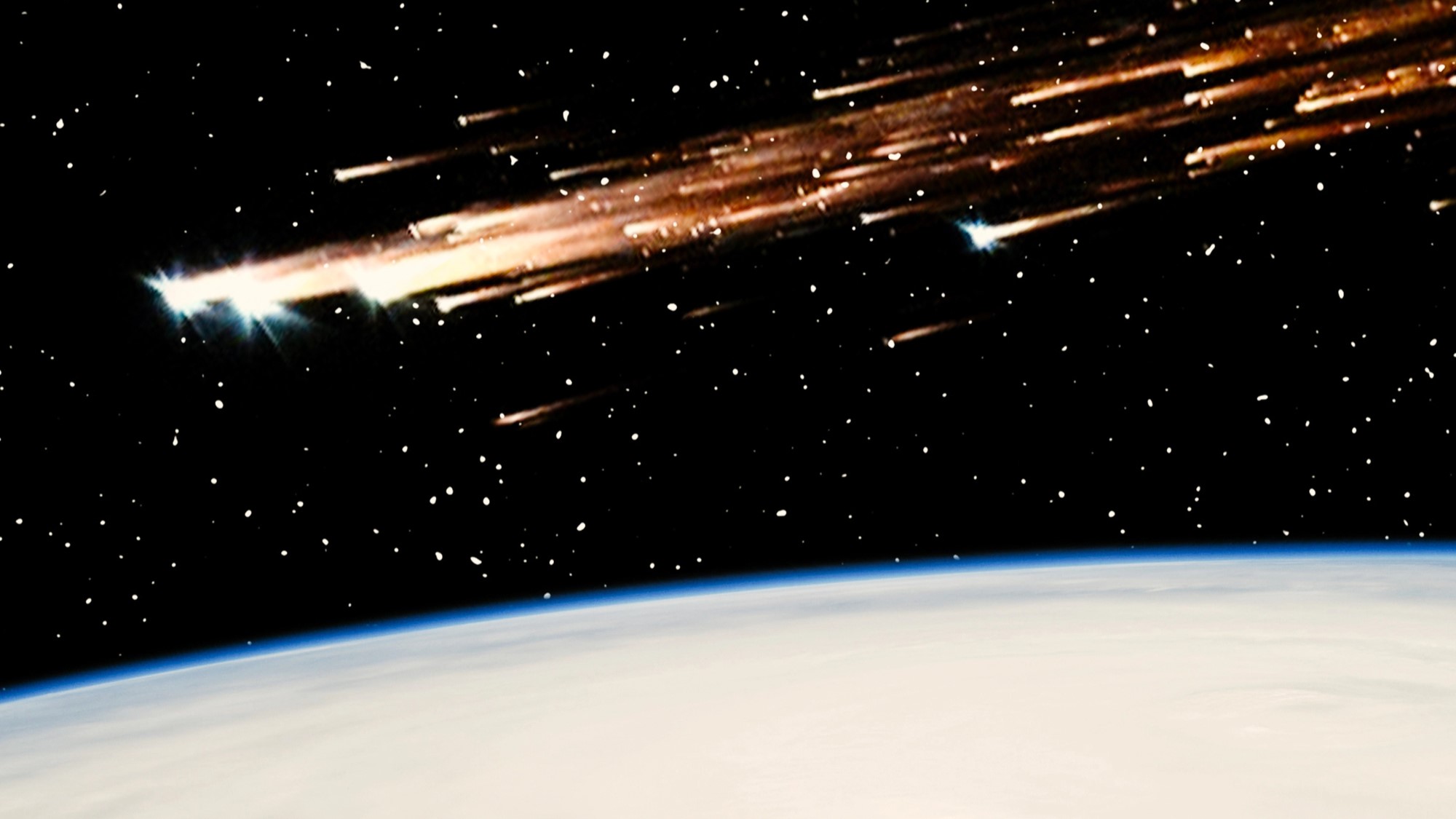
Right now, somewhere above your head, a dead satellite or spent rocket stage is losing altitude. Nobody knows exactly where it will hit. Objects weighing 500 to 2,000 kilograms reenter Earth’s atmosphere uncontrolled roughly every week, according to ESA and a 2024 peer-reviewed hazard study. This has been happening for decades. The difference now: it’s accelerating, and the rules meant to manage it remain largely voluntary.
The Numbers Are Bigger Than You Think
The scale of uncontrolled reentries dwarfs what most people assume — and the pace is rising.
ESA’s 2025 Space Environment Report counts more than three intact-object reentries per day, adding up to roughly 100 to 120 metric tons of uncontrolled hardware entering the atmosphere annually, per ESA conference analysis. Between 2019 and 2024, an average of 289 sizable objects reentered each year — five to six per week, according to ESA proceedings. Objects exceeding 500 kilograms fall uncontrolled about every eight days, while anything over five tons comes down approximately three times per year. Earth’s orbit currently holds an estimated 9,000-plus metric tons of tracked debris, per NASA’s Orbital Debris Program Office, and roughly 75 percent of all larger objects ever launched have already reentered, according to ESA.
“With our current knowledge and state-of-the-art technology, we are not able to make very precise predictions. There will always be an uncertainty of a few hours in all predictions.” — Holger Krag, Head of ESA’s Space Debris Office
Those few hours matter enormously. A tumbling object covers thousands of kilometers in that window. Prediction models carry 20 to 30 percent mean relative error, per CNR-IRIS technical research. That uncertainty window translates to thousands of kilometers of unknown impact corridor — no app notification, no siren, no advance warning of any kind.
So Should You Actually Worry?
The individual risk is genuinely microscopic, but the structural gaps behind that reassuring number are worth understanding.
ESA estimates individual annual injury risk at under one in 100 billion. There are zero confirmed deaths or serious injuries across 50-plus years of reentries, per NASA’s Orbital Debris Program Office. Most material burns up on descent. Earth is mostly ocean. Science Focus calculated that debris would miss humans 99.9998 percent of the time even under worst-case assumptions — odds that make a lightning strike look like a safe bet.
But there is a structural problem worth noting. NASA’s safety standard sets a one-in-10,000 casualty threshold per reentry event — yet that standard carries no international legal force. Hazard analyses suggest uncontrolled reentries likely breach that threshold weekly, often without national authorities even registering it. As mega-constellations like Starlink scale up and launch rates climb at a pace that outstrips current debris-mitigation frameworks, the gap between standard and practice quietly widens.
The individual risk stays microscopic. But with cleanup technology — nets, harpoons, drag-enhancement devices — still experimental, the real question isn’t whether debris falls. It’s whether anyone with authority acts before something lands where the cameras are.