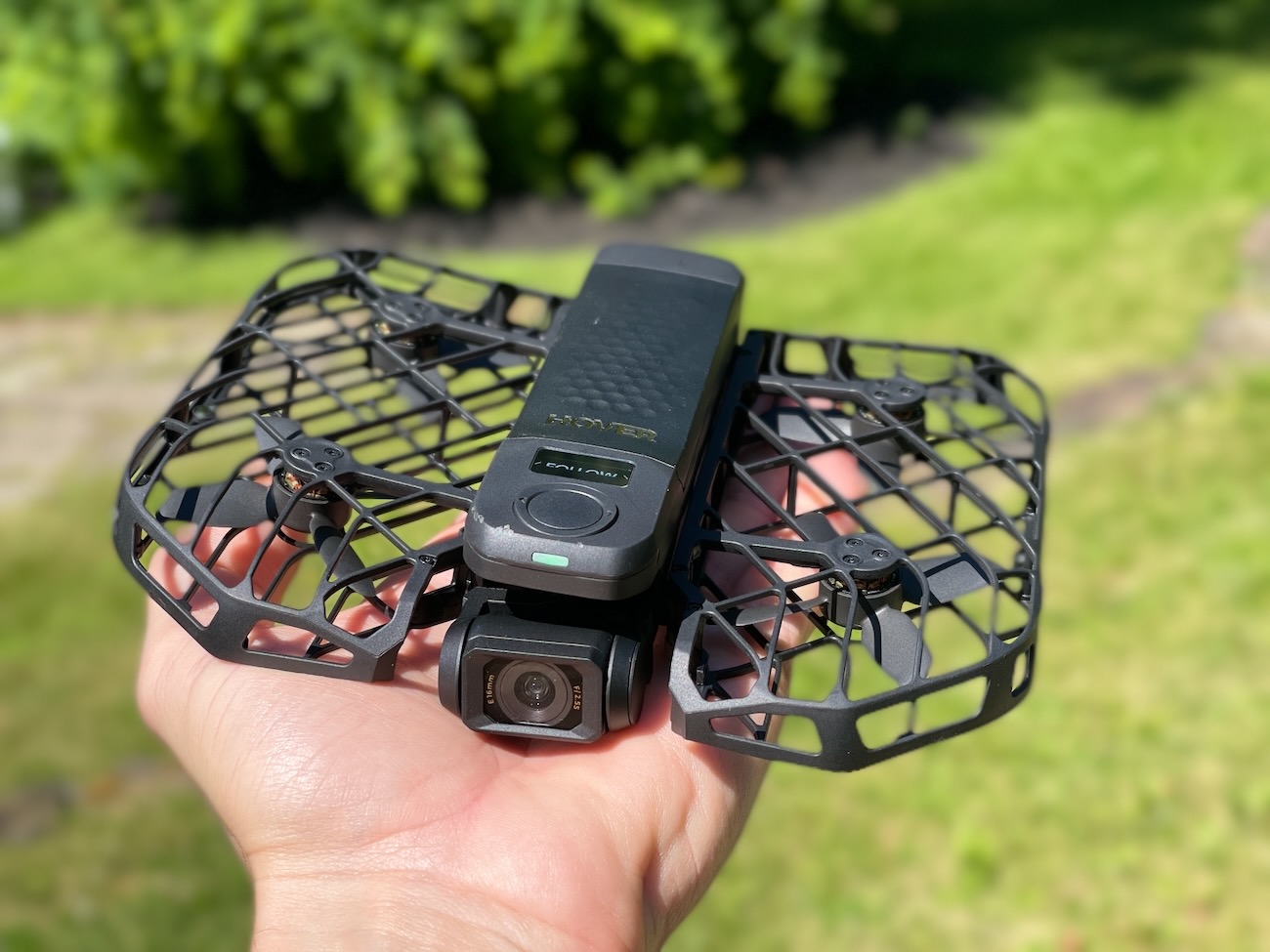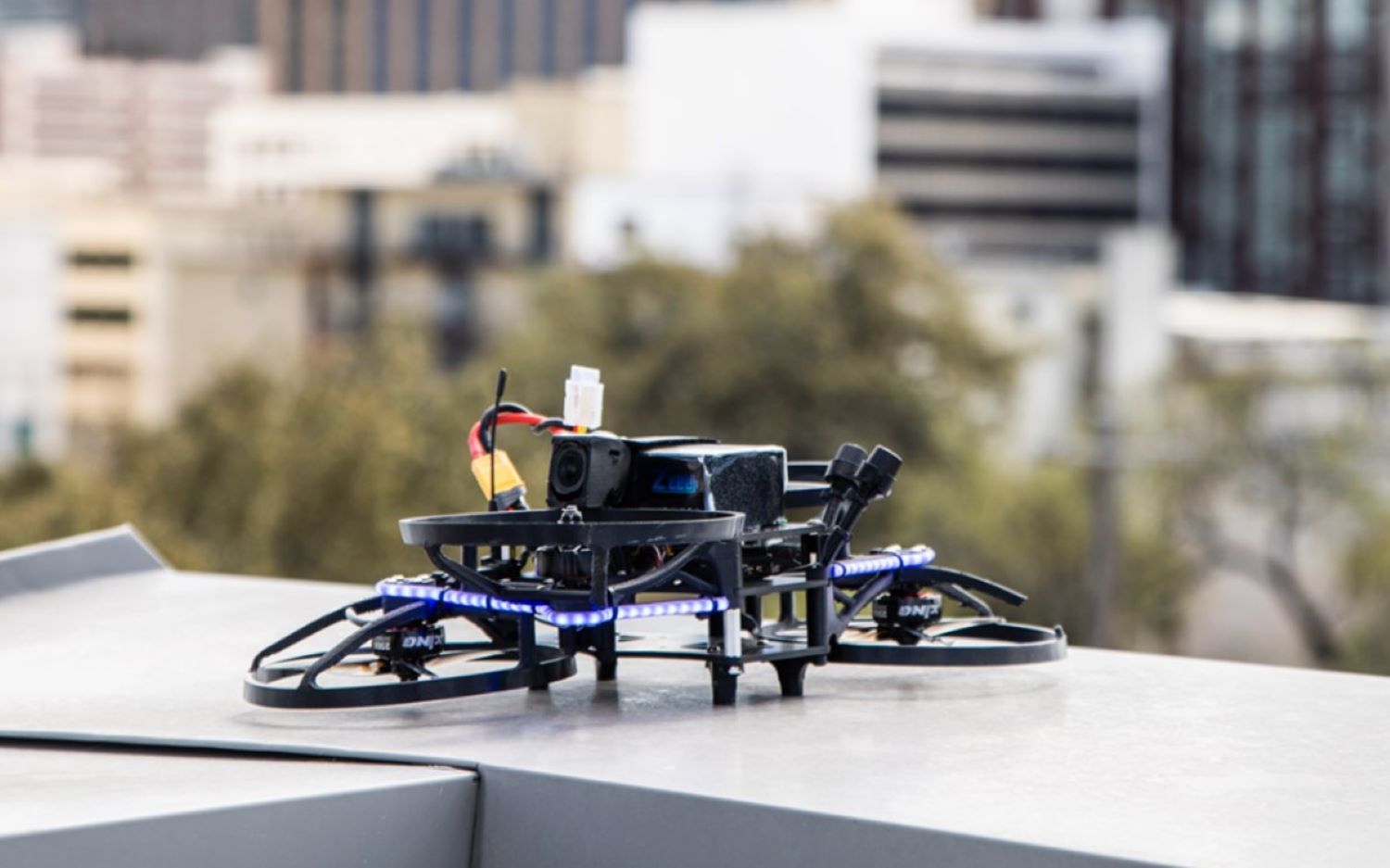
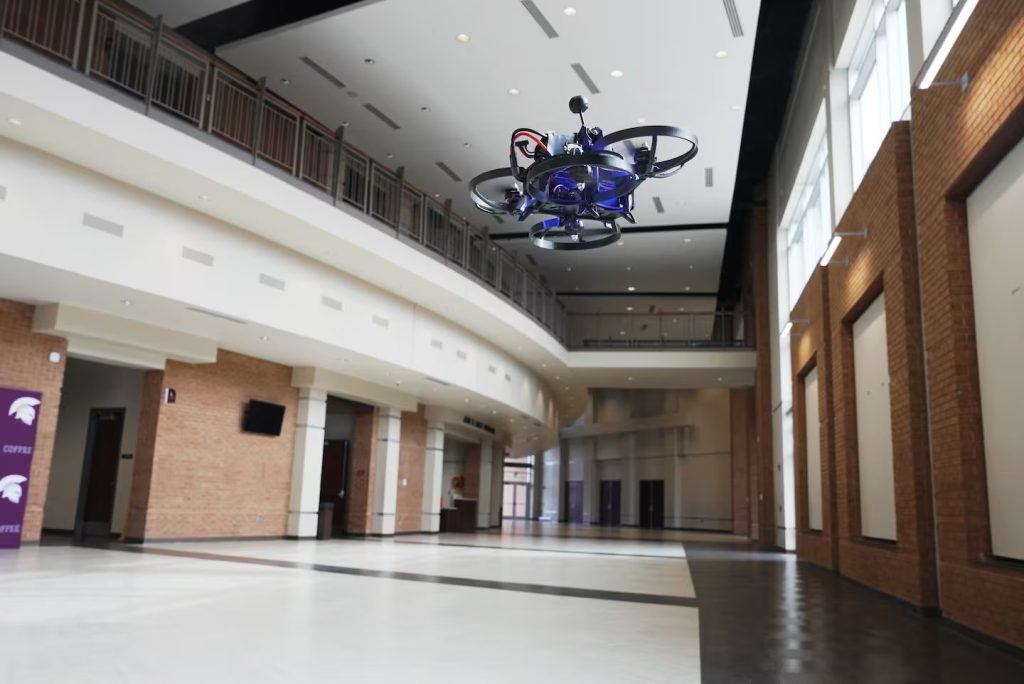
Fifteen seconds. That’s how long Mithril Defense claims its Campus Guardian Angel drone needs to reach an active shooter after a teacher hits a panic button. The pizza-sized aircraft — armed with pepper gel, strobes, sirens, and the ability to ram a suspect at 60 mph — is headed into at least nine schools across Florida, Georgia, and Colorado. The pitch is brutally simple: get something on the shooter before police arrive. “The first 120 seconds are incredibly critical, because that’s when most of the shooting happens,” Mithril CEO Justin Marston told KFF Health News, citing the Uvalde massacre’s agonizing police delay as direct inspiration. Responding to a gunshot wound in those critical moments is exactly the gap this technology aims to close.
How It Actually Works
Teachers trigger the system; remote pilots in Texas take the controls.
Stored on charging pads throughout school hallways, the drones activate when staff hit a mobile app or classroom panic button. Licensed pilots at a tactical operations center in Texas then take over via live video, locating and tracking the suspect. Mithril’s stated targets: airborne in five seconds, on the shooter in fifteen, degrading or incapacitating within sixty. The non-lethal toolkit includes pepper gel, blinding strobes, and ear-splitting sirens. If all else fails, the drone becomes a projectile — ramming at reportedly up to 60 mph.
- Florida allocated roughly $557,000 across three schools; Deltona High was the first installation
- Georgia approved about $550,000 for five high schools, with deployment set for 2026–2027
- Colorado’s John Adams Academy is self-funding its program — the state’s first
- Drones cannot open locked doors but carry glass-breaking lances for non-ballistic windows
- The system has been tested only in drills — no actual shooting has put it to the test
The Risks Nobody Has Answered Yet
Misidentification, pepper spray in enclosed hallways, and a complete absence of real-world data.
In the chaotic first minutes of a school shooting, a drone targeting a fleeing student or a responding officer is not a hypothetical — it is a documented failure mode of automated targeting systems operating under incomplete information. School safety consultant Curtis Lavarello has expressed “serious reservations about the deployment of drones in schools,” according to KFF Health News. David Riedman, founder of the K-12 School Shooting Database, is blunter: these systems may “create more new risks and complications than potential viable defense against an attack,” he told DroneXL, flagging pepper spray dispersal in enclosed hallways as a particular concern.
Parents weighing this technology should consider what gets displaced in already-strained school budgets. March for Our Lives co-founder Jaclyn Corin argues finite resources should fund prevention — mental health support, threat assessment, gun policy — not tech that only engages after shots are fired. Axon tried taser drones in 2022. Its own ethics board resigned in protest, and the project collapsed. Education Week and other outlets underscore the same uncomfortable truth: zero empirical data shows these drones reduce casualties compared to locked doors and training.
The pilots will either validate the concept or expose it. In schools, the cost of an unproven experiment is not measured in budget overruns — it is measured in the trust handed over every morning at the front door.