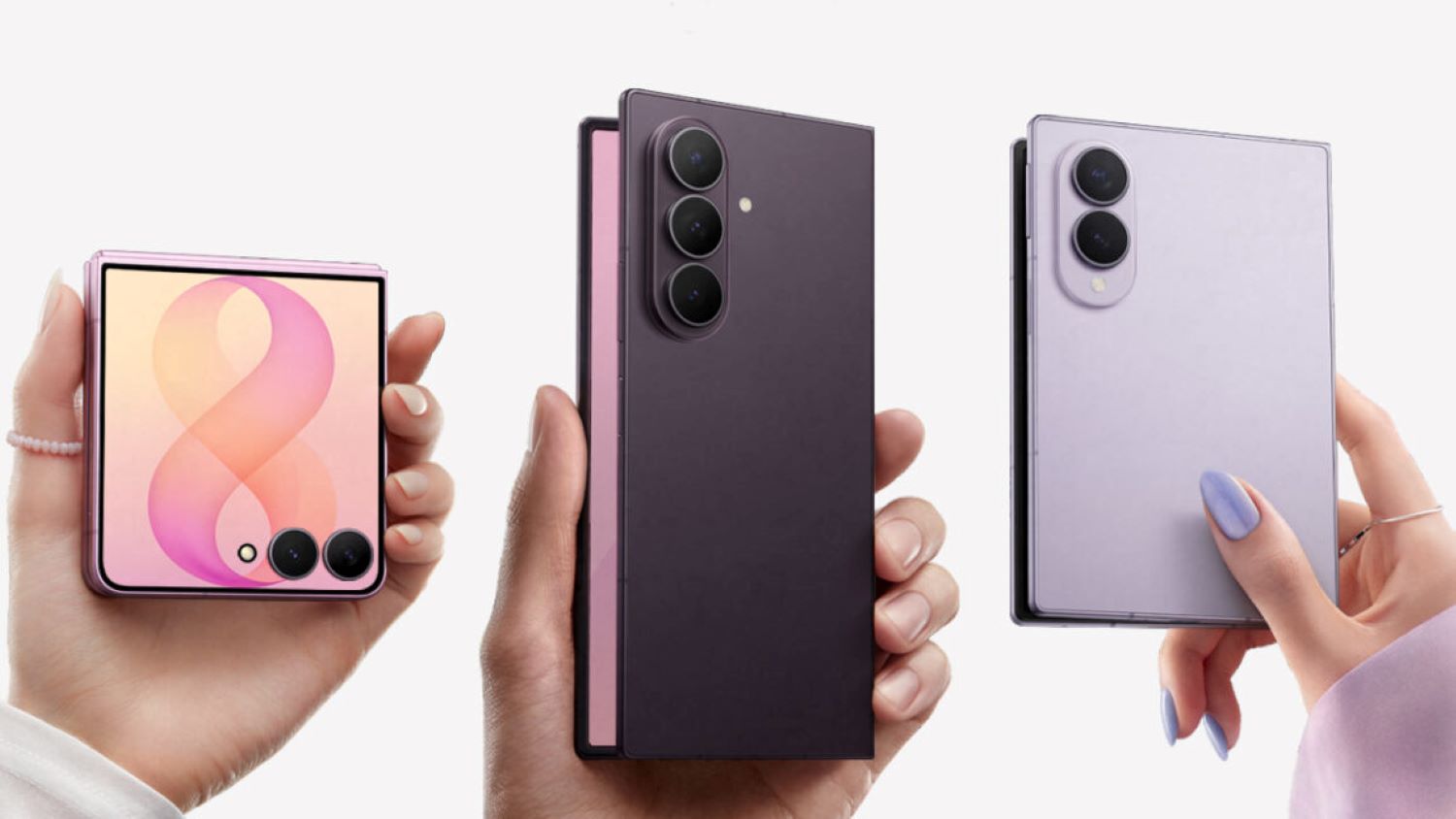
Three foldable phones now sit where two used to. Samsung’s 2026 Galaxy Z8 generation — the Flip 8 at $1,200, the new wide-body Fold 8 at $1,900, and the Fold 8 Ultra at $2,100 — represents the company’s most expansive foldable bet yet. Prices climbed roughly $100 across the board, driven partly by what industry watchers are calling a “RAMpocalypse” component shortage, per Ars Technica and Samsung’s official announcement. Preorders are live now. Everything ships August 7.
Three Phones, Three Personalities
Samsung splits its foldable vision into three distinct use cases — multitasking, media, and style — with real trade-offs at each tier.
The Fold 8 Ultra is the productivity workhorse: an 8-inch near-square inner display built for running two apps side by side, a 200 MP main camera, 5,000 mAh battery, and 45W charging packed into a device just 4.1 mm thin when open. The Fold 8 takes a different path — a wider 7.6-inch display with a 4:3-ish ratio built for streaming and reading documents, lighter at 201 grams, with a dual-camera setup that trades versatility for screen shape. Then there’s the Flip 8, which packs a 6.9-inch main screen and the same Snapdragon 8 Elite Gen 5 for Galaxy chip but stays stuck at 25W charging while costing hundreds more than Motorola’s Razr alternatives.
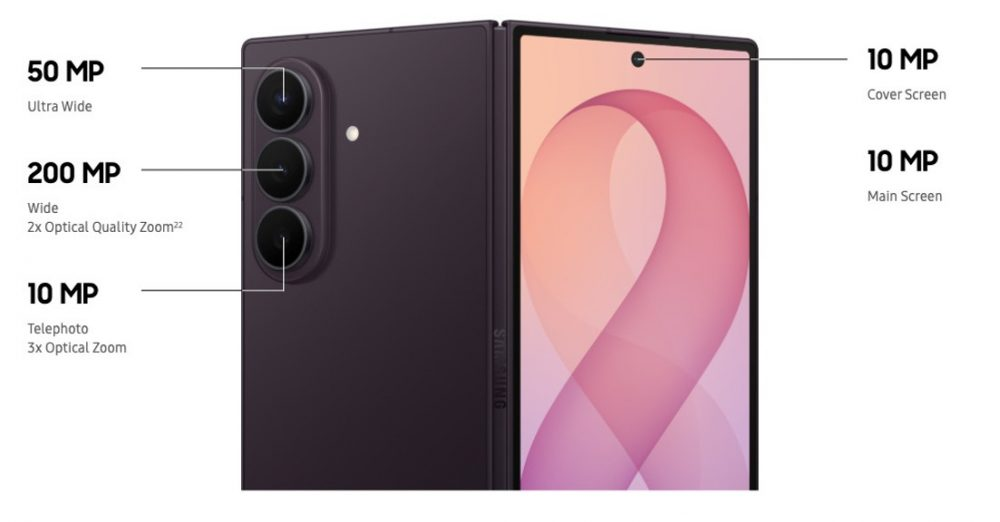
Across the lineup, a few specs deserve a closer look:
- All three phones share the Snapdragon 8 Elite Gen 5 for Galaxy — no processing compromises at any tier.
- The headline material feature, Flex Titanium, sounds like a titanium chassis but is actually a titanium alloy film beneath the OLED panels, designed to reduce crease visibility and improve impact resistance.
- Both Fold models gain 45W wired charging, while the Flip 8 stays at 25W.
- A new low-reflection display coating improves outdoor visibility across all three.
- Android 17 and One UI 9 ship standard, with Gemini Notebook (formerly NotebookLM) and AI-powered Now Brief and Now Nudge features integrated throughout.
That $1,200 Flip 8 price hits like a Beyoncé tour ticket — you knew it’d be expensive, just not quite that expensive. Samsung is softening the blow with enhanced trade-in values, which feels less like generosity and more like quiet acknowledgment that the sticker shock is real. The Ultra’s $2,100 ask lands only $100 above last year’s equivalent model, making it the comparatively easier pill to swallow for anyone already in the Fold ecosystem.
The Watches Aren’t an Afterthought
Galaxy Watch Ultra 2 and Watch 9 bring Samsung’s wrist-level specs competition with Apple into a sharper new chapter.
The $700 Galaxy Watch Ultra 2 — 47mm titanium case, IP69K and 10ATM water resistance, a diving app arriving later this year — is aimed squarely at Apple Watch Ultra territory. It packs more battery and a brighter display than its sibling. The Galaxy Watch 9 starts at $380 (or $430 for LTE) in a “squircle” aluminum case — that’s a square-circle hybrid shape, first introduced on Samsung’s original Ultra — available in 40mm and 44mm. Both run on the Snapdragon Wear Elite platform.
On the software side, One UI 9’s AI layer brings Now Brief for contextual and security suggestions, and Now Nudge for proactive assistance throughout the device experience. Whether that reads as genuinely helpful or your phone quietly becoming your life coach is something August will clarify.
The Fold 8 Ultra is the most capable foldable Samsung has built to date, while the Flip 8 still has ground to cover at its price point. August 7 is when the real-world verdicts start rolling in.