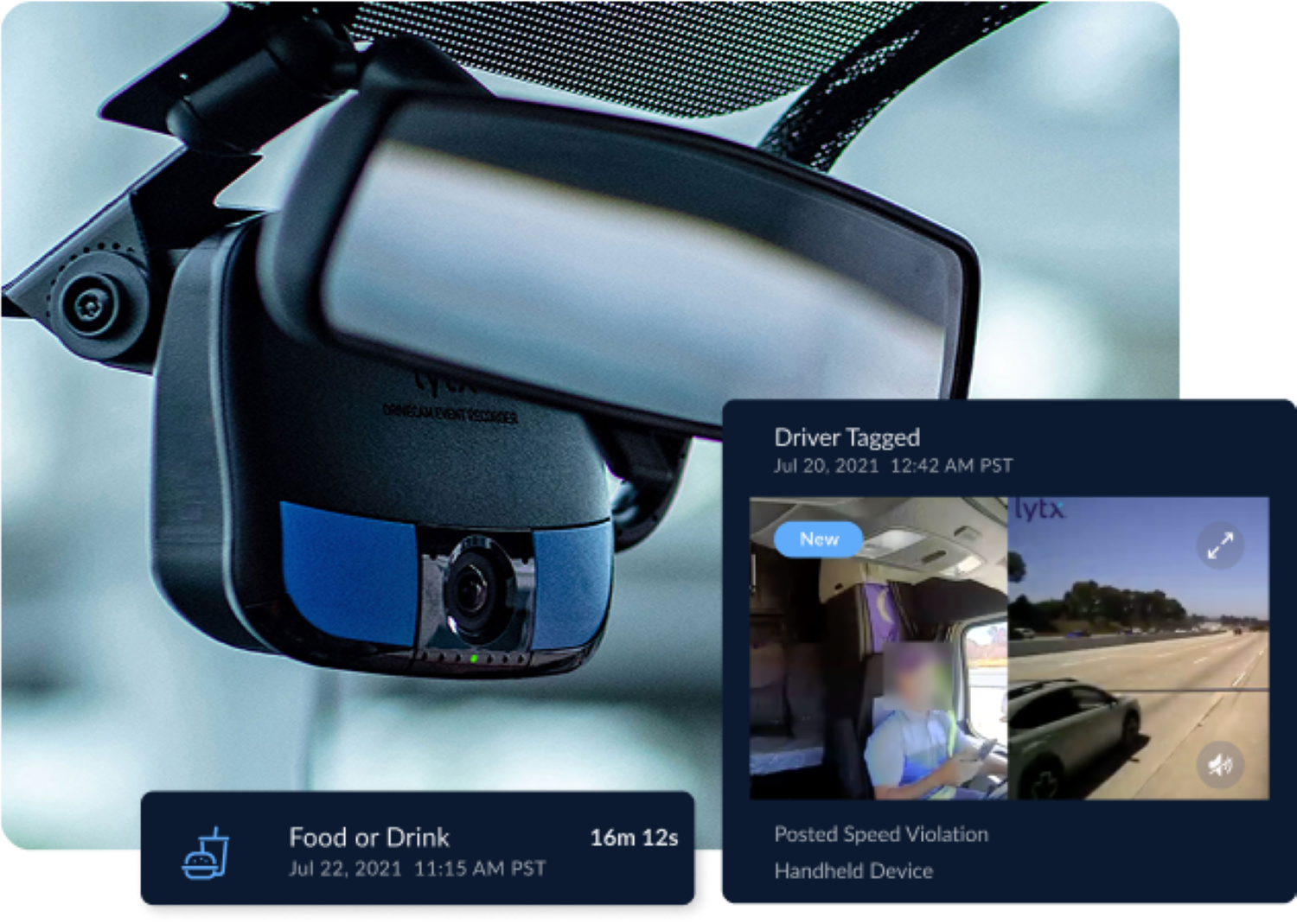
You slide into a loaner Audi, adjust the rearview mirror, and freeze. A palm-sized device with two lenses sits right behind it. One eye watches the road. The other watches you. It’s not a quirky aftermarket accessory — it’s a Lytx DriveCam, enterprise-grade fleet surveillance appliance originally built for long-haul trucking, now quietly showing up in luxury dealer loaners. Most drivers have no idea what it can do.
What That Camera Actually Does
Built for trucking compliance managers, it’s now pointed at your face during a routine errand run.
Lytx, a San Diego-based video telematics company, designed the DriveCam as a dual-lens, AI-powered recorder. One lens captures 180 degrees of road ahead. The other captures you — your hands, your eyes, your seatbelt status. The system detects over 100 risk indicators, issues real-time audio alerts (yes, it will literally say “seatbelt, seatbelt” at you), and streams everything to the cloud, according to Lytx’s product documentation.
Here’s what it’s capable of:
- AI detection of drowsiness, phone use, and unsafe following distances
- Continuous audio recording, with event-triggered access capturing 15–30 seconds before and after incidents
- Up to 400 hours of cloud-stored footage per device, accessible to the device owner, insurers, and law enforcement
- GPS tracking that links speed, location, and driving behavior to video in real time
Lytx’s own fleet safety overview frames this cheerfully: “With advanced fleet safety solutions powered by cutting-edge artificial intelligence… you’ll not only help prevent risk — you’ll transform the way your fleet operates.” The uncomfortable part? In a loaner, the “fleet” is you, picking up dry cleaning.
How Fleet Tech Ended Up in Your Borrowed A4
The business logic is straightforward; the consent gap is anything but.
Lytx’s move into rental vehicles isn’t new. A 2021 partnership with HD Fleet brought portable video event data recorders into rental trucks for parcel delivery companies — specifically to help operators meet rental vehicle safety policies. The jump to luxury dealer loaners follows the same logic: high-value cars, liability exposure, damage disputes that are easier to resolve with footage. No public documentation confirms Audi corporate as a Lytx partner; this reads as a dealer-level decision, not a manufacturer-wide program.
The privacy tension, though, is real. Your car has always been a semi-private space — phone calls with your doctor, your lawyer, your kids. A limousine operator’s safety page describes the Lytx system as capturing “everything that it sees, and everything that it hears” for roughly 20 seconds around an event trigger. Truckers on forums note that employers reportedly can’t access routine audio outside of critical events. But you’re not an employee. Consent language buried in loaner paperwork isn’t meaningful notice — it’s a legal formality dressed up as disclosure.
The Quiet Normalization
If this becomes standard practice without transparent disclosure, privacy starts looking like a premium feature.
If dealers keep installing these systems quietly, opting out of in-car surveillance could become something you pay extra for — the civil-liberties equivalent of security systems as optional add-ons. Regulators haven’t caught up to this context. For now, the safest assumption when climbing into any loaner: something is watching, it knows your speed, and it definitely clocked that seatbelt. Stories of apps secretly tracking users without meaningful disclosure suggest this consent gap extends well beyond the driver’s seat.