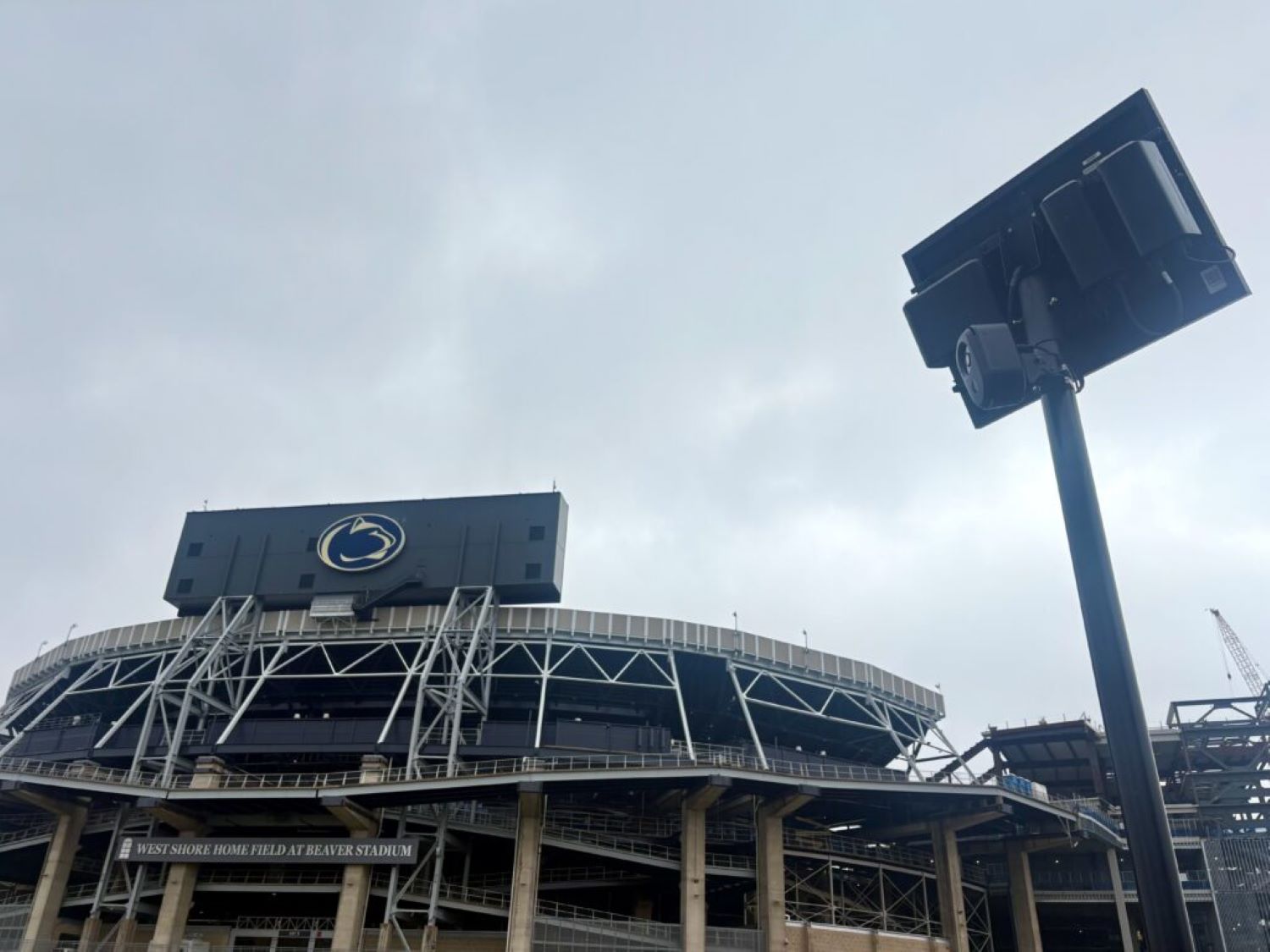
Drivers turning onto Jordan Road near Penn State Behrend’s Erie campus may not realize a surveillance app has already captured their license plate before they reach the parking lot. The image is read by computer vision, cross-referenced against a law-enforcement database, and uploaded to a cloud platform — all in seconds. That’s the system now sitting at Behrend’s perimeter, and it’s worth understanding exactly what it does.
Three Flock Safety automated license plate reader cameras are now installed at the campus boundary — two on Jordan Road, one on Knowledge Parkway — as part of a Penn State systemwide safety pilot, according to local reporting by YourErie.
What Flock’s Cameras Actually Do
Flock Safety’s ALPR system functions like a Ring doorbell scaled to an entire campus border — except it never forgets a plate.
Flock’s stationary devices capture high-resolution vehicle images, automatically identify plates using computer vision, and push data to a searchable cloud platform that flags matches against law-enforcement hotlists in real time. Here’s what Penn State has confirmed about the Behrend deployment:
- Three cameras across two campus entry roads
- Data is vehicle-based — no facial recognition or biometrics
- Access limited to trained, authorized university police personnel
- No public access to ALPR data
- Data sharing governed by policy and applicable law
Penn State says the cameras support stolen vehicle recovery, missing persons investigations, and generating investigative leads. A university spokesperson told WPSU: “The data collected is vehicle-based, and access to the data is tightly restricted, audited and governed by strict policies with clear safeguards in place to protect privacy and safeguard the data.”
Specific retention periods and interagency sharing details, however, remain publicly undisclosed.
Not Everyone’s Convinced
Community pushback at Behrend reflects a national anxiety about AI surveillance arriving on campus with limited public input.
Local reporting confirmed an online petition opposing the cameras, though its full text hasn’t surfaced publicly. The concern it represents is familiar. Pulitzer Center reporting notes that AI campus security systems can track movements, scan for weapons, and analyze behavior in real time — which is precisely why institutional framing matters when these tools are announced.
The gap between vendor capability and stated institutional use deserves scrutiny. At San Diego State, police said their AI-enabled cameras only detect when a unit goes offline. The vendor, meanwhile, markets facial recognition and crowd monitoring capabilities, per ABC10News reporting. One sentence captures the problem: promises aren’t policy.
That’s the real tension here — not what three cameras do today, but what the infrastructure quietly permits tomorrow. If Penn State’s pilot is deemed successful, expanded ALPR coverage across its campuses becomes likely, and other universities will be watching closely. The question worth asking isn’t whether Behrend is safer. It’s who gets to audit that answer.