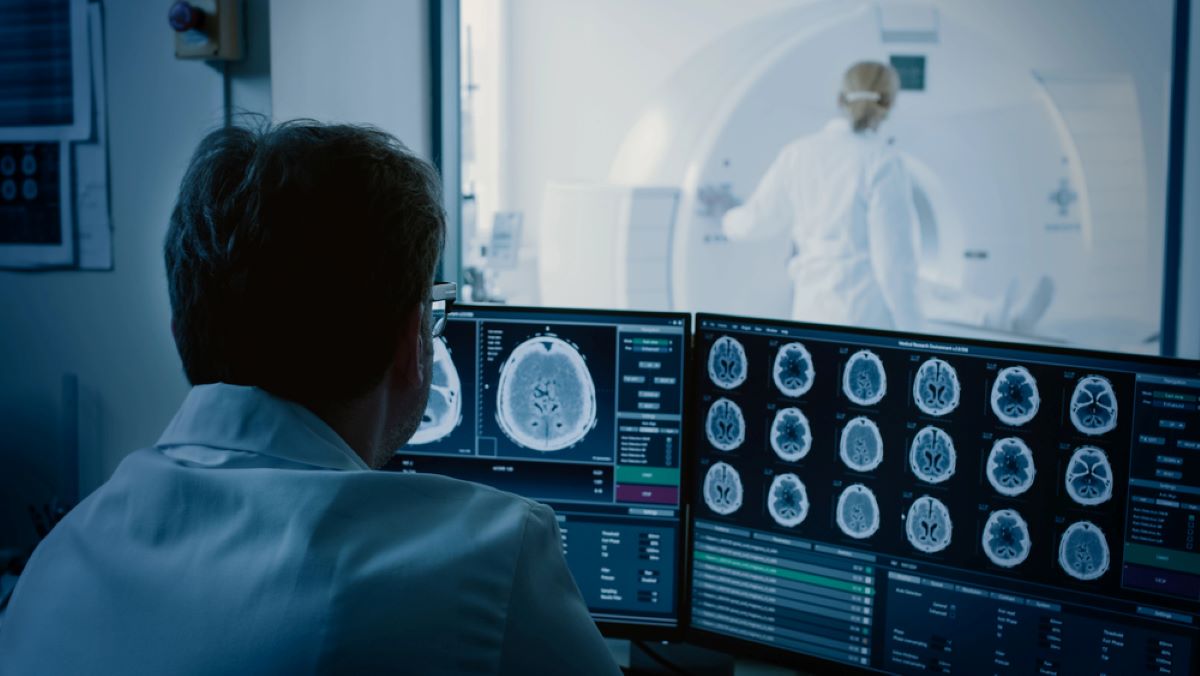
For years, people with ME/CFS have been told their crushing brain fog is essentially imaginary. Turns out it’s measurable on an MRI. A study from Griffith University’s National Centre for Neuroimmunology and Emerging Diseases, published in Frontiers in Neuroscience in July 2026, has produced the first direct imaging evidence that the brain’s waste-clearance system — the glymphatic system — is impaired in ME/CFS patients. Think of it as your brain’s overnight janitorial crew. In ME/CFS, that crew isn’t showing up for the shift.
Your Brain’s Cleanup Crew Works the Night Shift – In ME/CFS, It’s Understaffed
New MRI data links measurably impaired glymphatic clearance in ME/CFS directly to brain fog and disrupted sleep.
Here’s what the study found:
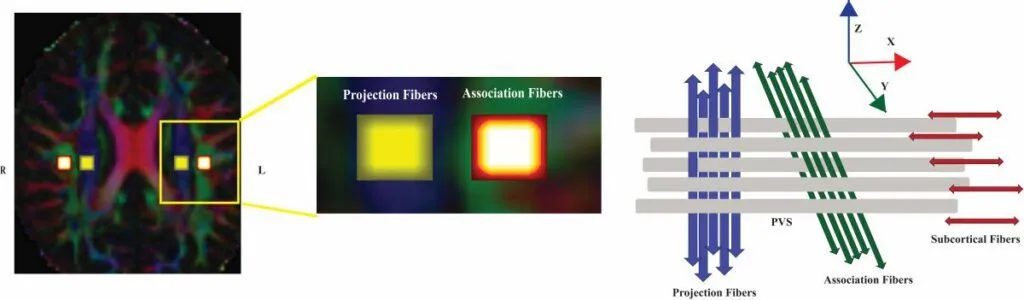
- Researchers used DTI-ALPS (Diffusion Tensor Imaging – Analysis along the Perivascular Space), an MRI technique that estimates glymphatic activity by tracking water movement along brain pathways.
- ME/CFS patients showed a significantly lower DTI-ALPS index than healthy controls — meaning measurably worse brain waste clearance.
- Lower glymphatic function correlated directly with worse sleep quality and more severe cognitive impairment.
- The glymphatic system primarily clears metabolic waste — lactate, glutamate, beta-amyloid — during sleep. Disrupt sleep, disrupt clearance. Disrupt clearance, worsen sleep. A brutal feedback loop.
- These findings connect ME/CFS to a broader scientific conversation about impaired brain tissue waste clearance already active in Alzheimer’s and traumatic brain injury research — though its role across those conditions is still being mapped.
When harmful waste accumulates because the brain’s cleaning system falters, neuroinflammation follows. Lead author Dr. Kiran Thapaliya put it plainly: “This study is the first to demonstrate impaired glymphatic function in ME/CFS using MRI, providing a mechanistic explanation for the inflammatory changes reported by other Australian and international teams,” according to News-Medical.
NCNED Director Professor Sonya Marshall-Gradisnik added: “The study found worse sleep is associated with poor brain waste clearance, reinforcing the notion that sleep plays a critical role in maintaining brain health.”
A Biomarker, Not a Breakthrough — Yet
The findings are mechanistically significant but need replication before they can reshape clinical practice.
Some necessary grounding first. The paper positions these results as initial evidence requiring replication and broader validation. DTI-ALPS is relatively new, and indirect MRI measures of glymphatic flow still need testing against more direct physiological benchmarks. But the technique is non-invasive — which matters enormously. Glymphatic imaging could eventually join objective diagnostic workups, something ME/CFS has long lacked. It also provides the clearest objective counter yet to the psychosomatic framing that has shadowed the condition for decades.
The finding places ME/CFS squarely into a conversation neurologists and Alzheimer’s researchers have been having for years — about sleep, brain clearance, and what happens when the brain can’t take out its own trash. For millions of patients worldwide, that seat at the table is long overdue.