Every biomass-to-fuel process on the planet treats moisture like a villain. Dry it out first, then cook it — that’s the rule. A team at the Korea Institute of Geoscience and Mineral Resources (KIGAM) just broke that rule. Their Flame Plasma Pyrolysis (FPP) system takes soggy spent coffee grounds — roughly 55% water — and converts them into high-grade biochar in about 90 seconds. No pre-drying. No oil removal. Conventional hydrothermal carbonization takes one to six hours. Torrefaction needs at least 30 minutes, and only after you’ve already wrung the water out. FPP skips the line entirely.
The Popcorn Effect: Why Wet Grounds Are Actually the Point
Moisture becomes a demolition tool inside KIGAM’s plasma reactor — not a problem to solve before processing begins.
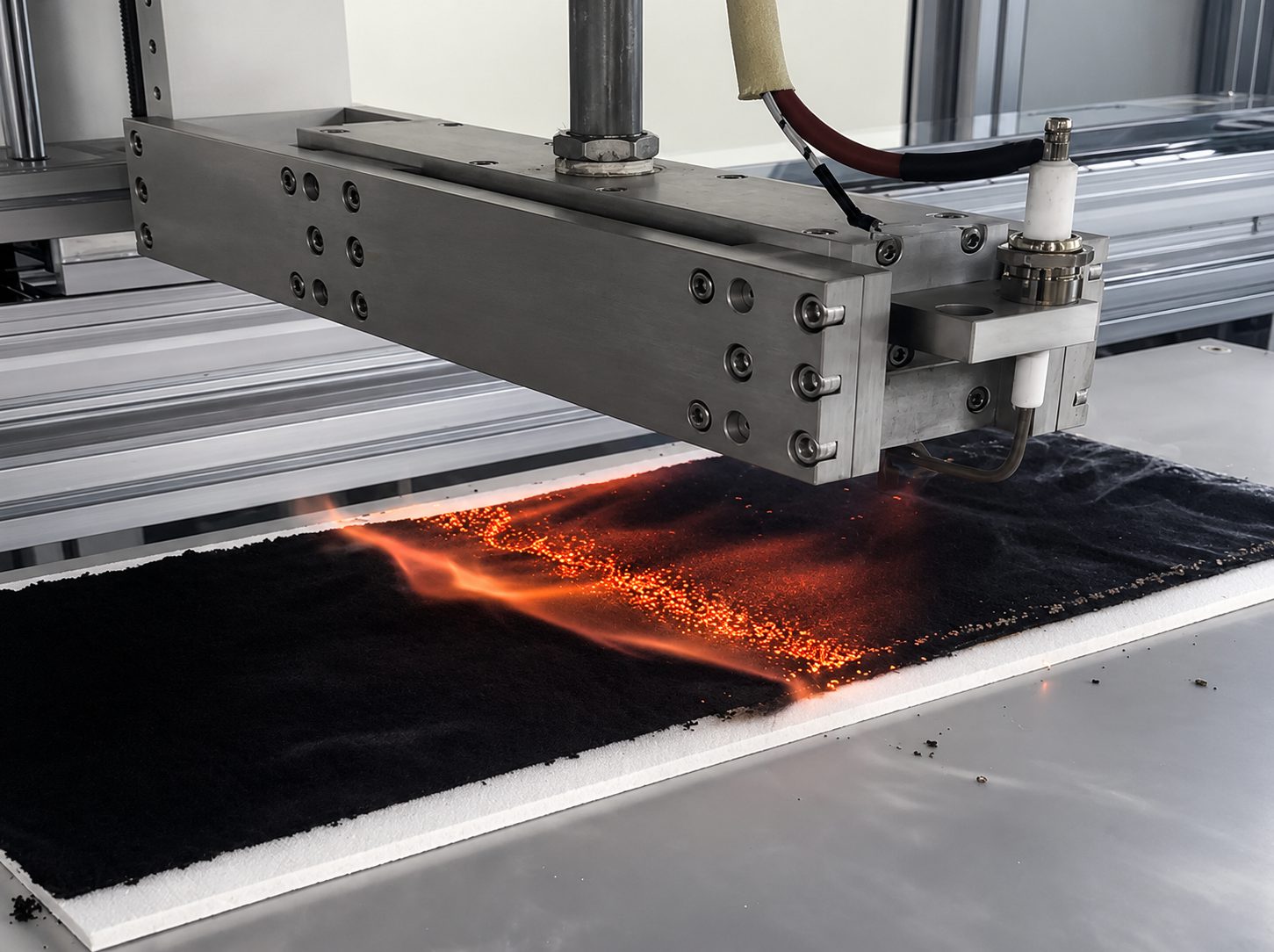
Here’s where it gets genuinely clever. LPG-fueled plasma flames hit the grounds at 800–900°C under atmospheric pressure. Water trapped inside each particle flash-vaporizes, building steam pressure until microscopic explosions shatter the structure from within. Think microwave popcorn, but at temperatures that would melt aluminum. Those micro-explosions increase porosity and accelerate carbonization simultaneously. The moisture isn’t removed. It’s weaponized.
The numbers back up the drama. Biochar heating value hits 29.0 MJ/kg — roughly 33% higher than raw grounds (~21.8 MJ/kg) and comparable to anthracite coal. Fixed carbon content triples, from 15.6% to 46.2%. Surface area rockets from approximately 1.5 m²/g to 115.4 m²/g, making the material viable for activated carbon and filtration applications. Sulfur compounds are eliminated entirely — preventing SO₂ emissions if burned — while mass drops by 83.3% at the 90-second mark.
- Biochar heating value: 29.0 MJ/kg, comparable to anthracite coal
- Fixed carbon content: triples from 15.6% to 46.2%
- Surface area: ~1.5 m²/g to 115.4 m²/g, viable for filtration and activated carbon use
“A new paradigm in which waste is no longer viewed as a disposal problem but as a valuable energy resource,” according to lead researcher Dr. Taejun Park, as reported by TechXplore.
If you run a coffee chain, you currently pay to haul away wet grounds. Existing recovery operations — bio-bean in the UK, ANDRITZ dewatering systems — still require logistics-heavy collection and thermal drying infrastructure. FPP reportedly collapses dewatering and carbonization into one stage, making onsite conversion plausible for the first time at meaningful scale. Independent analysts have noted, however, that plasma-based systems typically face significant scale-up costs — a hurdle KIGAM has not yet publicly addressed.
Fast in the Lab. The Real Question Is What Happens at Scale.
Impressive benchmarks deserve honest scrutiny before anyone installs a plasma reactor next to the espresso machine.
Researchers estimate energy consumption at roughly 154 MJ per kilogram of biochar produced, using LPG combustion plasma rather than electricity-heavy conventional reactors. Net energy balance across real-world duty cycles hasn’t been independently validated. Lifecycle emissions versus composting or anaerobic digestion remain unclear. No commercial partner has been named. This is a research publication, not a product launch.
Still, KIGAM suggests FPP extends beyond coffee to food waste, sewage sludge, and agricultural residues — any high-moisture organic liability currently treated as a disposal problem. If the energy math survives industrial reality, the most interesting machine in your local café might eventually be the one nobody drinks from.