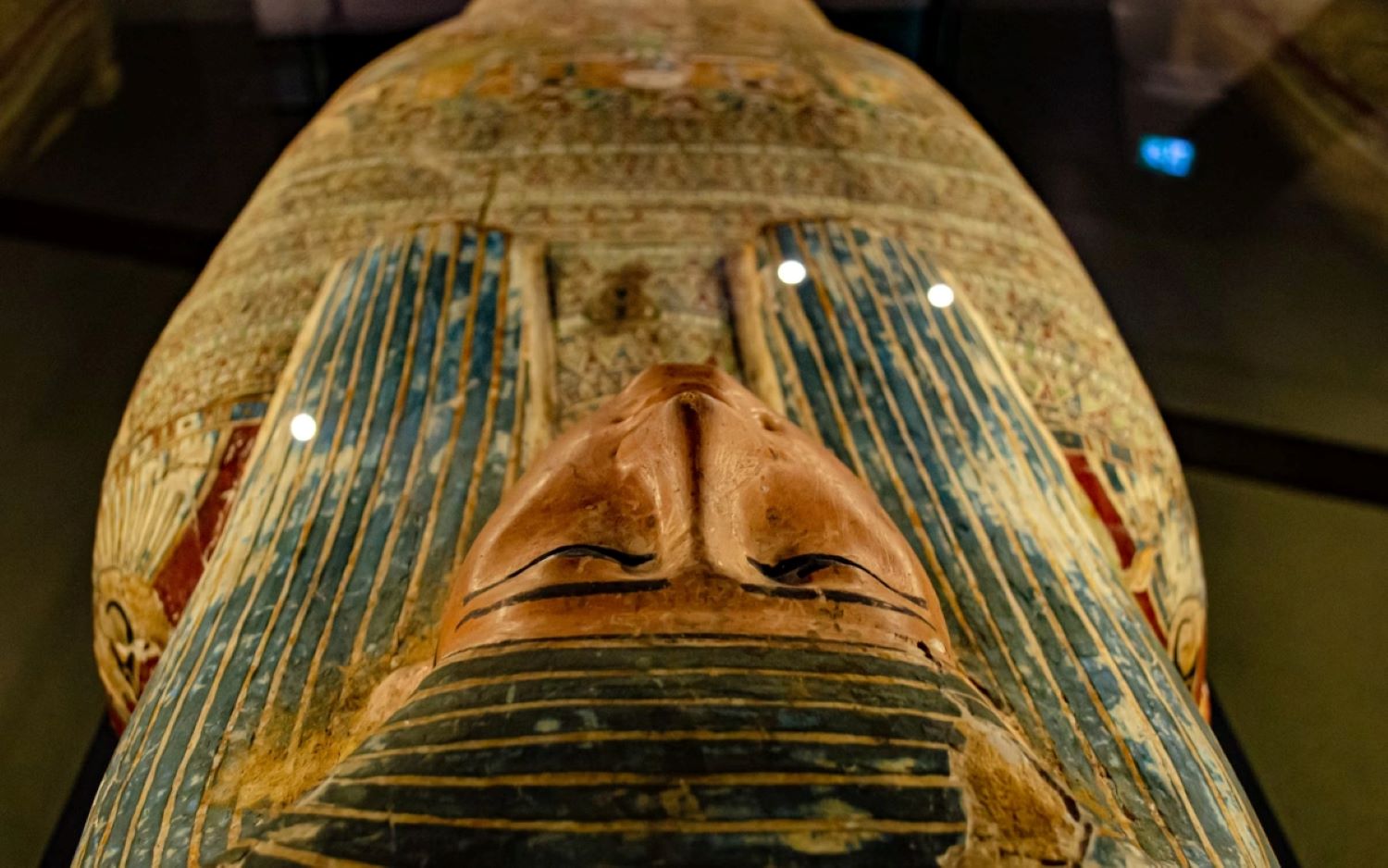
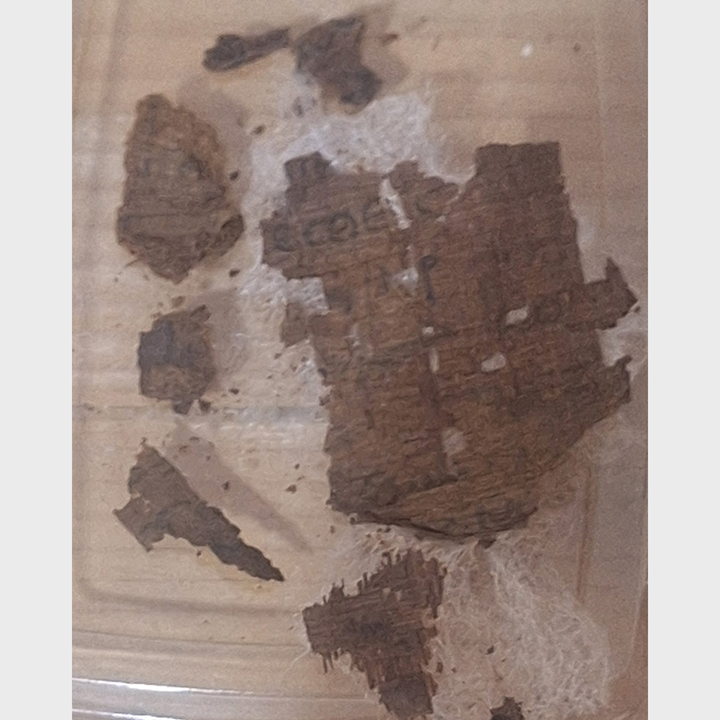
A Roman-era mummy pulled from a tomb at Oxyrhynchus, Egypt, had a papyrus fragment from Homer’s Iliad placed on its abdomen during embalming. Not tucked in accidentally. Not recycled as packing material. Deliberately incorporated into the mummification process, according to researchers from the University of Barcelona. That distinction matters. Papyrus scraps turn up in ancient Egyptian burials regularly — administrative receipts, magical spells, ritual formulas. But a passage from one of Western literature’s foundational texts? That had never been documented in this context before. The find reframes what Greek literary culture meant inside an Egyptian burial chamber.
What Was Found
The details from Tomb 65 ground the discovery in specifics that separate it from prior papyrus finds.
- Location: Oxyrhynchus, also known as Al Bahnasa, one of Egypt’s richest papyrological sites, already famous for preserving thousands of Greek texts in dry desert conditions.
- The mummy came from Tomb 65, Sector 22, part of a funerary complex containing three limestone burial chambers and decorated wooden sarcophagi, some damaged by ancient looting.
- The papyrus fragment sat on the mummy’s abdomen, placed there as part of the embalming ritual.
- Researchers identified the text as a section of Book II of the Iliad — the Catalogue of Ships, Homer’s exhaustive roster of every Greek contingent that sailed for Troy.
- The discovery was reported by the Oxyrhynchus Archaeological Mission team, including Maite Mascort, Esther Pons, Núria Castellano, Margalida Munar, Leah Mascia, and Ignasi-Xavier Adiego.
Why a Literary Text Changes the Picture
Previous mummy papyri were magical or bureaucratic — this one carried canonical Greek verse.
Earlier finds at Oxyrhynchus involved magical or ritual texts placed with the dead. A parallel discovery at Hawara in the Fayum also turned up Homeric text near mummified remains, but lacked clear evidence of intentional incorporation into embalming itself. The Oxyrhynchus find is the first where researchers say a literary papyrus was part of the process, not just proximity.
The Catalogue of Ships is the ancient world’s equivalent of an obsessive playlist nobody requested but somebody clearly valued — a 300-line inventory of ships, captains, and cities. Why place it on a body? Some commentators suggest symbolic or cultural significance, though that remains interpretation, not established fact. Roman Egypt was a place where Greek intellectual tradition and Egyptian mortuary custom coexisted fluently, the way code-switching works in any multilingual city today. This find sits squarely at that intersection.
What the discovery opens up matters more than what it confirms. If literary texts served a deliberate role in burial practice, Oxyrhynchus — already one of archaeology’s most generous sites — may have more answers still underground. Exploring how technology is reshaping our understanding of ancient peoples, a lost civilization in the Amazon was recently uncovered through similar investigative ambition.