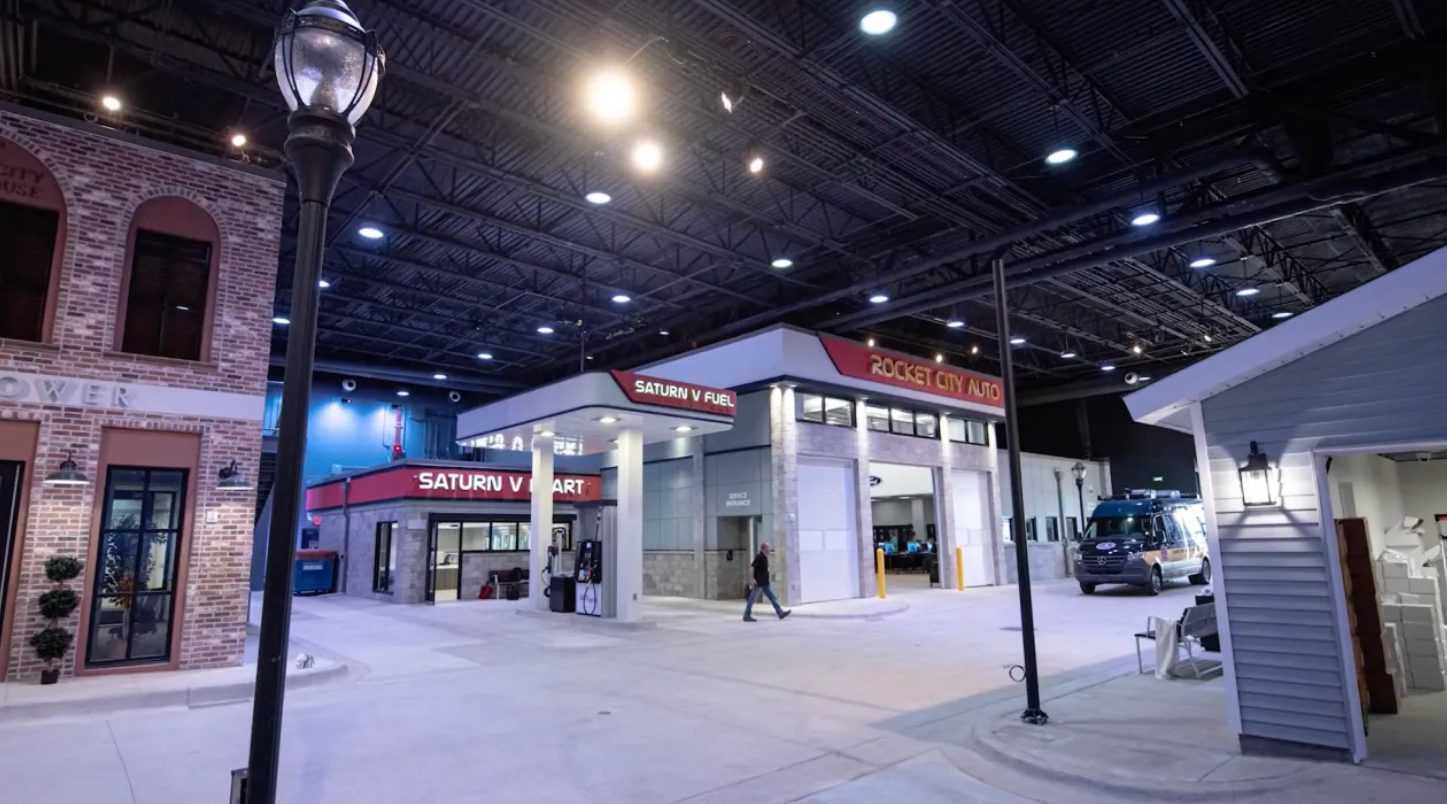
Twenty-two thousand square feet of fake Americana sprawls across the FBI’s Huntsville campus. Houses with working doorbells. A grocery store stocked with products. Traffic lights that actually cycle through red, yellow, and green. Even a trailer park and an arcade, because apparently cybercriminals target every corner of American life.
This isn’t some dystopian theme park. It’s the FBI’s Kinetic Cyber Range, where investigators learn to fight tomorrow’s cyberattacks by practicing on today’s infrastructure. Think of it as a digital sandbox where the consequences are real but contained—like Netflix’s content labs, except instead of testing which rom-com algorithm hooks viewers, agents are learning how to stop hackers from shutting down your local hospital.
The Uncomfortable Truth About Cyber Training
Program managers designed deliberately miserable conditions to mirror real-world stress.
The facility’s data center houses over 200 physical servers running Windows and Linux systems. Program manager Dave Beachboard describes these server rooms as “cold, cramped, noisy, dark, miserable”—intentionally matching the hellish conditions investigators face during actual breaches.
You know that panicked feeling when your Wi-Fi dies during an important video call? Imagine that stress multiplied by “the hospital’s life-support systems just went offline.” Since opening in February 2025, the range has trained more than 1,400 students from FBI and partner agencies.
The Stakes Behind the Simulation
Rising cybercrime losses demand hands-on preparation for life-or-death scenarios.
They practice everything from ransomware response to digital forensics, including techniques that exploit undisclosed vulnerabilities in devices from Apple and Google. These vulnerabilities aren’t reported back to those companies, leaving your iPhone potentially exposed until someone else discovers and patches them.
The FBI’s 2025 Internet Crime Report recorded $20.9 billion in U.S. cybercrime losses from over one million complaints—a 26% increase from the previous year. Ransomware remains the top threat to critical infrastructure, according to federal data.
When Colonial Pipeline went dark or hospitals lost patient records, investigators needed split-second decisions under extreme pressure. This simulated town lets instructors launch live attacks on mock infrastructure without risking real power grids or medical systems. It’s the logical evolution of law enforcement training: from shooting ranges to cyber ranges, from physical tactics to digital warfare where a well-placed keystroke can kill more people than a bullet.
The simulated community approach signals how seriously federal agencies view cyber-physical threats. Building an entire fake town just to practice fighting hackers isn’t cheap or easy—but neither is explaining to families why grandma’s dialysis machine stopped working during a ransomware attack.