Those circling helicopters above your neighborhood aren’t just responding to emergencies anymore. Modern police aircraft carry high-resolution cameras, thermal imaging systems, and live video feeds that stream directly to officers’ phones—transforming routine patrols into comprehensive aerial monitoring operations. These capabilities extend beyond physical surveillance to include digital methods, as seen with recent reports of a surveillance app targeting specific groups.
Your City from Above Gets Crystal Clear
Police helicopters now operate as flying sensor platforms with capabilities that would make a drone operator jealous.
These aren’t the grainy news helicopter shots you remember from the O.J. chase. We’re talking camera systems that capture detailed activity across entire neighborhoods while coordinating multiple response teams below. The live downlink technology means that what the helicopter sees, patrol cars see instantly.
Police departments nationwide have upgraded their aircraft with thermal imaging that can scan large areas and transmit real-time footage to ground units. The technology transforms a single helicopter into a command center that monitors wide swaths of urban territory simultaneously.
When Emergency Response Becomes Routine Surveillance
The line between public safety and persistent monitoring has blurred beyond recognition in major cities.
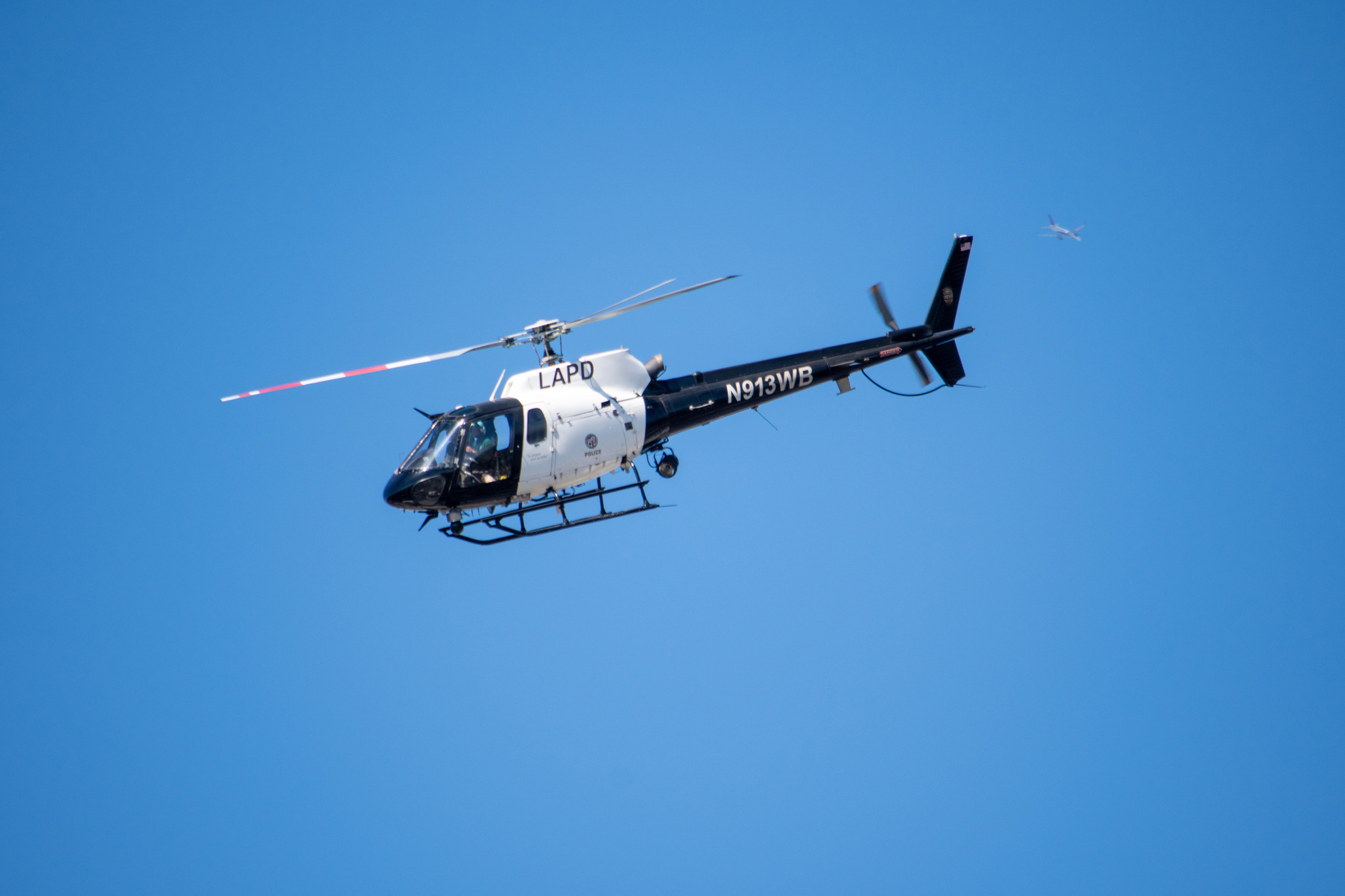
LAPD helicopters have become routine patrol fixtures rather than emergency-only assets, according to recent reporting. California Highway Patrol used aerial platforms to monitor protesters with zoom capabilities that captured individual faces.
Baltimore Police took this furthest with their now-infamous aerial surveillance program that monitored vast city sections without warrants—until the Fourth Circuit Court ruled it violated the Fourth Amendment. The technology justified for disaster response doubles as crowd control infrastructure, similar to digital monitoring methods that involve tracking users continuously.
Federal Agencies Join the Aerial Party
Beyond local police, federal aircraft now carry specialized detection equipment for broader security missions.
The Department of Energy’s NNSA operates AW139 helicopters with radiological detection systems mounted in the cabin and baggage compartments. These flights provide “often the first readings” officials use for health and safety decisions, according to NNSA materials.
While ostensibly for nuclear security, the precedent shows how quickly specialized surveillance capabilities spread across government aircraft fleets. Your local protest might attract multiple agencies with different sensor packages.
Privacy Rights Navigate Turbulent Legal Airspace
Constitutional protections struggle to keep pace with advancing aerial surveillance technology.
The Fourth Amendment traditionally allowed public airspace observation, but persistent, wide-area monitoring challenges those boundaries. Baltimore’s surveillance program demonstrated how helicopter capabilities can enable dragnet-style monitoring that courts eventually rejected.
As camera resolution improves and data-link systems advance, your privacy may depend less on hardware limitations than on warrant requirements and local surveillance policies. The question isn’t whether helicopters can watch you—it’s whether they’re legally allowed to store what they see. For those concerned about surveillance, investing in robust security measures may provide some peace of mind.