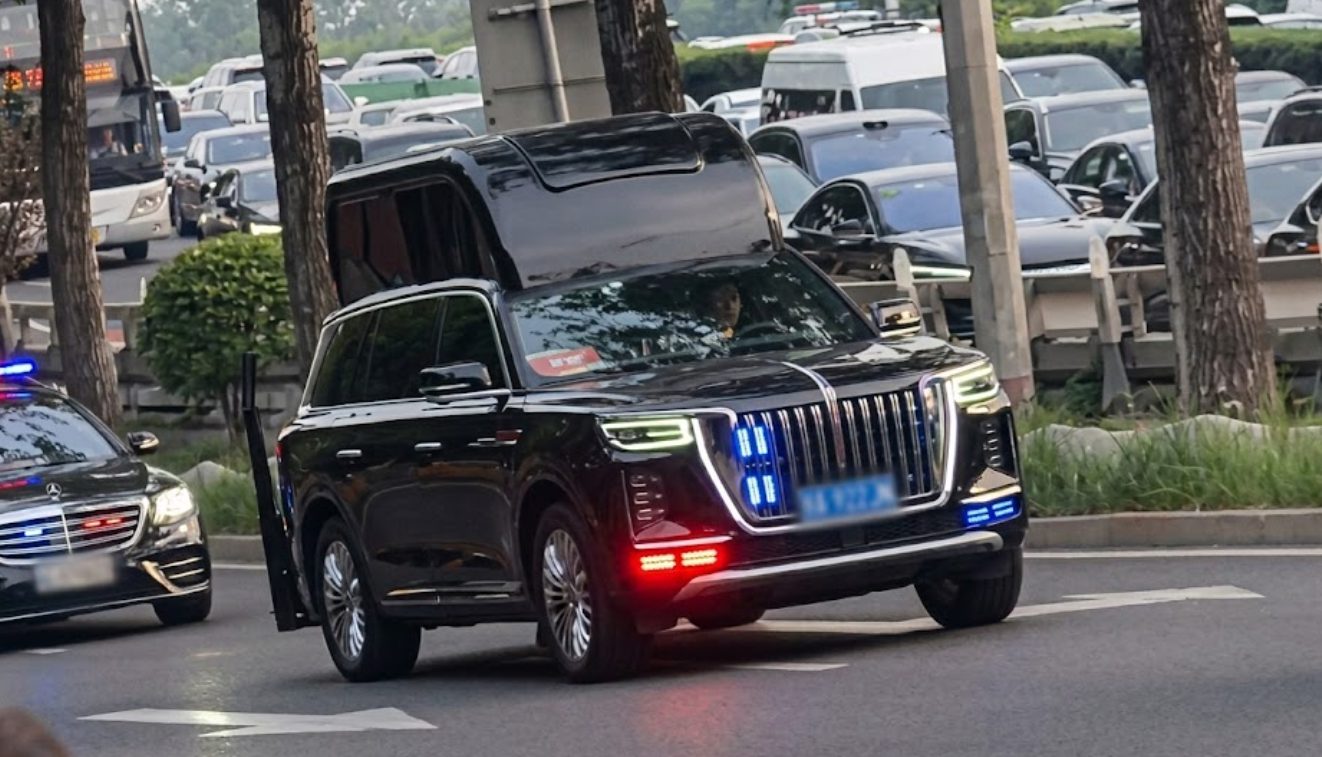
Racing through Beijing with a foreign head of state requires more than armored limousines and motorcycle escorts. During Donald Trump’s state visit, observers spotted something unprecedented: a pair of massive, custom-built SUVs that looked like luxury vehicles had been crossed with mobile command centers. Their oversized roofs and low stance suggested serious internal hardware—the kind that turns a convoy into a rolling electronic warfare platform.
The Vehicles That Caught Everyone’s Attention
These weren’t your typical diplomatic transport vehicles. The high-roof SUVs featured enormous custom roof structures that made them instantly recognizable and completely unlike any previously documented security vehicles in such convoys. The U.S. Secret Service told The War Zone it wasn’t operating these particular vehicles, leaving questions about whether they belonged to Chinese authorities or U.S. diplomatic security elements.
Either way, their presence marked a dramatic evolution from the traditional “follow the armored limo” approach to VIP protection.
Electronic Warfare on Wheels
The bulky roof modifications serve a purpose beyond aesthetics. Defense analysts suggest these vehicles could house:
- High-power communications suites for secure satellite links
- Electronic warfare equipment capable of jamming hostile signals and GPS spoofing
- Counter-drone systems designed to detect and neutralize aerial threats
Unlike traditional military vehicles with obvious external antennas, these SUVs hide their capabilities inside civilian-looking packages—like a Tesla Cybertruck, but actually subtle.
The convoy also included a modified Lincoln Navigator with sensor turrets and a Chevrolet Suburban sporting X-shaped antennas typically associated with military satellite communications. This layered approach creates overlapping zones of electronic protection around the principal vehicle.
The New Reality of VIP Security
Traditional motorcade security focused on ballistic protection—thick armor, bulletproof glass, and overwhelming firepower. Today’s threats include:
- GPS-guided weapons
- Commercial drones weaponized for surveillance or attack
- Remotely triggered explosive devices
The War Zone notes that advanced electronic warfare capabilities “are set to become increasingly commonplace in VVIP motorcades” as drone technology becomes more accessible and sophisticated.
This shift mirrors how technology typically evolves: what starts as military or diplomatic equipment often influences civilian products. Anti-jamming GPS systems, secure mesh communications, and counter-drone technology could eventually appear in high-end security systems for corporate executives.
The Beijing motorcade offers a glimpse into a future where protection happens in frequencies you can’t see, making every VIP convoy a mobile electronic fortress disguised as a luxury car parade.