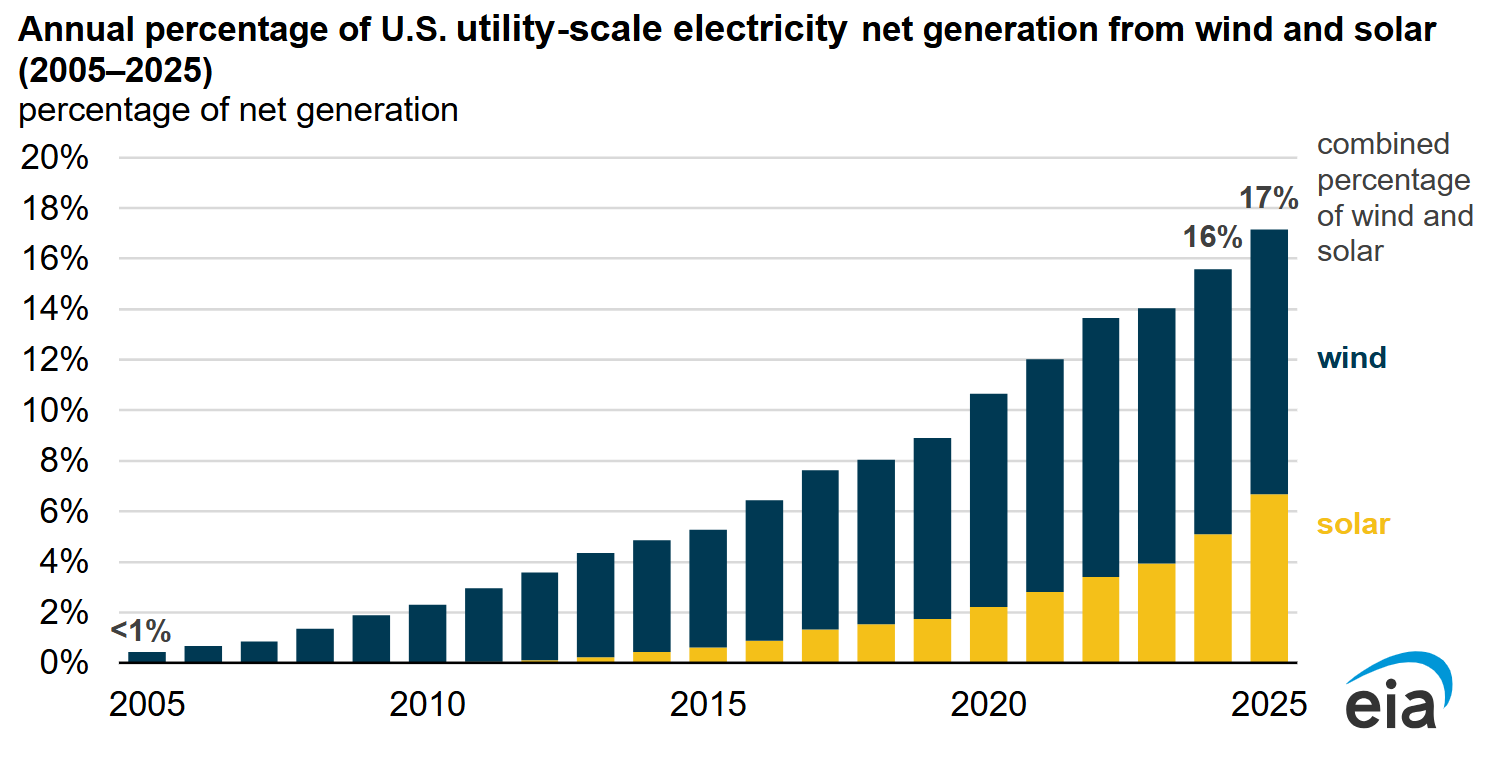
Your electricity is getting cleaner whether you noticed or not. Wind and utility-scale solar generated a record 760,000 gigawatt-hours in 2025—17% of all U.S. electricity—according to the U.S. Energy Information Administration. This milestone represents the fastest energy transition in American history, transforming from less than 1% renewable share in 2005.
From Zero to Hero in Twenty Years
This isn’t incremental progress—it’s a fundamental rewiring of how your lights turn on. Solar exploded 34% year-over-year while wind climbed a steady 3%, adding up to something unprecedented. When you include rooftop panels, renewables hit 25% of total generation.
Your Tesla charges differently now than it did five years ago, powered increasingly by sunshine and prairie winds instead of coal plants.
Solar Dominance Meets Wind Reliability
The numbers tell a story of complementary growth. Solar delivered 296,000 GWh while wind contributed 464,000 GWh, creating a tag-team approach to clean power. Battery installations jumped alongside them—15.77 gigawatts added in 2025 alone.
These massive lithium banks store excess afternoon solar for evening Netflix binges, turning intermittent power into reliable electricity.
“Dramatic growth by solar, wind, and battery storage is the key take-away,” says Ken Bossong, executive director of the SUN DAY Campaign. Record 50 gigawatts of new capacity came online in 2025.
The Reality Check
Yet baseload power plants—natural gas, coal, nuclear—remain the backbone keeping your devices running when the wind doesn’t blow. That 17% milestone sounds impressive until you realize intermittency still dominates energy planning discussions in utility boardrooms.
Policy risks loom large. Tax credit phase-outs and offshore wind delays could slow momentum, according to American Clean Power Association‘s JC Sandberg. The infrastructure revolution transforming your grid depends on consistent government support, not political whiplash.
This 20-year transformation from energy afterthought to major power source represents more than environmental progress. This represents the early stages of true energy independence—homegrown electricity that can’t be manipulated by foreign cartels or supply chain disruptions that affect fuel use.