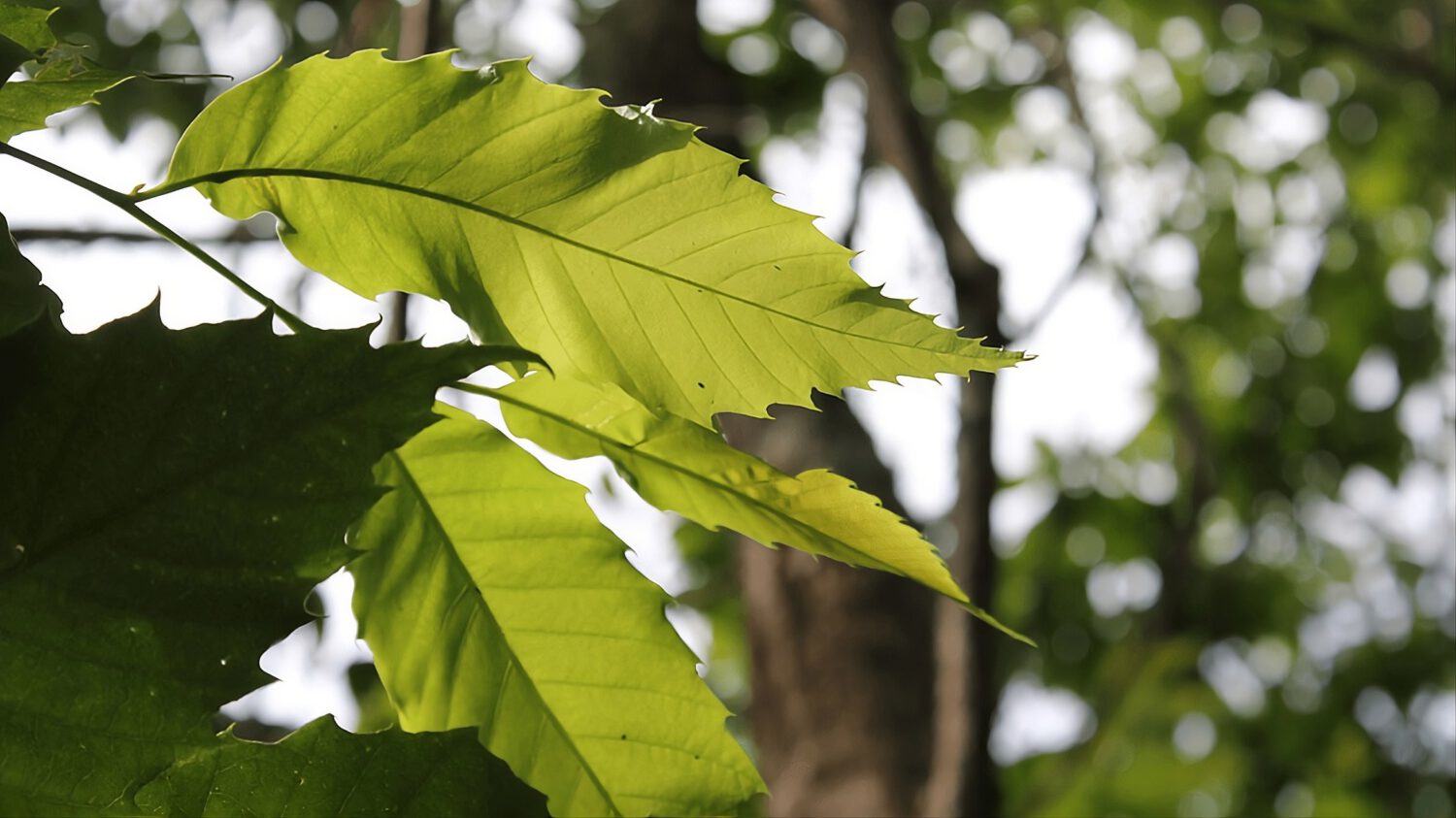
An AI infrastructure company is covering the cost to preserve chestnut and chinquapin trees at a shuttered West Virginia nursery. Gov. Patrick Morrisey announced on Oct. 10 that the trees at the former Clements State Tree Nursery in Mason County will be relocated within the property, with Nscale funding the work.
The nursery closed in 2021 after financial losses, but the trees retained conservation value for seed and sapling harvesting.
A Relocation Plan, Not a Removal
The trees will stay on the property, moved to a more suitable setting under professional supervision rather than cleared for development.
Professional arborists are expected to move the trees during the late-2027 dormant season, according to the governor’s office. Seed and sapling access will continue after the move, preserving the trees’ ongoing role in propagation.
The Genetic Safety Net Is Already Built
Conservation groups and state agencies have already secured backup genetic material beyond the nursery site.
Conservation groups and state agencies established multiple two-acre stands on state land, with two additional plots created using grafts and seedlings. The American Chestnut Foundation, the West Virginia Division of Natural Resources, the West Virginia Department of Agriculture, and the West Virginia Division of Forestry all participated in an Oct. 5 assessment. Their involvement extends to the broader preservation effort, creating a layered genetic safety net that does not depend on a single site.
Nscale’s Footprint and Who Pays
Nscale, not West Virginia taxpayers, is responsible for the full cost of preservation and relocation.
Nscale is developing an AI data-center and utility-grid project spanning up to 2,250 acres in Mason County, per local reporting from wchstv.com. The governor’s office said Nscale would cover the preservation and relocation costs. Local residents and conservation advocates raised concerns about the trees before the governor’s commitment was announced, drawing wider public attention to the issue.
If relocation succeeds in 2027, the trees and their genetic material could remain available to researchers and growers for years ahead, keeping one piece of Appalachian ecological heritage intact alongside a major technology project.