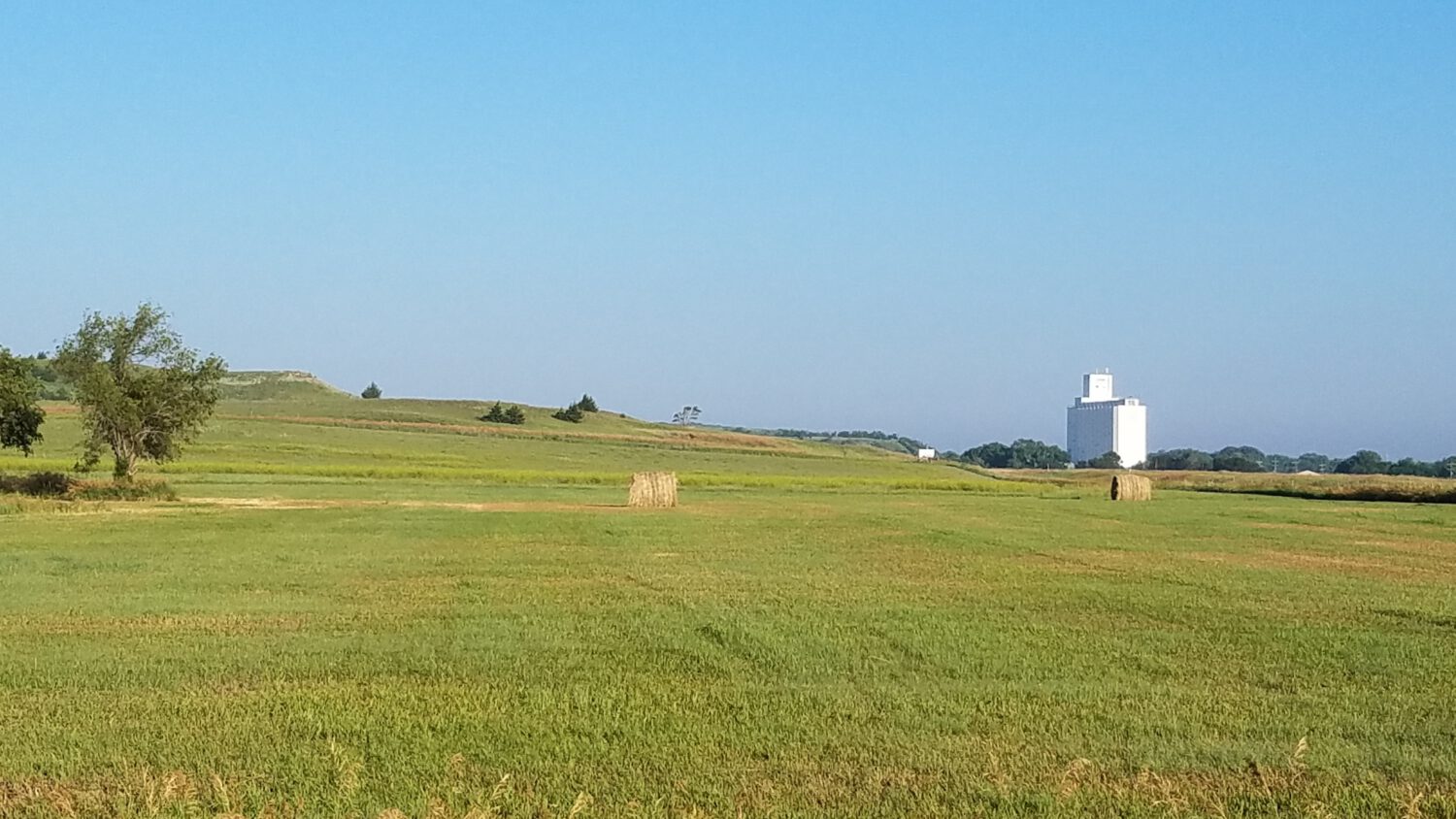
Where a Kansas wheat field, a Virginia cattle pasture, and a Texas plain once stretched flat to the horizon. Now there’s a substation, a battery wall, a row of server halls, and cooling towers where that land used to be.
Publicly reported proposals across Texas, Kansas, and Virginia place tens of thousands of rural acres under consideration or control for AI and hyperscale data-center development. That acreage spans projects at wildly different stages: acquired, leased, optioned, proposed for rezoning, or still entirely conceptual. The critical word is “yet”: none of it can honestly be called permanently converted farmland.
The Numbers, Unvarnished
The verified project ledger is large enough to be alarming on its own terms, without inflating it.
Zone Frontier’s Potter County, Texas ground lease covers approximately 4,077 acres. The company may designate only 200 to 800 of those acres for data-center facilities and related infrastructure, with at least 1,800 acres potentially supporting solar generation, battery storage, and related systems.
Alpha Digital Campus reportedly holds an option on roughly 3,400 Texas acres, with up to 2 gigawatts of planned co-located power generation. That figure is subject to an ERCOT interconnection study and has not been independently verified through primary documentation.
Caldwell Valley Technology Park near Lockhart is reported to propose approximately 3,000 acres with a power target exceeding 4 gigawatts and an initial delivery date of early 2028. As with the Alpha Digital Campus figures, these details come from project tracking reports rather than confirmed primary sources.
In De Soto, Kansas, Digital Realty has acquired approximately 1,440 acres at Astra Enterprise Park. The initial Astra North phase covers roughly 280 acres, with nine planned buildings.
Across the state line in Leavenworth County, Project Bluestem reportedly proposes approximately 1,000 to 1,100 acres and up to 1.2 gigawatts of demand. As of the most recent local reporting, no formal permit application had been filed, and the project remained conceptual.
In Virginia, Haven Oak Technology Park is reportedly seeking rezoning for approximately 986.9 acres in Dinwiddie County, a figure drawn from project reporting that has not been independently confirmed through county records. Google’s Botetourt County site, reportedly 312 acres purchased for a multi-phase campus, reflects the broader push of data-center development into western and southern Virginia.
“Campus acreage” and “developed acreage” are not the same number. Zone Frontier and Astra North illustrate that gap precisely: a 4,077-acre lease can coexist with a data-center footprint of 800 acres or less, and a 1,440-acre acquisition can begin with a 280-acre first phase.
What the Approval Process Isn’t Telling You
The criticism is not that data centers exist; it is that the public accounting stops at the server-hall door.
County commissioners reviewing rezoning requests rarely receive a consolidated picture of the full energy infrastructure each project requires. Utility interconnection studies run on a separate regulatory track from land-use review.
That gap means substations, gas generation, battery storage, and cooling infrastructure can all arrive in a community without ever appearing on the same approval document as the server halls they serve. The structural problem is not malice; it is a permitting architecture that was not designed for industrial systems of this scale.
Investment figures circulating in project reports compound the opacity. A reported $4 billion for Astra North and a reported $12.6 billion for Project Red Wolf are proposals, not completed capital expenditure. Presenting them as finished commitments obscures how much remains contingent on approvals that have not yet been granted.
The current disclosure situation resembles ordering off a menu where the listed price covers only the entrée. The sides, the service charge, and the infrastructure bill arrive after you have already committed. Communities across rural Texas, Kansas, and Virginia are being asked to vote on the entrée.
Jobs, Taxes, and the Fine Print
The economic case for these projects is real, and so are the conditions attached to it.
Developers and economic-development officials point to construction activity, tax revenue, utility investment, and permanent jobs. In regions where agricultural margins are already thin, those benefits carry genuine weight.
The counterweight is equally real. Hyperscale campuses can intensify competition for electricity, water, and transmission capacity in areas that previously had modest demand for all three. Tax incentive agreements can defer or reduce the very revenue that made a project attractive to the county in the first place. Infrastructure costs may then fall on existing ratepayers and taxpayers rather than on the developer building the facility.
Farmers, rural landowners, county commissioners, utilities, schools, conservation groups, and electricity customers all have standing in these decisions. Their interests are not identical, and treating them as a unified bloc misrepresents what is actually a layered set of trade-offs.
The Fix Is Not Complicated
Better disclosure rules would cost nothing and change everything about how these decisions get made.
Public approval processes should account for the full project envelope: substations, generation, storage, roads, and setbacks disclosed and reviewed together rather than filed piecemeal across separate agencies. Rezoning applications should include a binding breakdown of developed versus controlled acreage, so the distinction between a 4,077-acre lease and an 800-acre build site is visible to every commissioner casting a vote.
Interconnection and land-use review timelines should be coordinated at the county level rather than running on separate regulatory clocks. Investment and job-creation figures cited in economic-development agreements should be tied to verified, milestone-based reporting rather than announced totals that may never fully materialize.
Asking a rural community to approve a data center without disclosing the full energy infrastructure is the regulatory equivalent of posting a calorie count that only covers the bun. Everything else is still on the plate.
The most consequential decisions about where AI infrastructure is built will increasingly be made in county zoning hearings. If the public process only counts the server halls, the communities living next to everything else face a decision they were never actually allowed to make.