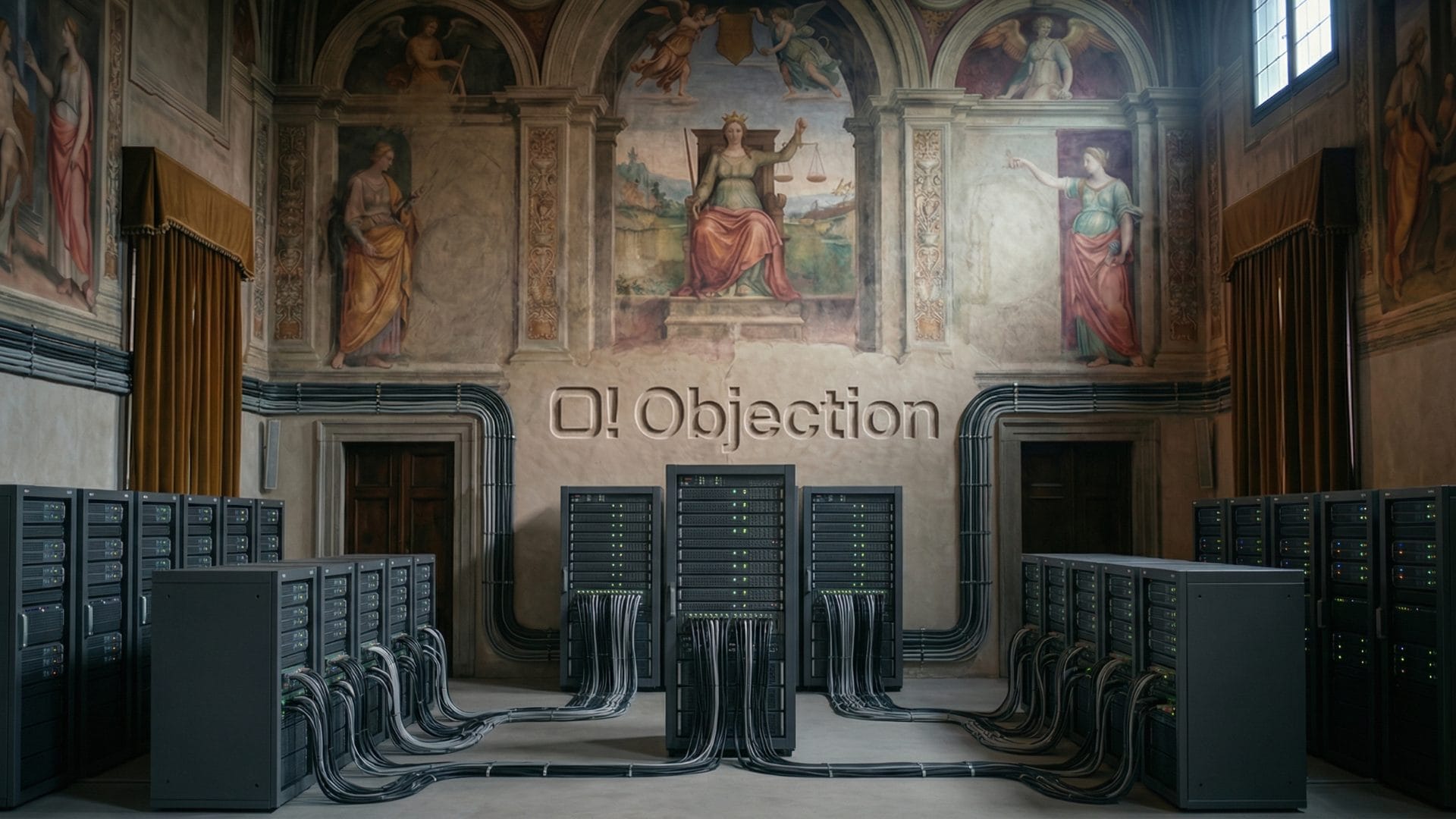
Media accountability feels broken when billionaires can secretly bankrupt entire outlets, but Peter Thiel’s latest venture promises a different approach to fact-checking journalism. Objection.ai offers anyone the chance to challenge news stories for around $2,000, complete with former intelligence operatives and AI-powered verdicts that arrive faster than your morning coffee order.
Silicon Valley’s Private Court System
Former intelligence operatives investigate stories while algorithms determine truth.
When you file an objection against any media statement, it triggers investigations by what the platform describes as former law enforcement agents and investigative journalists. An AI model then renders a verdict through their “Honor Index” system—faster than most people can fact-check a tweet. This numerical scoring system assigns trust ratings to outlets and reporters, creating permanent records regardless of whether journalists agreed to participate.
Co-founded by Aron D’Souza (Thiel’s partner in the 2016 Gawker lawsuit) and backed by Thiel alongside Balaji Srinivasan, Objection.ai has already targeted major outlets including:
- New York Times
- Wall Street Journal
- UK Mirror
While the pitch sounds reasonable—faster dispute resolution without expensive court battles—critics see something more troubling: weaponized fact-checking disguised as innovation.
When AI Meets Media Vendettas
Critics warn the platform enables harassment disguised as investigation.
You’ve probably noticed how online “fact-checking” often serves whoever’s paying for it. Objection.ai amplifies this problem by letting anyone trigger formal-sounding investigations against stories they dislike. Rather than working through courts, the platform bypasses traditional First Amendment protections by operating through private arbitration and public relations pressure.
This isn’t Thiel’s first media rodeo. His secret $10 million funding of Hulk Hogan’s privacy lawsuit bankrupted Gawker in 2016—not for publishing lies, but for invading privacy. Now he’s reframing that victory as “truth enforcement,” despite Gawker’s downfall having nothing to do with factual accuracy. D’Souza’s messaging positions their platform as correcting media failures amplified by clicks and algorithms, though critics argue this revises history since Gawker’s liability centered on privacy invasion, not inaccuracy.
The Chill Factor
Cheap challenges could flood newsrooms with costly distractions.
Legal experts worry about the chilling effect on investigative reporting. When challenging a story costs just $2,000 but defending it requires lawyers and resources most outlets can’t spare, the economics favor the wealthy and vindictive. Your local newsroom might think twice before investigating that controversial development project if they know it’ll trigger an expensive investigation cycle.
The broader concern extends beyond Thiel’s personal grievances with media coverage. This creates a scalable system where anyone with a few thousand dollars can weaponize artificial intelligence against journalism they find inconvenient. That’s not fact-checking—that’s power projection with a Silicon Valley gloss, potentially transforming how news organizations navigate accountability in an age where algorithms increasingly determine truth.