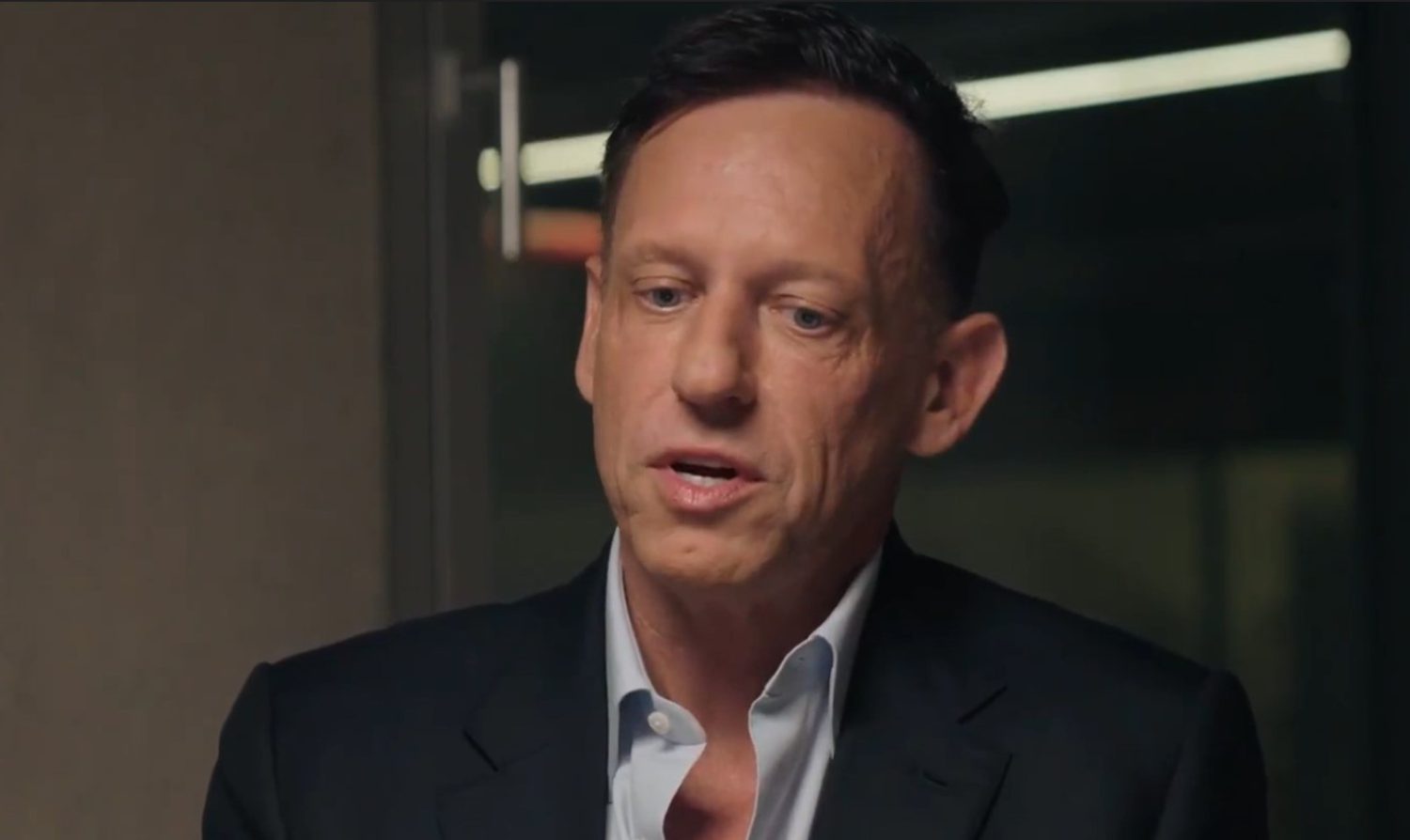
Slowing AI globally would require a coercive world government, and that government might be more dangerous than the technology itself. That is the argument Peter Thiel, PayPal co-founder and prominent technology investor, made in a September 2026 interview with Axel Springer CEO Mathias Döpfner, published amid a widening debate over how Western democracies can regulate AI without ceding ground to China.
The stakes reach beyond policy circles. Divergent regulatory outcomes could shape which AI products you can access, when companies deploy them, and what compliance costs get passed to consumers across jurisdictions.
Thiel’s Core Argument: Enforcement Requires Authority No One Should Have
Voluntary international coordination, he argues, cannot meaningfully constrain a technology that rival states are developing independently at full speed.
“In theory, you could slow it down if you had genuine, deep cooperation across the whole world,” Thiel said in the Döpfner interview, as reported by pjfp.com. “But I think that would require like a one world government with real teeth, real force.”
He immediately rejected that solution as worse than the problem. From his classical-liberal perspective, a centralized authority capable of enforcing AI restrictions across the United States, China, and the European Union would concentrate power in ways he views as unacceptable. This is Thiel’s argument, not a consensus position among governance experts.
The Pope, the Encyclical, and a Sharp Accusation
Thiel directed his sharpest language at Pope Leo XIV’s May 2026 encyclical, Magnifica Humanitas, calling it strategically damaging to Western AI interests.
The document calls for binding limits on AI, particularly in military applications. Available reporting does not establish that it seeks to halt AI development entirely.
Thiel characterized the encyclical as “anti-AI,” which is his description, not an independently verified account of the document’s scope. His strategic concern was asymmetric: democratic governments and their citizens might honor the pope’s call for restraint while China would not.
“The Communist Party of China is not going to listen to the pope,” Thiel said, according to Politico. “There’s a chance people in the US will. And so in effect, the Pope’s encyclical was working for the Communist party.”
He went further, telling Döpfner that the pope was “at least acting as a useful idiot for the CCP,” while adding he was not accusing Leo of being a Communist agent, as reported by The Telegraph. The “useful idiot” characterization is Thiel’s political accusation, not an objective finding about Pope Leo XIV’s motives or affiliations.
The Asymmetry Argument and Its Own Limits
Thiel’s central strategic concern is that restrictions enforceable within Western democracies, but ignored by Beijing, could disadvantage U.S. firms without reducing global AI risk.
That assessment is Thiel’s, not an established outcome of any specific regulatory proposal currently under consideration. The available research does not independently verify that any particular rule would produce that result.
Thiel also introduced a notable qualification in the same interview. Americans themselves are a significant source of AI backlash, he said, and he cautioned against attributing all domestic opposition to Chinese influence, according to Business Insider. His argument is about structural regulatory risk, not a claim that Beijing is orchestrating U.S. public opinion.
What the Debate Means in Practice
Divergent AI rules across major powers could significantly shape deployment timelines, compliance costs, and access to computing resources for companies and consumers in each jurisdiction.
No quantified market forecasts exist in the available reporting, and none should be assumed. Regulatory choices made in the coming years could significantly influence the competitive landscape for AI development across rival powers.
Whether international AI oversight can be coordinated across those powers without either a coercive central authority or a race to the bottom on safety standards remains genuinely unresolved. Thiel’s remarks sharpen the tension. The difficulty of the problem does not shrink because his framing of it is provocative.