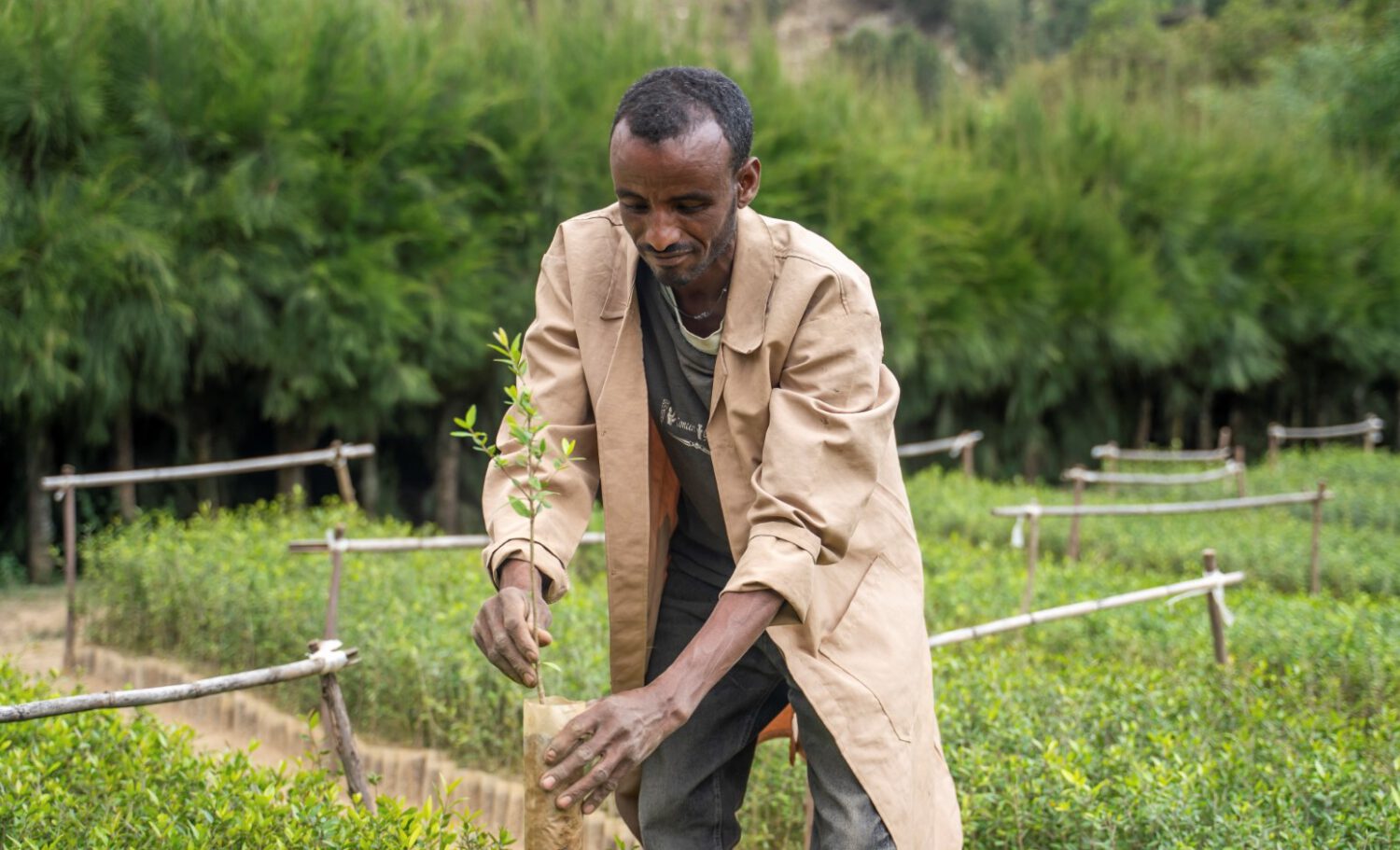
An area roughly the size of Kazakhstan is now documented as being under ecosystem restoration, according to a report co-published by the Food and Agriculture Organization, the UN Environment Programme, and the Secretariat of the Convention on Biological Diversity. That figure, 252 million hectares across 149 countries, represents the largest documented global restoration effort to date, covering terrestrial, freshwater, marine, and coastal ecosystems simultaneously.
The 252 million hectares reflect restoration projects that have been initiated and reported, not habitats that have fully regained their original ecological functions, species composition, or resilience. Readers should treat the figure as a measure of mobilization, not a declaration of recovery.
Regional and Ecosystem Gaps
Asia accounts for 192.2 million hectares of the documented total, with China alone reporting 127.4 million terrestrial hectares, followed by substantial reported areas in Mongolia and Kazakhstan. Africa follows with 36.3 million hectares, while Europe, North and Central America, South America, and Oceania each report between 3 and 9 million hectares.
Terrestrial restoration has reached nearly half of its relevant 2030 target. Marine and coastal restoration sits at roughly 23 percent of its benchmark, and freshwater restoration at approximately 5 percent, even though aquatic ecosystems are among the fastest-degrading on the planet.
Reporting gaps may also mean aquatic restoration figures are underestimated, particularly where national monitoring systems are inconsistent.
A Structural Financing Shortfall
Annual restoration finance currently stands at approximately $64 billion and must rise to $296 billion by 2030, according to the report. The highest estimated annual investment needs fall in agroforestry at $87 billion, restorative reforestation at $52 billion, peatland restoration at $44 billion, and seagrass restoration at $28 billion.
Without that capital, the pace of implementation would need to accelerate substantially. That threshold is defined by the Kunming-Montreal Global Biodiversity Framework, which calls for placing 30 percent of degraded ecosystems under effective restoration by 2030.
What Working Restoration Looks Like
The report cites species recovery involving mountain gorillas in East Africa, jaguars in Brazil, snow leopards in Kyrgyzstan, and Ganges River dolphins in India as examples of measurable ecological progress. More than one million green jobs have been created through documented restoration activity, and investment scaled to meet 2030 commitments could generate up to 32 million additional jobs worldwide.
“We cannot expect to fix nature with one hand while we destroy it with the other one.” Astrid Schomaker, Executive Secretary of the Convention on Biological Diversity. Schomaker called on governments to address the underlying drivers of degradation while investing in monitoring systems capable of confirming that restoration gains endure.
From Projects to Economies
The report argues that lasting recovery requires a shift from isolated restoration projects toward integrated “restoration economies.” In that model, land tenure security, Indigenous and local community leadership, and long-term ecological monitoring sustain gains over time.
FAO Director-General QU Dongyu offered a direct assessment of where things stand: “Restoration works.”