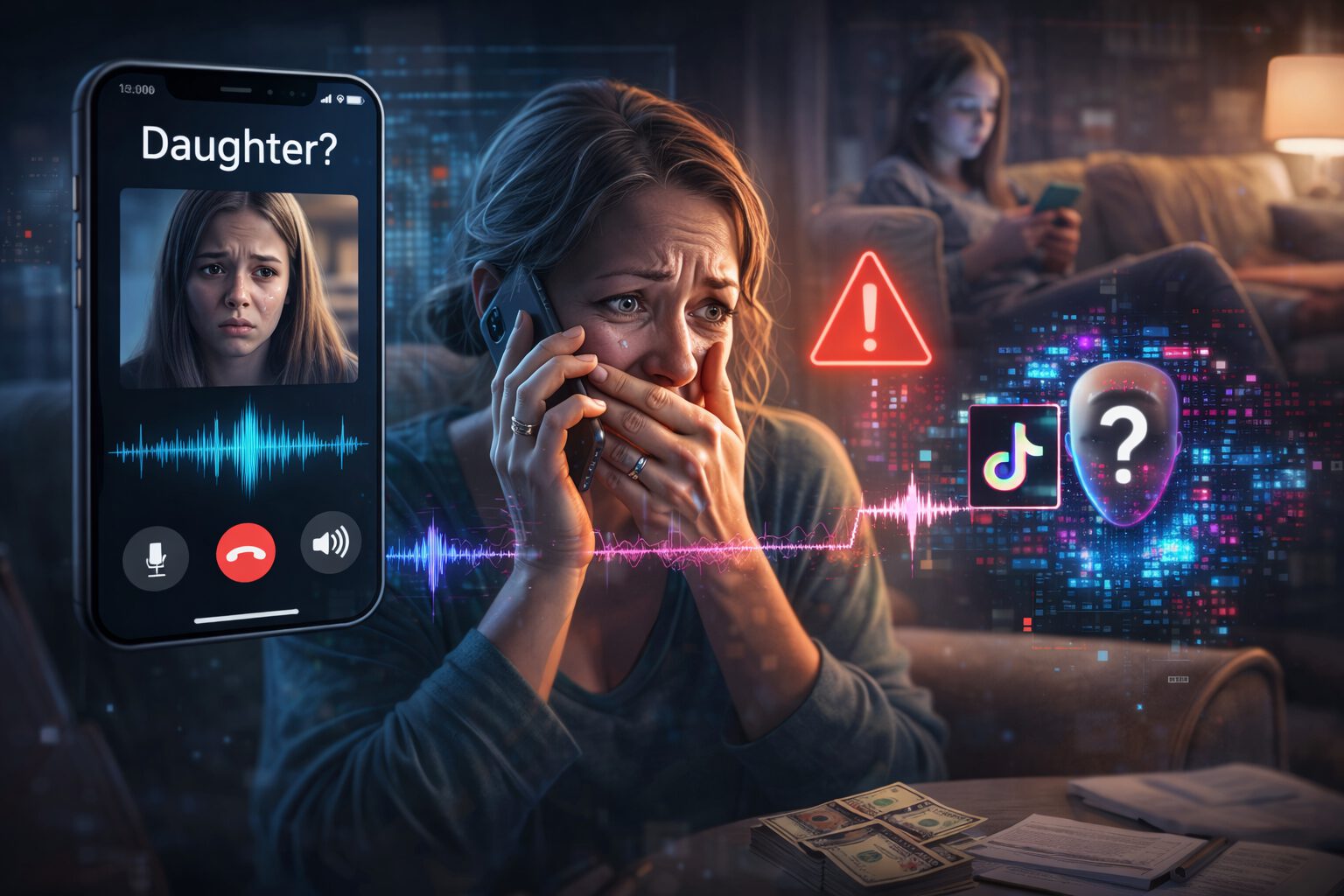
A Florida mother lost fifteen grand to her “daughter’s” desperate voice—except her daughter was home safe, and the voice was AI-generated from TikTok clips.
The New Family Emergency Playbook
Scammers need just 30 seconds of social media audio to clone voices perfectly.
A grandmother posts a video of you singing happy birthday. Within hours, criminals have scraped that audio and fed it into an AI voice cloning app. The technology costs under $10 and takes minutes to deploy, according to cybersecurity experts tracking these scams.
The playbook is devastatingly simple:
- Clone the voice
- Spoof a local phone number for credibility
- Script a personalized emergency
“Grandma, I’m in jail” becomes unnervingly convincing when it sounds exactly like your voice, complete with your speech patterns and emotional inflections.
Tools from companies like ElevenLabs have democratized voice synthesis beyond recognition. What once required Hollywood-level resources now fits in a smartphone app.
The Billion-Dollar Family Business
Seniors lost nearly $5 billion to cybercrime in 2024, with AI supercharging emotional manipulation.
The numbers tell a brutal story. Victims over 60 lost $4.9 billion to cybercrime in 2024—a 43% jump from the previous year, according to FBI data. Hiya’s latest report found one-third of respondents across multiple countries encountered deepfake voice fraud, with victims losing an average of $6,000.
A Canadian grandmother nearly wired $9,000 after receiving a call from her “grandson” claiming arrest. Only a suspicious bank teller stopped the transfer. In Suffolk County, New York, multiple seniors fell victim to similar AI-powered scams in early 2025.
“When humans get afraid, we get stupid,” explains Chuck Herrin from cybersecurity firm F5. The FBI notes that AI has dramatically increased the “believability” of criminal scams by exploiting our deepest emotional triggers.
Your Voice, Their Weapon
Private social media settings and family code words provide the strongest defense.
Protecting yourself requires rethinking your digital footprint and establishing verification protocols with loved ones. Set social media profiles to private immediately—those family videos are reconnaissance material for scammers.
Establish code words with family members that only you would know. When emergency calls arrive demanding immediate wire transfers or gift cards, verify through known contact methods before acting.
The FCC has deemed AI-generated robocalls illegal, and victims can report incidents to the FBI’s IC3.gov. Your family’s love shouldn’t become a weapon against you. These scammers bet on emotional override defeating rational thought—but awareness breaks their spell.