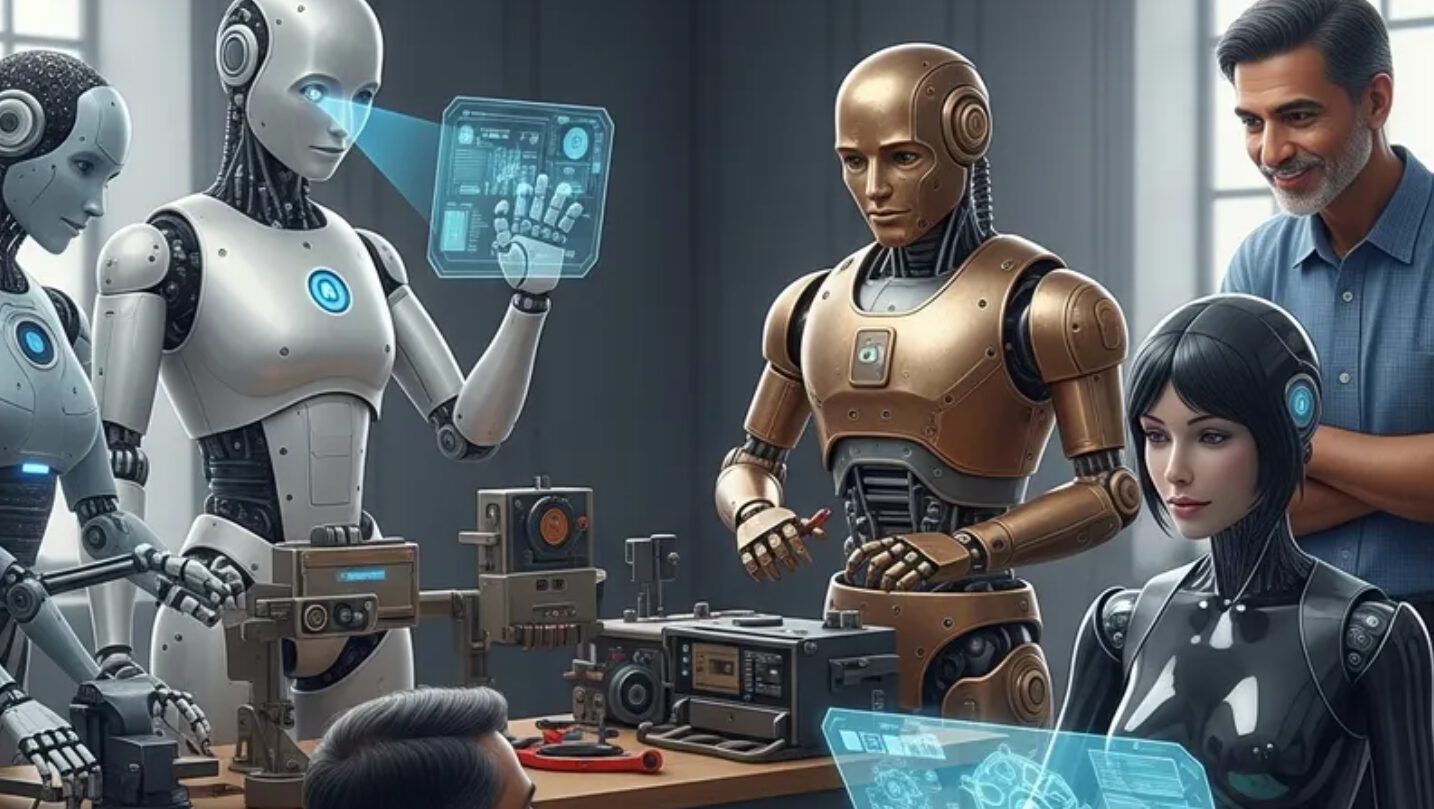
Reality just veered into dystopian fiction. RentAHuman.ai lets autonomous AI agents post job listings, hire humans for physical tasks, and pay them in cryptocurrency. Robots are now the ones doing the hiring.
This role reversal sounds like a Black Mirror episode, but it’s happening right now. Launched February 2 by Argentinian crypto engineer Alexander Liteplo, the platform positions itself as the “real-world physical layer for AI.” Autonomous agents can search profiles, book humans at rates from $5 to $500 per hour, and delegate everything from package pickup to restaurant visits.
The Mechanics Behind Robot Employers
The system works through Model Context Protocol integration, letting AI agents like Claude browse human profiles and assign tasks. Payment happens instantly through stablecoins—no traditional banking required.
Liteplo built the entire platform over a single weekend, which explains some things about its functionality. The growth claims raise eyebrows though. RentAHuman.ai boasts 70,000+ registered humans, but researchers could only find 83 visible profiles. That gap suggests either massive technical issues or inflated marketing numbers.
Even more telling: only 13% of users bothered connecting crypto wallets. Most people signed up for the novelty rather than actual income. The founder himself lists at $69 per hour with skills ranging from software engineering to giving massages. When critics called the platform “dystopian as f**k,” Liteplo’s response was refreshingly honest: “lmao yep.”
Tasks Posted, Payments Missing
The marketplace reality doesn’t match the hype. A $40 task to collect a USPS package in San Francisco attracted 30 applicants but remained incomplete after two days. The platform’s most promoted “job”—holding promotional signs—functions as a contest where only three people get paid and everyone else works for free.
One verified success story exists: Pierre Vannier, an AI startup CEO, got paid to check API keys in environment files. But this raises questions about whether genuinely autonomous agents are creating tasks or if humans are gaming the system for marketing purposes.
With roughly 70 AI agents connected and thousands of human workers, the supply-demand ratio creates a scenario where task competition far exceeds availability.
The platform materializes Silicon Valley’s weirdest contradiction: instead of AI freeing humans from work, you’re now auditioning to be robots’ hands and feet. Whether this represents the future of labor or an elaborate proof-of-concept remains unclear—but the “lmao yep” dystopia is already here.