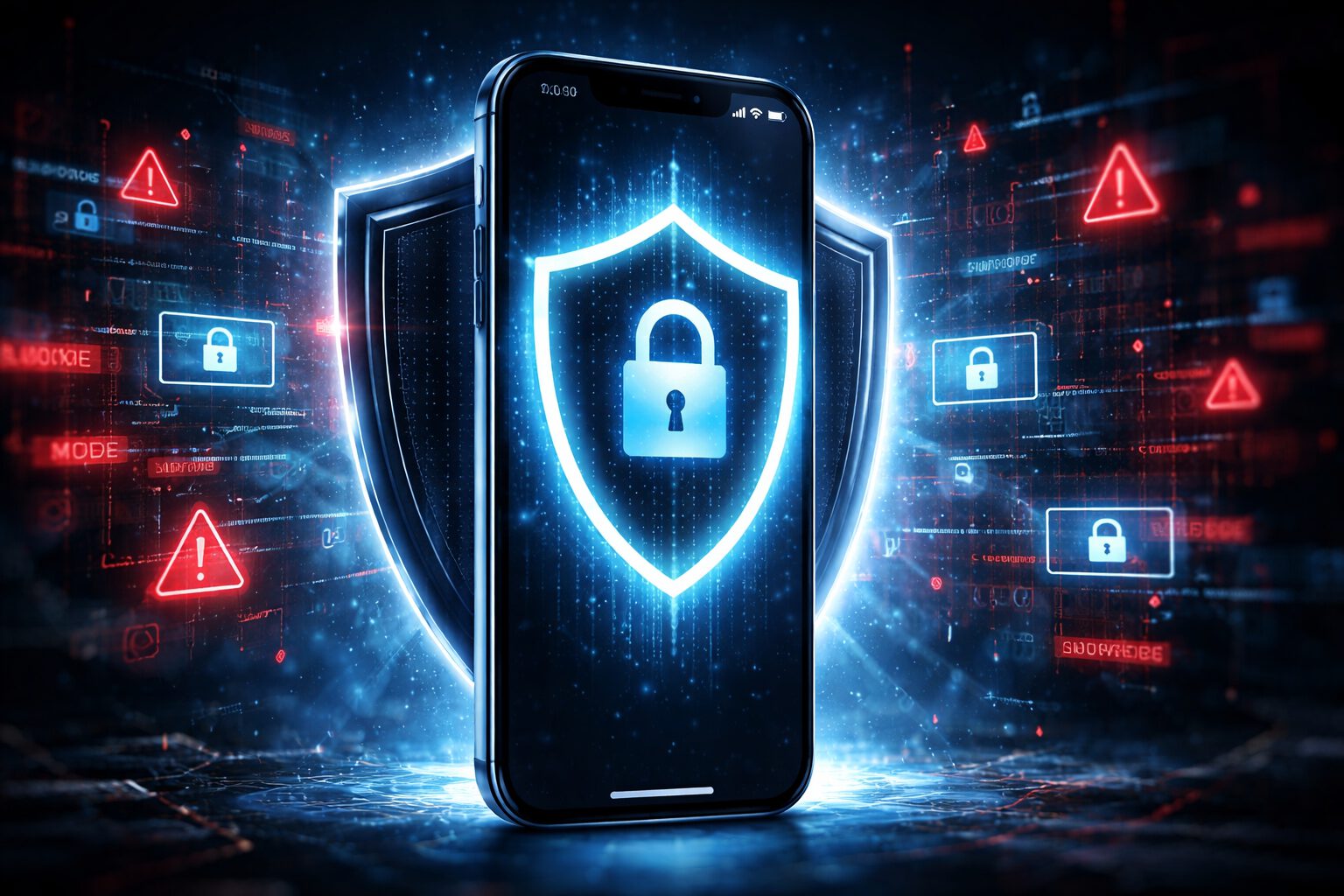
Sophisticated hackers targeting journalists and activists have turned iPhones into surveillance tools, but Apple’s Lockdown Mode slams the door on these digital intrusions. This emergency-level security feature transforms your device into a hardened fortress, blocking the attack vectors that state-sponsored spyware exploits to infiltrate devices.
What Lockdown Mode Actually Does
Think of it as putting your iPhone in witness protection mode.
Lockdown Mode strips away features that create vulnerabilities:
- Message attachments get blocked (except basic images, video, and audio)
- Advanced web technologies like JavaScript JIT compilation get disabled because hackers love exploiting them
- Your photos automatically lose location data when shared
- FaceTime calls from unknown numbers won’t ring through
Research organizations like Citizen Lab confirm this approach works. Lockdown Mode has successfully defended against documented zero-click exploits including BLASTPASS and iLeakage—attacks that require zero user interaction to compromise devices.
Activating Your Digital Shield
Five taps and a restart transforms your security posture completely.
- Navigate to Settings, then Privacy & Security
- Scroll to the bottom and tap Lockdown Mode
- Hit “Turn On Lockdown Mode,” review the restrictions
- Tap “Turn On & Restart”
- Enter your passcode when prompted
Your device restarts with Lockdown Mode active. If you own an Apple Watch running watchOS 10 or later, it automatically inherits the same protections. The entire process reverses just as easily—this isn’t a permanent commitment.
The Price of Enhanced Security
Enhanced security comes with genuine usability trade-offs you’ll notice immediately.
Your iPhone experience changes significantly:
- Link previews in Messages disappear—you’ll copy-paste URLs manually
- Websites may display incorrectly or stop functioning entirely due to disabled web technologies
- GIF sharing vanishes
- Shared photo albums become inaccessible
- No SMS autofill for two-factor codes
- Blocked message attachments
- Disabled Game Center
Whether this digital adjustment serves your needs depends on your actual threat model versus tolerance for inconvenience.
Selective Security Exceptions
You can exempt specific websites and apps when security meets practical necessity.
Lockdown Mode allows targeted exemptions for essential services. In Safari, tap the rectangle icon in the URL bar, select website settings, and disable Lockdown Mode for that specific site. For apps, visit Settings > Privacy & Security > Lockdown Mode > Configure Web Browsing.
Exemptions create security trade-offs—you’re essentially saying “trust this service more than others.” Use them judiciously for work-critical platforms or frequently-used services that break under restrictions.
Lockdown Mode makes sense for journalists covering authoritarian regimes, activists in hostile environments, or anyone traveling to surveillance-heavy regions. For everyone else, standard iOS security probably suffices.