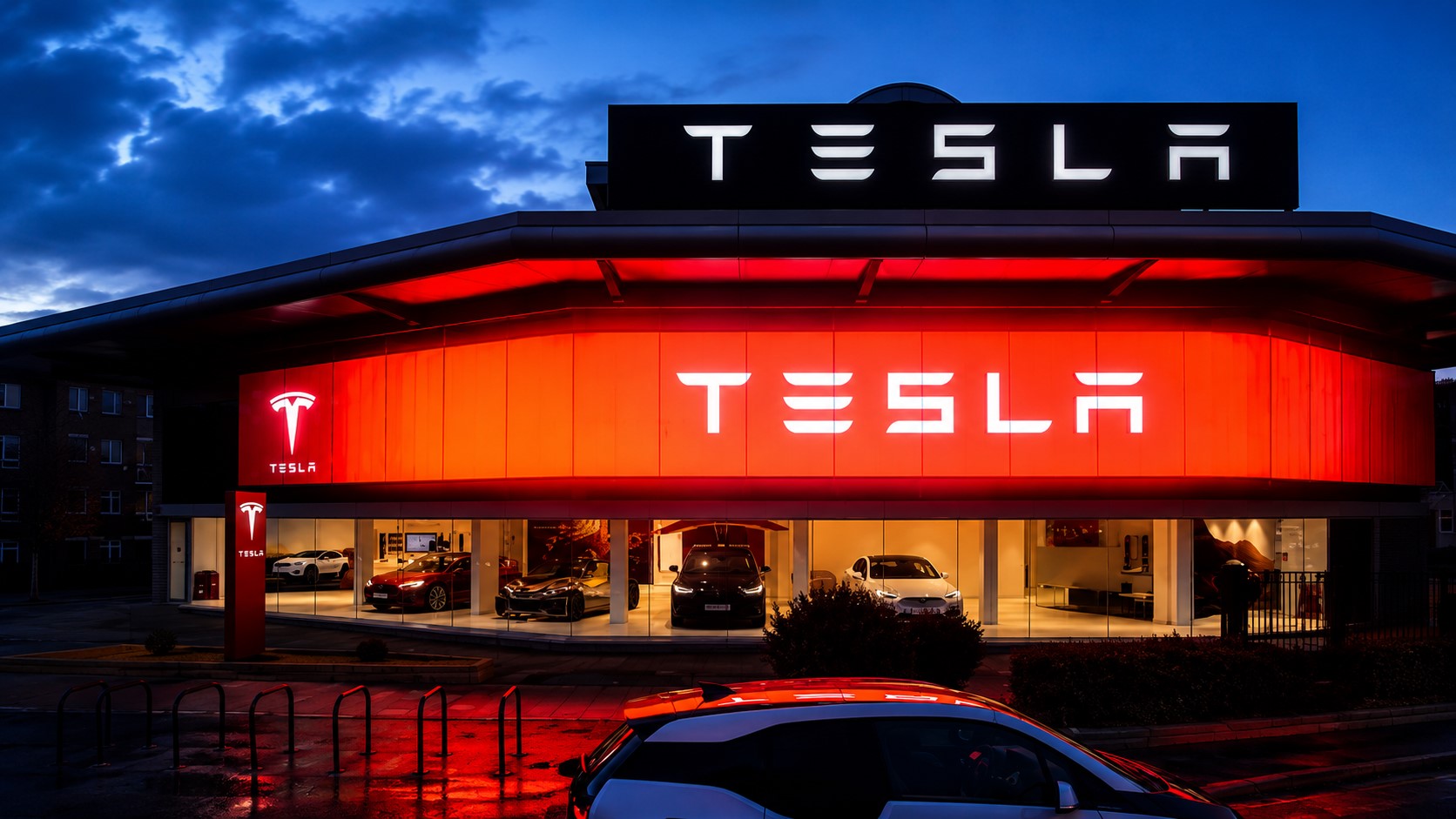
Revenue up 26%. Net income down 5%. Free cash flow negative $1 billion. Tesla’s Q2 2025 numbers read like a company sprinting in two directions at once — growing fast on top while bleeding cash underneath. The reason is straightforward: Tesla quietly removed “volume production in 2026” language for nearly every next-generation product on its roadmap, according to its second-quarter shareholder letter. For shareholders and industry analysts alike, the concern is not demand — it’s whether the cost structure can survive timelines that keep drifting.
The Bill Comes Due
Spending has more than doubled as Tesla bets everything on an industrial ramp that keeps sliding right.
Q2 revenue reached $28.2 billion. Automotive revenue hit $20.5 billion on over 480,000 deliveries. Operating expenses surged 47% to $4.3 billion, and capital expenditures more than doubled. Capex is projected to hit $25 billion in 2026 — roughly three times Tesla’s historical spending level. CFO Vaibhav Taneja previously warned that negative cash flow would persist for the remainder of the year. The math here looks less like disciplined investment and more like an escalating production bet where the payoff keeps moving to the next chapter.
Key timeline shifts from the shareholder letter:
- Cybercab, Tesla Semi, and Megapack 3 no longer target volume production in 2026
- Optimus volume production language also removed from prior guidance
- First production Cybercabs have started in Austin, but Semi and Optimus lines are still being built
- 4680 battery cell production remains the central bottleneck for Cybercab and Semi scaling
Musk acknowledged on Wednesday that Optimus will be “the hardest product Tesla has ever tried to scale manufacturing for” because “everything on the robot is new.” Reuters reported in January that Musk described early Cybercab and Optimus production as “agonizingly slow.” This isn’t abandonment. It’s a longer, more expensive slog than previously advertised — and that distinction matters enormously for anyone modeling Tesla’s near-term cash position. The challenges Tesla faces here mirror broader difficulties in the humanoid robot industry, where scaling manufacturing remains an unsolved problem.
Where the Money Actually Works
Energy storage revenue and self-driving subscriptions offer real counterweight to the mounting spending pressure.
Not everything is red ink. Energy storage and solar revenue climbed 13% to $3.1 billion. Full Self-Driving (Supervised) subscriptions reached 1.48 million, up 56% year over year. The near-term revenue engine runs solidly. The pressure point, for shareholders and industry watchers alike, is whether the cost structure holds while timelines keep shifting.
Tesla is essentially asking stakeholders to fund a second founding. The revenue is real. So is the burn rate. Whether the AI and robotics payoff arrives before patience expires — that’s the $25 billion question nobody at Tesla can answer yet.