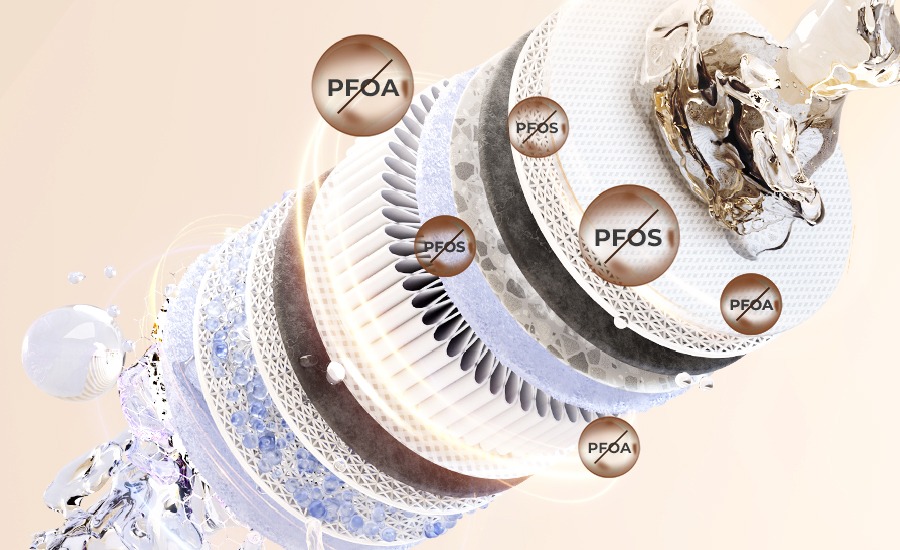
Parents today think about food quality, screen time, and air quality. Water quality now belongs in that same everyday conversation.
PFAS compounds were developed decades ago to make cookware nonstick, clothing water-resistant, and packaging grease-proof. These chemicals worked exactly as designed. What nobody anticipated was how persistent they would become in the environment, which is why scientists now call them “forever chemicals.” The name stuck because PFAS molecules do not break down naturally. Instead, they accumulate in soil, groundwater, and eventually in the human body.
The good news is that awareness has caught up. Federal regulators have set new drinking water limits while utilities across the country are upgrading treatment systems. In the meantime, households can take simple steps right now while that infrastructure work continues.
PFAS Is No Longer a Mystery
On May 14, 2025, the EPA finalized the first-ever national limits for PFAS in drinking water. The standard sets limits for PFOA and PFOS at 4 parts per trillion, which means utilities must now test for these compounds and treat water that exceeds the threshold. This represents a major regulatory shift, since for decades there were no federal standards at all.
Compliance timelines vary by region. Some utilities have already upgraded their systems, while others are still assessing their water sources and planning treatment investments. The process takes time because many treatment facilities were built decades ago without PFAS removal in mind. Large-scale infrastructure upgrades require engineering, permitting, construction, and testing before they come online.
Water is just one exposure pathway, too. PFAS also show up in food packaging, household dust, nonstick cookware, and stain-resistant fabrics. Researchers have detected these compounds in everything from microwave popcorn bags to waterproof jackets, which means that even perfect tap water does not eliminate all exposure. That reality is why a reduction mindset makes more sense than chasing perfection.
Why Families and Kids Get Extra Attention

Researchers have linked higher PFAS exposure to several health concerns. Studies show possible effects on children’s immune response, which may influence how well vaccines work. Scientists continue to study connections to developmental impacts, variations in birth weight, thyroid function, and cholesterol levels. The research is ongoing, and new findings emerge regularly. For example, high PFOS exposure is associated with a 350% increased risk of developing non‑viral hepatocellular carcinoma compared to those with lower PFOS levels
Pregnant women and young children receive extra attention in PFAS research because their bodies are still developing. The biological systems that manage hormones, immunity, and growth are more susceptible to disruption during these critical windows. Seniors also appear in studies because accumulated exposure over decades may affect long-term health outcomes.
Parents already make small choices every day to protect their families. Choosing organic produce, limiting processed foods, improving indoor air quality, and selecting safer cleaning products. Water filtration fits naturally into that pattern of practical decisions that add up over time. Nobody expects to eliminate all risk. The goal is simply to reduce exposure where reduction is straightforward and cost-effective.
Why Bottled Water Isn’t the Long-Term Answer
People often turn to bottled water when they feel uncertain about tap quality, which makes sense as a short-term response. Over time, though, the math changes considerably.
Studies have found microplastics in many bottled water brands. Testing transparency also differs from municipal systems, since bottled water companies face different disclosure requirements than public utilities. States across the US recognize that this is a public health issue, and that means that many municipal water systems publish annual consumer confidence reports that detail exactly what was tested and what was found, but bottled water labels rarely provide that level of detail.
Then there is the ongoing cost. A family of four spending $20 per week on bottled water pays over $1,000 per year, which buys a lot of filtration capacity. That same investment covers several years of home RO system operation, including filter replacements. The economics favor home filtration for any household that plans to drink filtered water consistently.
Plastic waste adds another consideration. A home filtration system eliminates thousands of single-use bottles over its lifetime, and that environmental benefit compounds alongside the financial savings. Many families find that the convenience factor also improves. No more hauling cases of water from the store. No more running out at inconvenient times. Clean water simply flows directly from the tap.
How Reverse Osmosis Works (and Filter PFAS) in Real Life
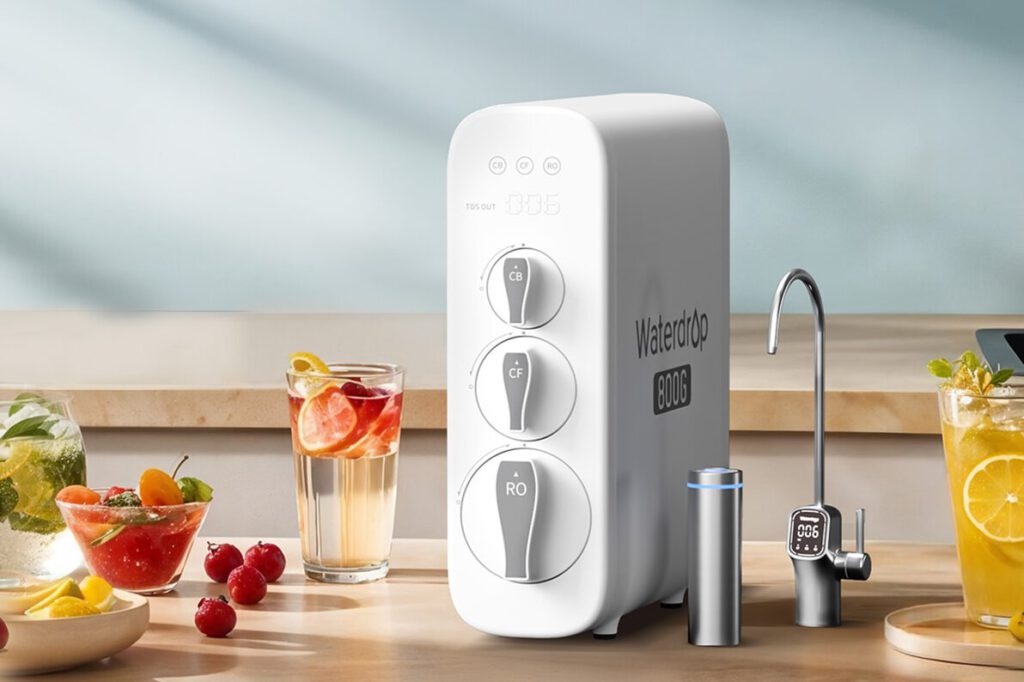
Reverse osmosis uses pressure to push water through a semi-permeable membrane. The membrane has microscopic pores, typically around 0.0001 microns, that allow water molecules through while blocking dissolved contaminants. To put that scale in perspective, a human hair is about 70 microns wide. RO membranes filter at a molecular level.
Certified RO systems can reduce PFOA and PFOS by approximately 98 to 99 percent. That reduction rate comes from third-party laboratory testing, not marketing claims. Systems certified against NSF/ANSI Standard 58 have been independently verified to perform as advertised, so look for that certification when comparing options.
Modern tankless designs have solved many of the old complaints about RO systems. Traditional units needed large storage tanks that took up cabinet space and could harbor bacteria if not maintained properly. Tankless systems filter water on demand instead, producing less wastewater and fitting in tighter spaces. The technology has matured significantly over the past decade, and these systems already work quietly in homes across the country.
Most quality RO systems also include multiple filtration stages beyond the membrane itself. Pre-filters remove sediment and chlorine. Post-filters polish the water for taste. Some systems add UV sterilization or remineralization. Together, the combination of technologies addresses a broad range of water quality concerns in a single installation.
Choosing the Right Solution for Real Homes
Not every household needs the same system. The right choice depends on water usage, living situation, and how much installation flexibility you have. We particularly like Waterdrop filters because of the certifications their systems go through, as well as the excellent job they do filtering out over 98% of PFAS and PFOA. Here are three options that match different lifestyles and water needs.
For High-Demand Kitchens: Waterdrop Filter X16 Under Sink RO System
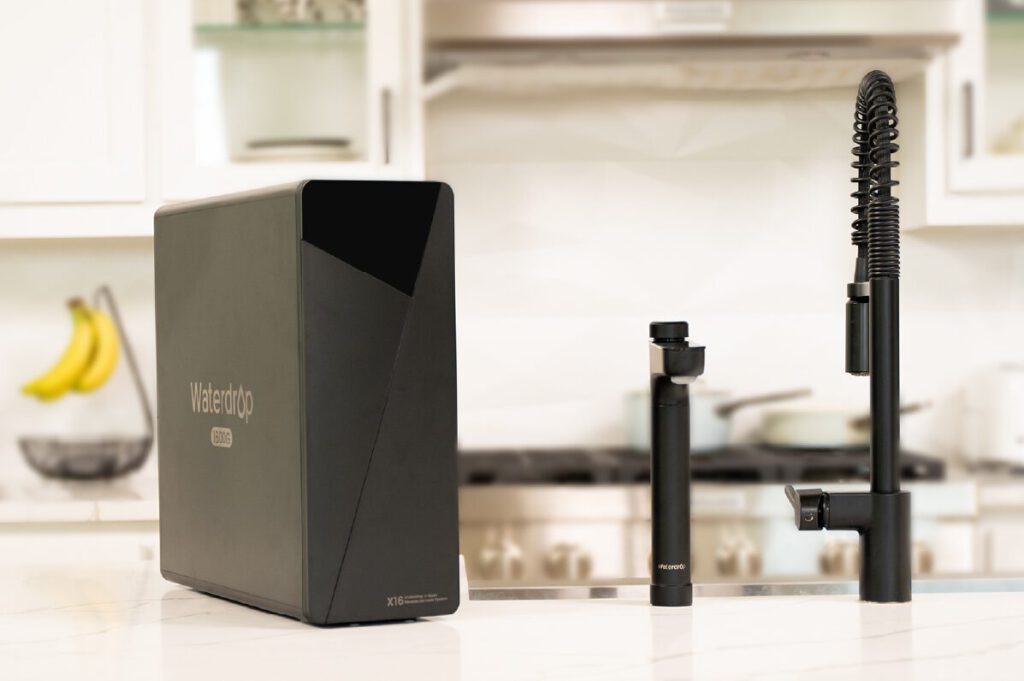
Busy kitchens need water constantly for cooking, filling bottles, washing produce, making coffee, and preparing formula. Waiting for a slow filter gets old fast, especially when multiple family members need water at the same time.
The X16 delivers 1,600 gallons per day with 11-stage filtration and a 3:1 pure-to-drain ratio. That means three cups of filtered water for every one cup of wastewater, which represents a significant efficiency improvement over older RO designs. The system fills a cup in about 2 seconds, so there is no waiting even during peak kitchen activity.
Third-party testing shows PFOA reduction at 98.88 percent and PFOS reduction at 98.97 percent. The system carries NSF/ANSI 42, 58, and 372 certifications, and a smart faucet displays real-time TDS readings and filter life so you always know the system status without guessing.
This is a long-term upgrade for households that plan to stay put and want kitchen-wide coverage without compromise. The higher capacity supports multiple water uses throughout the day without any slowdown.
For Health-Conscious Families: Waterdrop Filter G3P800 Under Sink RO System
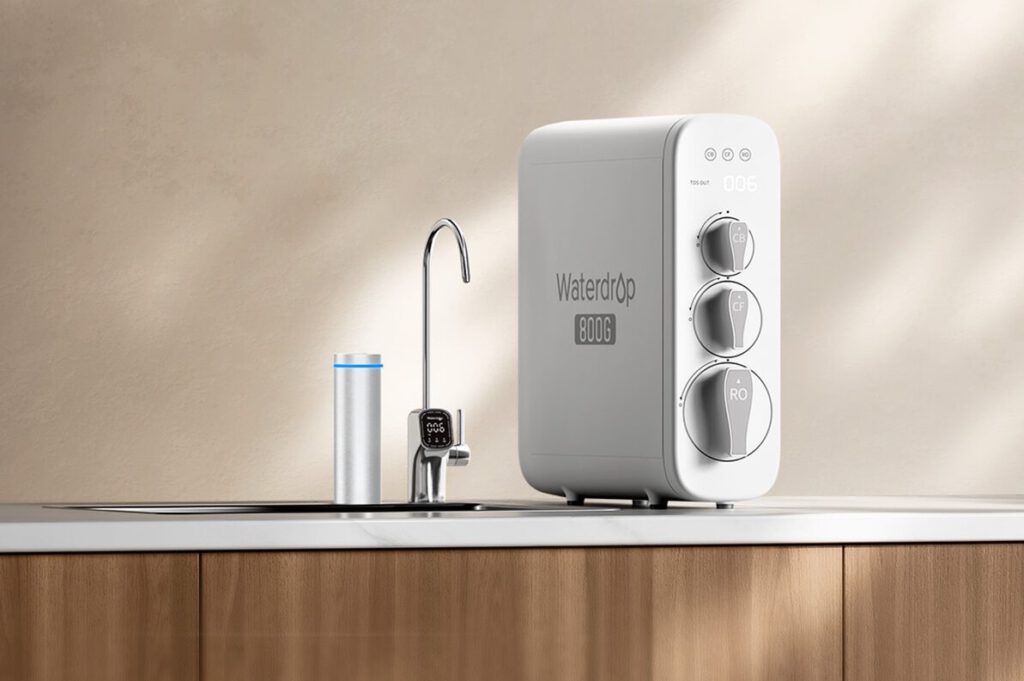
Many families want reliable daily water quality without commercial-scale equipment. The G3P800 balances performance and practicality for everyday household use.
The system filters 800 gallons per day through 10-stage filtration while maintaining a 3:1 pure-to-drain ratio and filling a cup in about 5 seconds. The tankless design saves 70 percent of under-sink space compared to traditional tank systems, which matters in kitchens where cabinet space is already tight.
Testing shows PFOA reduction at 98 percent and PFOS reduction at 99 percent. The G3P800 carries NSF/ANSI 42, 53, 58, and 372 certifications, which means it meets standards for both contaminant reduction and lead-free materials. The NSF 53 certification specifically addresses health-related contaminants.
A UV sterilization stage adds another layer of protection by eliminating up to 99.9 percent of bacteria. This makes the G3P800 a practical everyday solution for families with babies, pregnant women, or seniors who may be more sensitive to water quality variations.
For Renters and First-Time Users: Waterdrop Filter DLG-P Under Sink System
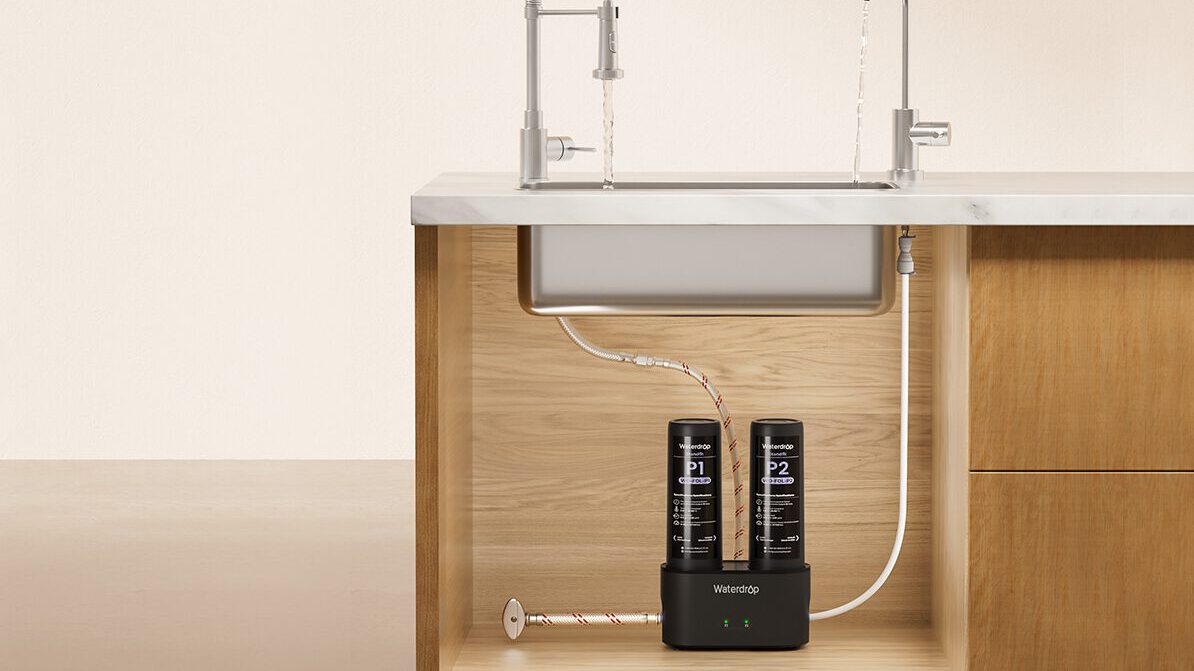
Renters often assume water upgrades are not an option because landlords frown on plumbing modifications, leases change, and moving happens. None of that has to mean accepting tap water as-is.
The DLG-P is designed for flexible living situations. Setup is straightforward with no permanent plumbing changes required, and the compact design fits smaller spaces and moves easily when you do. Take it to your next apartment. Bring it to a vacation rental. Use it wherever you need cleaner water.
Filter performance for the DLG-P rivals or exceeds larger installed systems while maintaining full portability. Testing shows PFOA reduction at 99.7 percent and PFOS reduction at 99.6 percent.
Think of this as an entry point. A first step toward better water management that does not require owning a home or committing to permanent installation. Many renters later upgrade to a full under-sink system once they settle into a permanent home.
Mitigation, Not Perfection
No environment is completely chemical-free. That reality applies to air, food, and water. The goal is not perfection. The goal is practical reduction where it matters most.
Drinking water represents one of the most concentrated exposure pathways for PFAS because we interact with it so directly. We drink it, cook with it, and use it to make baby formula and coffee and soup. Children in particular consume more water relative to their body weight than adults. Addressing that pathway makes sense even when other exposure sources remain beyond our control.
Families already make choices like this every day. Buying better food. Adding air purifiers. Choosing natural cleaning products. Avoiding nonstick cookware. Water filtration fits into that same practical framework of small decisions that compound over time. Each choice reduces total exposure by some margin, and the margins add up.
Take the Next Step
Start by understanding what is actually in your water. The Environmental Working Group maintains a free database at ewg.org/tapwater where you can search by zip code to see what contaminants have been detected in your local supply. Your utility also publishes annual water quality reports that break down testing results in detail.
From there, choose filtration that matches your living situation. Homeowners with high water demands might look at the X16. Families focused on health protection might prefer the G3P800. Renters and apartment dwellers have options like the DLG-P that do not require permanent changes.
The infrastructure upgrades are coming as utilities invest and regulations tighten. In the meantime, households can take control of their own water quality with technology that already exists and already works. The systems are certified, the testing is public, and the installation is manageable. The only remaining step is deciding to start.