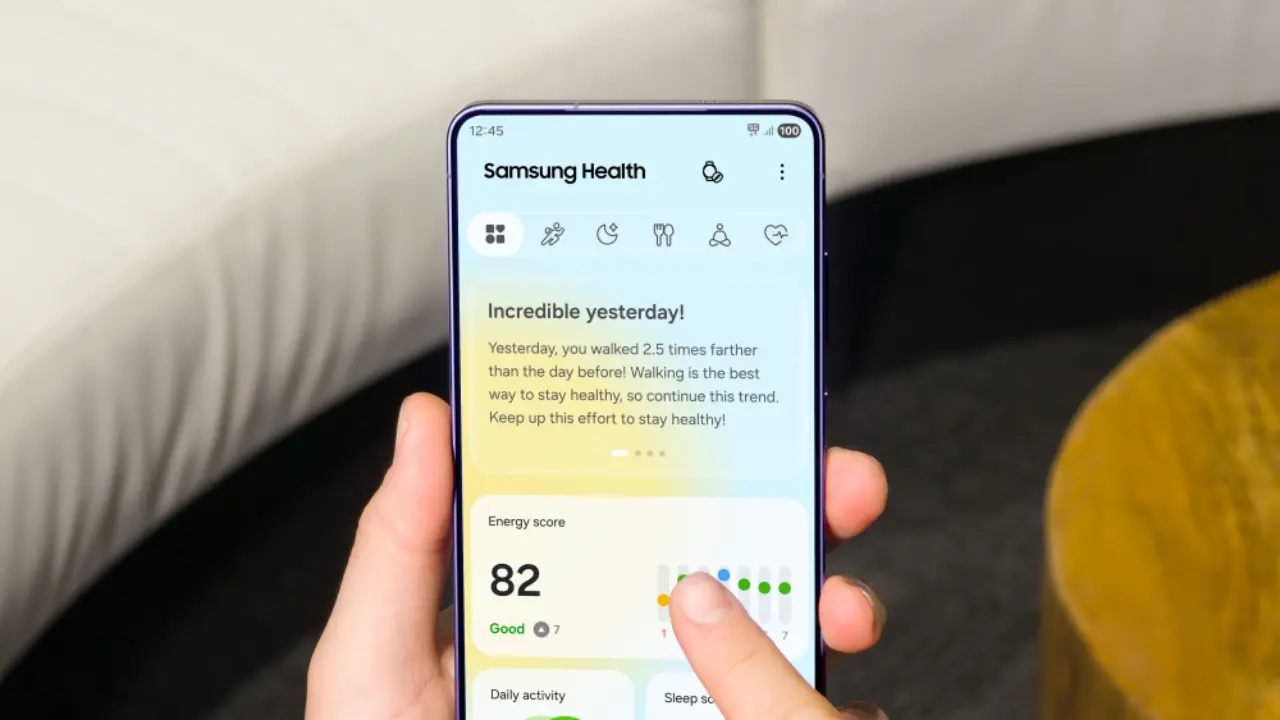
Samsung Health users are being greeted by a consent notice before they can check last night’s sleep score — and it’s not a routine terms-of-service update. The screen fills with a demand: let Samsung use your health data to train AI models, or watch your records disappear. That’s the choice Samsung Health is now presenting to some users as of mid-July 2026. Years of sleep logs, medication histories, menstrual cycle tracking, medical records — all held behind a single toggle. The official notice is titled “Consent to the Use of Health Data for AI Training and Modelling,” and the fine print is blunt about the consequences of saying no.
The Consent Trap: What Samsung Is Actually Asking
The consent notice covers some of the most sensitive data on your phone — and declining it has real consequences for your cloud records.
Here’s what the notice covers:
- Consent to “AI training and modelling, including human review” of your health data
- Data categories include activity metrics, medications, medical records, menstrual cycle data, sleep, body measurements, and diagnosis results
- Declining disables Samsung account sync for health data entirely
- Your health records “will be deleted unless retained pursuant to applicable law”
- The toggle lives in Samsung Health → Settings → Privacy — withdrawable anytime, but the penalty stays the same
That last point deserves its own sentence. “Withdrawable consent” that eliminates your backup history isn’t really free consent — it’s a hostage negotiation.
“Users are seeing a new consent notice and toggle that effectively requires them to share health info if they want to keep syncing it with their Samsung accounts.” — How-To Geek
The business logic isn’t mysterious. Samsung is rolling out AI-driven features — Vitals for overnight biometric monitoring, Heart Health Score, Cardio Load, and Fitness Index — alongside next-generation Galaxy Watch hardware and One UI Watch software. Those features need massive datasets to function. Your sleep patterns, heart rate variability, and menstrual data are the raw material.
Samsung says the data gets anonymized, is never sold to advertisers, and may support research purposes. That’s worth noting. But threatening to delete someone’s medical history for opting out is like a streaming service wiping your entire watchlist because you declined targeted ads — technically your choice, but designed to nudge compliance.
Samsung’s own consent language also explicitly names “human review,” meaning employees or contractors may inspect certain health records during AI development. That detail tends to get buried under the feature-launch headlines.
What You Can Actually Do
The rollout is phased, and local data on your device survives regardless of your decision — so there are steps worth taking before you tap anything.
The prompt isn’t reaching every user simultaneously. If you haven’t seen it yet, you likely will. When it appears, know that data stored locally on your device is not affected by your consent choice. Before toggling anything, export or back up what matters to you through Samsung Health’s data export function.
Gadgets & Wearables called the situation “awkward” — a polite word for a policy that penalizes users for exercising their privacy rights.
European regulators viewing this through a GDPR lens will likely scrutinize whether tying standard cloud backup to AI training qualifies as freely given consent — a foundational requirement under the regulation. Samsung may be forced to separate those two functions eventually. If not, competitors offering cleaner privacy terms will use this moment to pull users away. Either way, your menstrual cycle data shouldn’t come with strings attached.