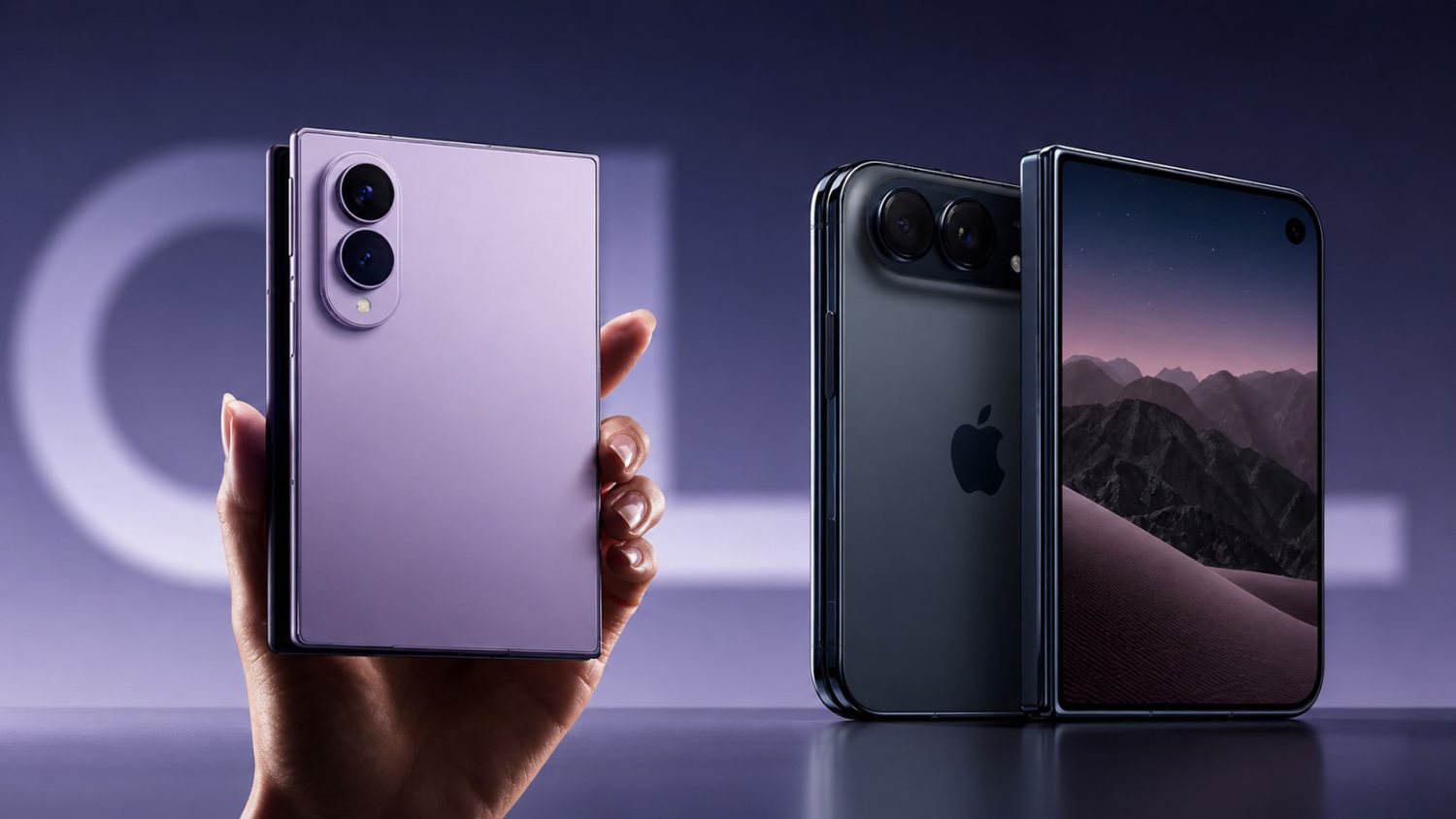
Apple unveiled its first foldable iPhone on September 9, 2026, and Samsung fans had a predictable reaction: a collective eye-roll seven years in the making. The iPhone Duo arrived in a book-style form factor, priced at $1,999, and was positioned as an “entirely new design” by Apple hardware chief John Ternus, who described existing foldables as feeling like “two phones awkwardly stuck together.” Samsung, which has released roughly 20 foldable models since the original Galaxy Fold in 2019, noticed.
Samsung Fans Call the iPhone Duo Derivative
Apple’s first foldable closely mirrors a design Samsung has refined across multiple generations.
The Duo’s form factor mirrors the Galaxy Z Fold 8, Samsung’s latest book-style flagship, which launched weeks before Apple’s September keynote at $1,899. Samsung fans were quick to note the $100 price gap and quicker still to point out that the format Apple described as new has been available to consumers since 2019.
Samsung’s official response arrived on X within hours of Apple’s announcement.
“Let us know when you’re done reheating our leftovers,” Samsung Mobile US posted, a line widely reported by Moneycontrol, News18, and Reuters.
That was just the opener. Samsung’s coordinated campaign also included “So far, so same,” posted with the hashtag #ItsTimeToSwitch, and a third post: “Making us wait? Fine. We’ll be over here, folding 3 ways,” a reference to Samsung’s tri-fold hardware portfolio. Billboards went up in Seoul, Tokyo, and London carrying “Welcome to Foldables” messaging, according to Reuters and Marketing Technology News, framing Apple as a late entrant to a category Samsung established years ago.
Samsung Users Cite Years of Social Frustration
Galaxy Fold owners describe a specific frustration that Samsung’s corporate campaign put into sharper words.
The trolling resonated because it matched what Samsung’s own customers had been saying in quieter terms for years. Galaxy Fold owners report years of using technically advanced hardware in relative social isolation, only for strangers to ask whether their phone is “the new iPhone” once Apple’s version entered the conversation.
The iMessage blue bubble and green bubble divide sharpens this dynamic. In the U.S., that cultural divide has long positioned Samsung users as secondary participants in group chats, and Apple’s entry into foldables did little to change the underlying status gap. If anything, it validated the form factor while leaving Samsung’s role in building it largely unacknowledged by mainstream audiences.
Not every Samsung user is purely dismissive. Some concede that Apple, arriving late with years of foldable user behavior to study, may deliver software integration that goes beyond what Samsung has built across its hardware generations.
The Market Projections Favor Apple
Analyst forecasts suggest Samsung’s head start may not translate into long-term category leadership.
Counterpoint Research projects Apple will capture roughly 25% of the global foldable market in 2026, its first full year of sales. By 2027, that figure could reach approximately 40%, potentially surpassing Samsung’s share. “Apple’s pricing was one of the most impressive parts,” said Liz Lee, associate director at Counterpoint Research, as reported by Reuters. “Keeping the iPhone Duo just under the $2,000 mark, at $1,999, and only about $100 above the Galaxy Z Fold 8 looks like a pretty bold move by Apple.”
Foldables remain a niche category, forecast to stay below 3% of total smartphone volume by 2027. Apple’s entry is nonetheless expected to accelerate mainstream adoption of the form factor.
Samsung spent seven years refining hinge engineering, crease reduction, and multi-window software to make foldables viable as daily devices. Apple’s first attempt is already reshaping how mainstream consumers understand the category. For anyone weighing a $1,999 Duo against a $1,899 Galaxy Z Fold 8, the hardware gap is narrow; the question is which ecosystem and which origin story carries more weight. Before making that call, brushing up on smartphone charging tips is worth the few minutes it takes.