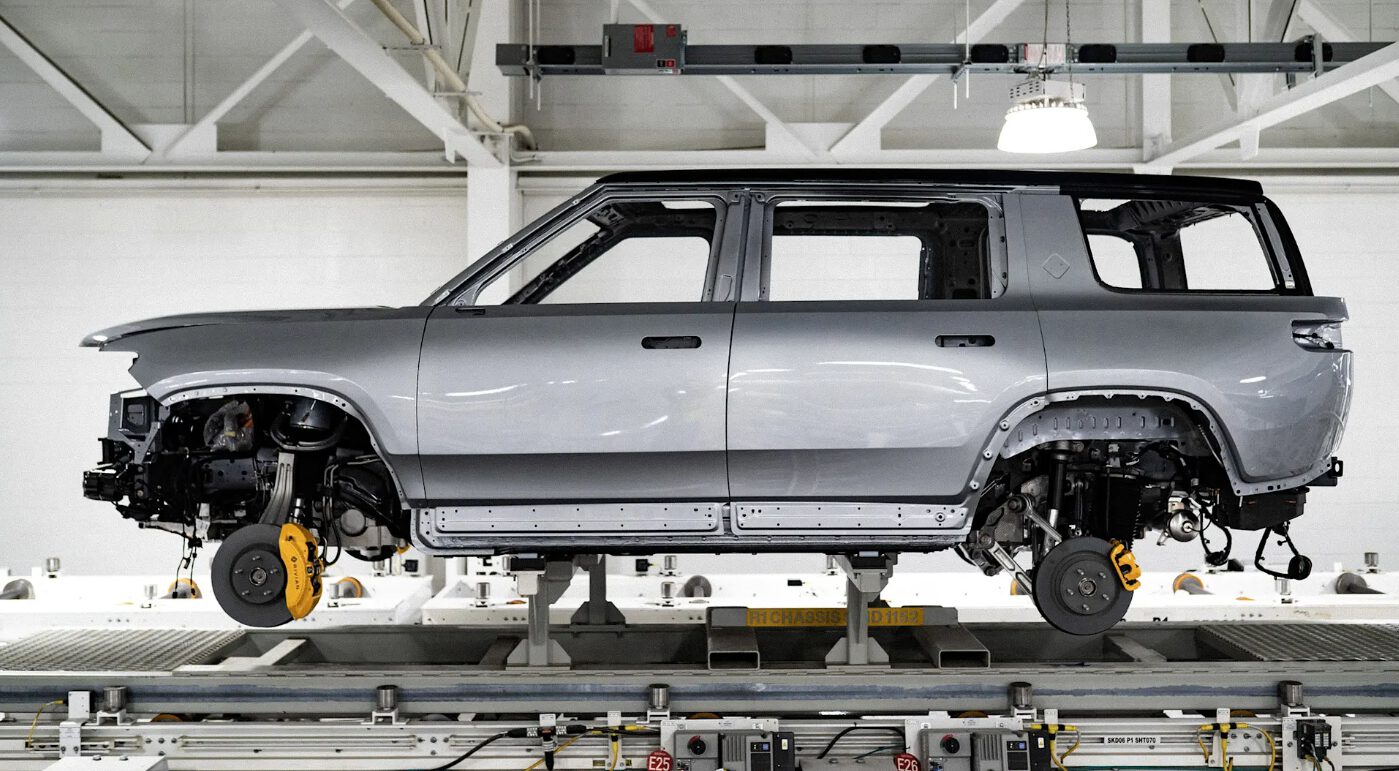
Rising electricity costs and AI-driven grid demands are squeezing manufacturers, but Rivian just turned old EV batteries into a power plant. The Illinois-based startup partnered with Redwood Materials to deploy over 100 second-life Rivian batteries for 10 megawatt-hours of energy storage at its Normal factory.
This marks the largest repurposed-battery system ever installed at a U.S. automaker, fitting into a space the size of a small parking lot.
Software Manages Mixed Battery Chaos
Redwood’s Pack Manager coordinates batteries from test vehicles and non-drivable packs.
The technical challenge? These aren’t uniform, fresh batteries. Redwood’s Pack Manager software orchestrates batteries pulled from Rivian’s test fleet and vehicles too damaged to drive but with viable power packs. This mixed-state coordination deploys faster than importing new battery systems, according to Redwood Materials.
The setup will shave peak grid demand and cut factory energy costs while enhancing local grid reliability.
CEO Vision Targets Grid Health
Rivian and Redwood leaders frame recycled batteries as strategic energy resources.
“EVs represent a massive energy resource that can benefit grid health and U.S. competitiveness,” stated Rivian CEO RJ Scaringe. His counterpart at Redwood, Tesla co-founder JB Straubel, emphasized urgency: “Electricity demand is accelerating faster than we can expand the grid,” making recycled batteries a “strategic energy resource.”
Both executives see this as a scalable model for industrial sites nationwide.
Automaker Trend Gains Momentum
GM partnerships and Tesla’s energy growth signal broader industry shift toward battery reuse.
This isn’t isolated innovation. General Motors already partnered with Redwood for similar projects, while Tesla’s energy storage business continues expanding. The timing aligns with America’s energy boom driven by AI data centers and manufacturing reshoring.
Rather than immediately recycling spent EV batteries, automakers are discovering their second-life value for grid storage.
Scale Questions Remain Open
One factory succeeds, but industry-wide adoption faces practical hurdles.
The Normal plant represents Rivian’s sole current production facility, with a Georgia plant planned for 2028. While this project demonstrates technical feasibility, scaling across hundreds of U.S. auto plants requires massive coordination between manufacturers, recyclers, and utilities.
Whether this becomes standard practice or remains a sustainability showcase depends on economics beating the convenience of traditional grid power. Your future electricity bills may hinge on that calculation.