





Maine winters don’t wait for the plow. My driveway is 60 feet long, uphill, and the truck that’s supposed to clear it runs on its own schedule. The deck out back collects snow in heavy, wet layers that don’t move themselves. When something storms through in the night, morning cleanup falls on whoever is standing there with a shovel — or something better.
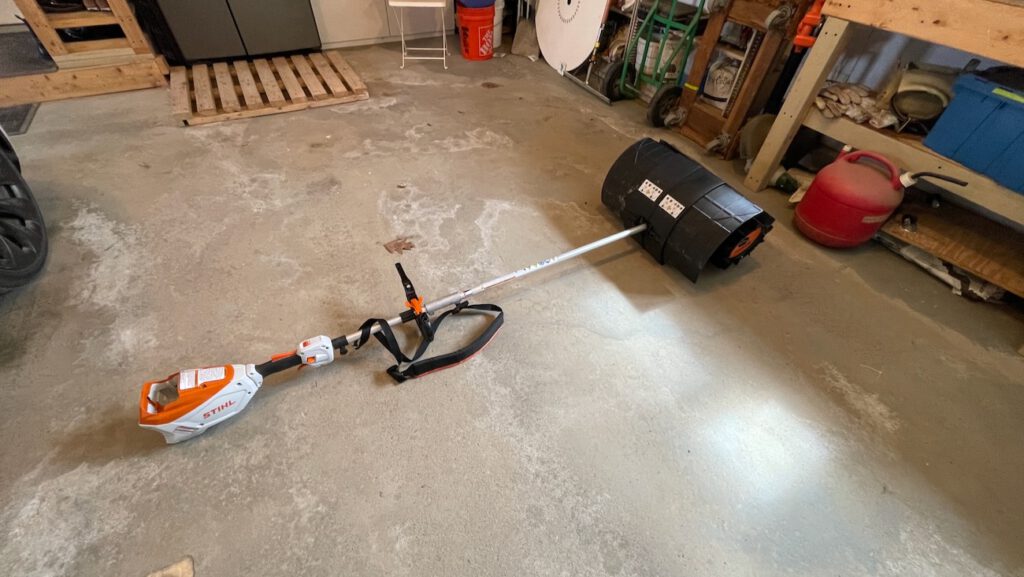
That’s what brought the STIHL KW-KM PowerSweep into this review. The pitch is appealing: one battery-powered system, interchangeable attachments, handles snow, sand, dirt, debris, whatever the season throws at it. And to STIHL’s credit, a lot of that pitch is true. The execution, though, has some real-world caveats I think are worth knowing before spending the money.
What It Costs

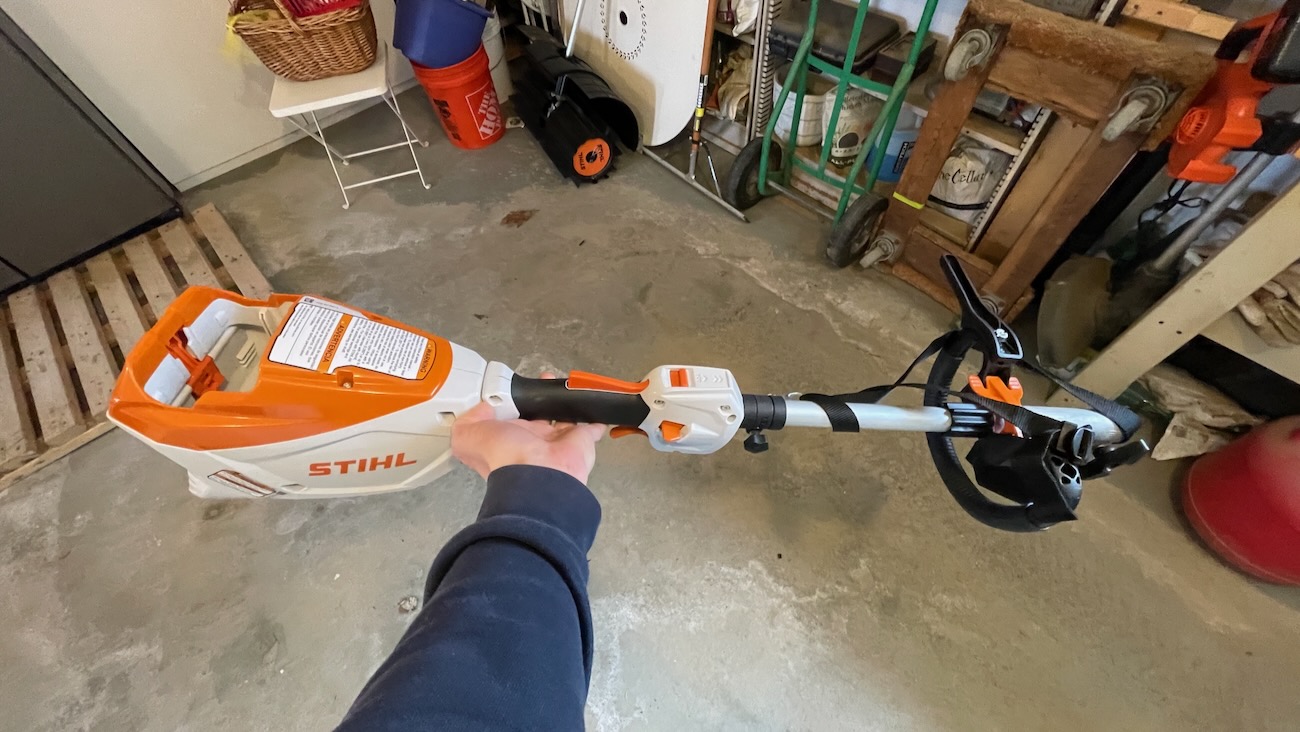
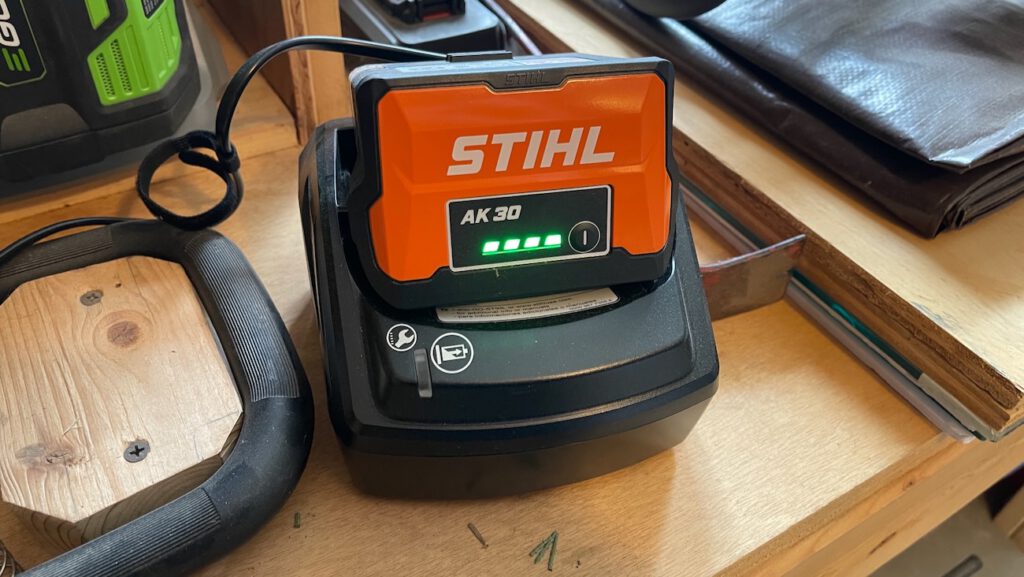
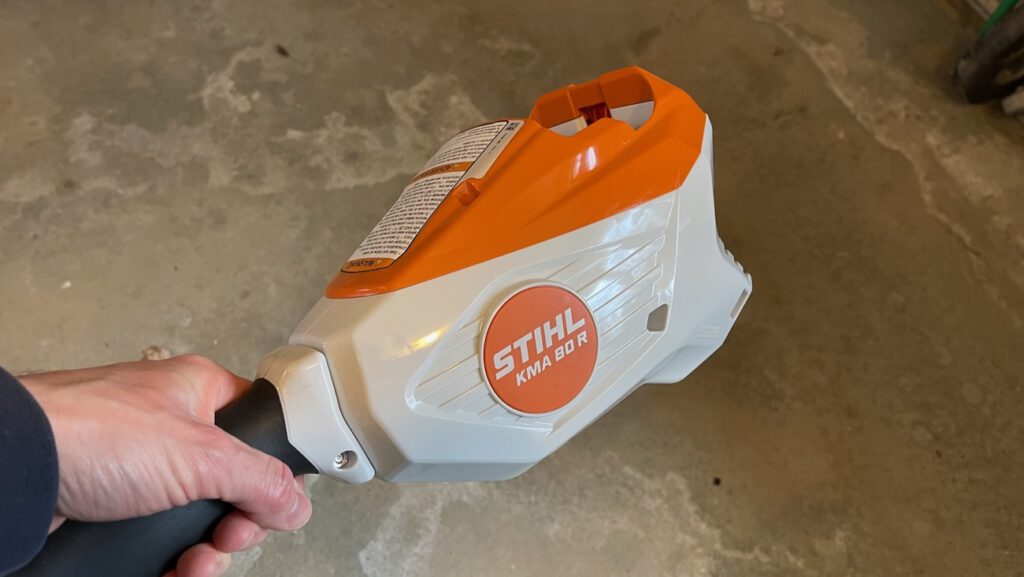
The KMA 80 R powerhead with the AK 30 battery and charger runs $449.99. The KW-KM PowerSweep attachment with drive shaft adds another $379.99. All in, that’s roughly $830 before tax. With battery installed, the whole unit weighs 9.7 pounds — and that’s before attaching the PowerSweep head. I found comparable standalone power shovels for a fraction of that. Whether this price makes sense comes down to whether the rest of the KombiSystem gets used year-round.

Setup and Assembly
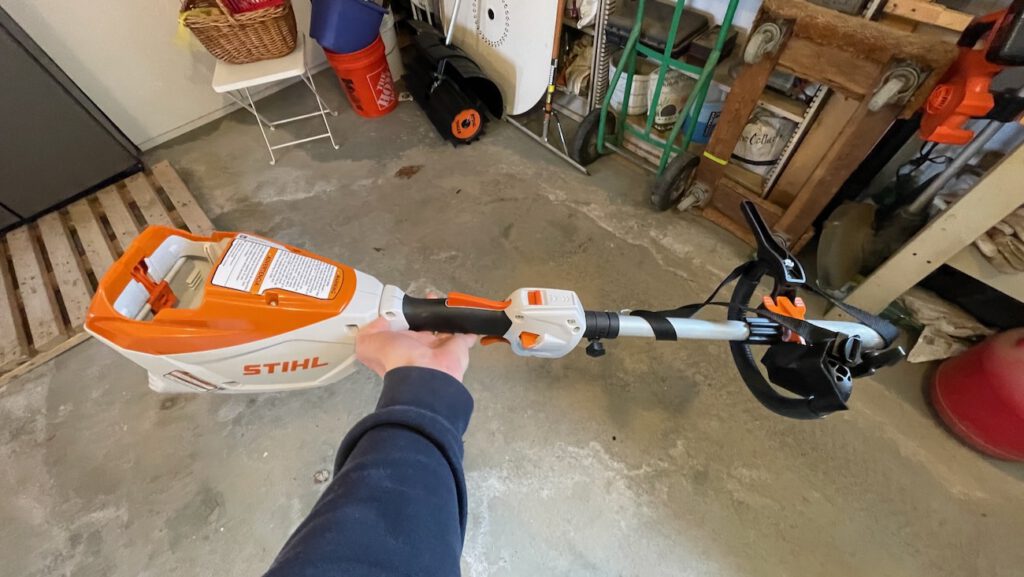
Assembly takes patience. The instruction manual is semi-ambiguous in spots, and getting the PowerSweep head properly aligned with the drive shaft takes real care.
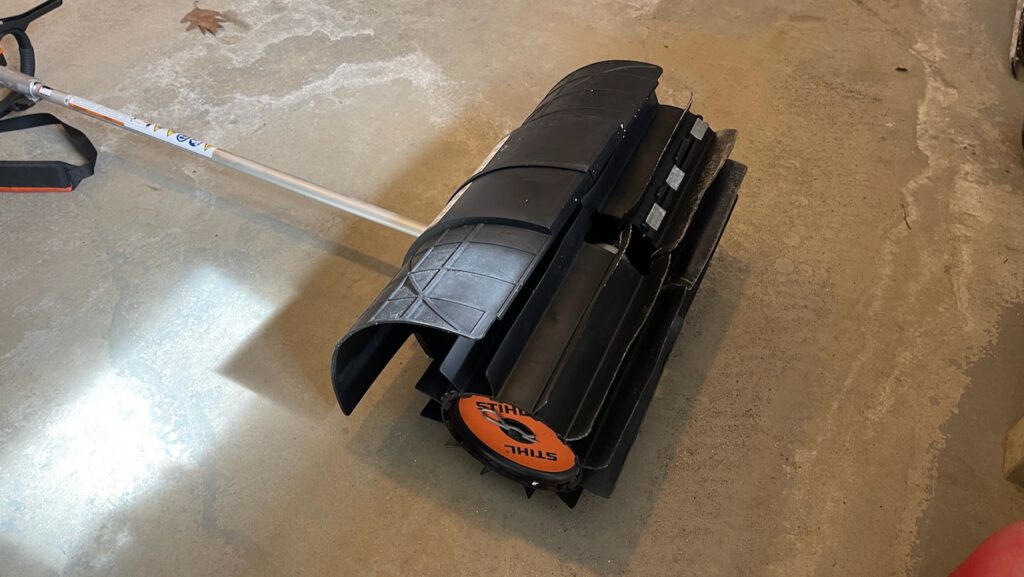
I learned that if it isn’t locked down tight, it rotates under load — and mid-driveway is a bad time to find that out. I’d figure 30 minutes for first-time assembly and give that final tightening step more attention than it seems to deserve.
Using It in the Field
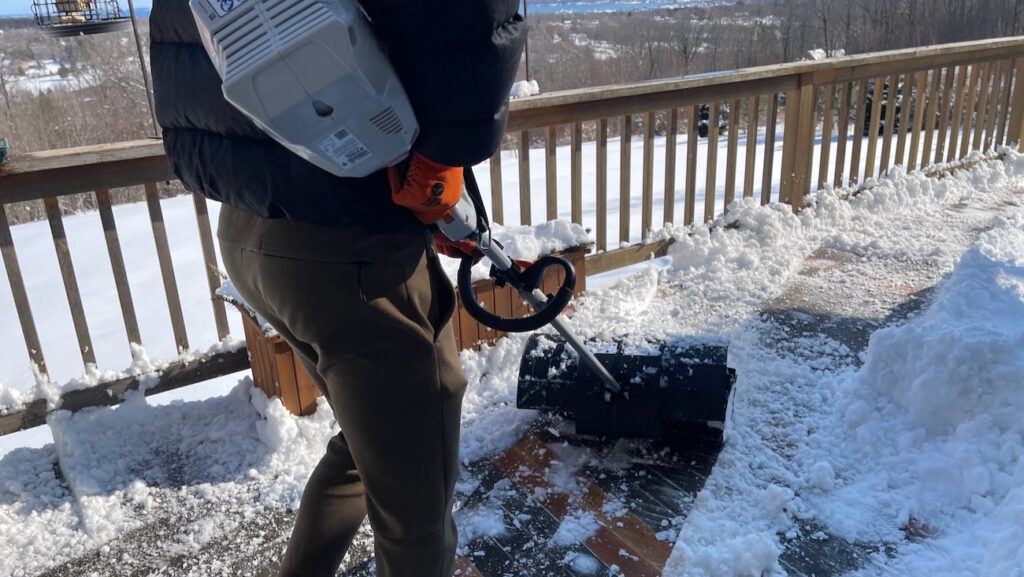
The harness system is the right way to run this tool. STIHL recommends holding it just above hip height, angled so there’s enough ground contact to move material without forcing it down. When I got the angle wrong, the tool fought back. The weight issue compounds this.
The KMA 80 R runs a brushless motor at a max of 7,000 RPM and runs quietly, but the combined heft of the powerhead and attachment takes a physical toll. The PowerSweep attachment alone weighs 16.3 lbs with the deflector — the full setup with powerhead and battery comes in at around 26 lbs.

One reviewer on Scheels, 70 years old and by their own description in very good shape, said the unit “will kick your butt” and asked for a wheel attachment on the shaft to take some load off the arms. I get it. Even KMA 80 R owners on STIHL’s own site consistently flag weight as the primary con, with one noting it “seems heavy at first with the battery in it” — and that’s before the PowerSweep head goes on.
In five inches of wet, heavy Maine snow, that sentiment lands hard. The rubber flaps push snow forward — they don’t auger it. My experience confirmed what the design suggests: this is not a power shovel in the traditional sense. It’s closer to a motorized push broom. I cleared two 60-foot uphill driveway lanes on a single battery charge, with multiple passes, before power ran out. Respectable given the conditions, but my effort level was high throughout.
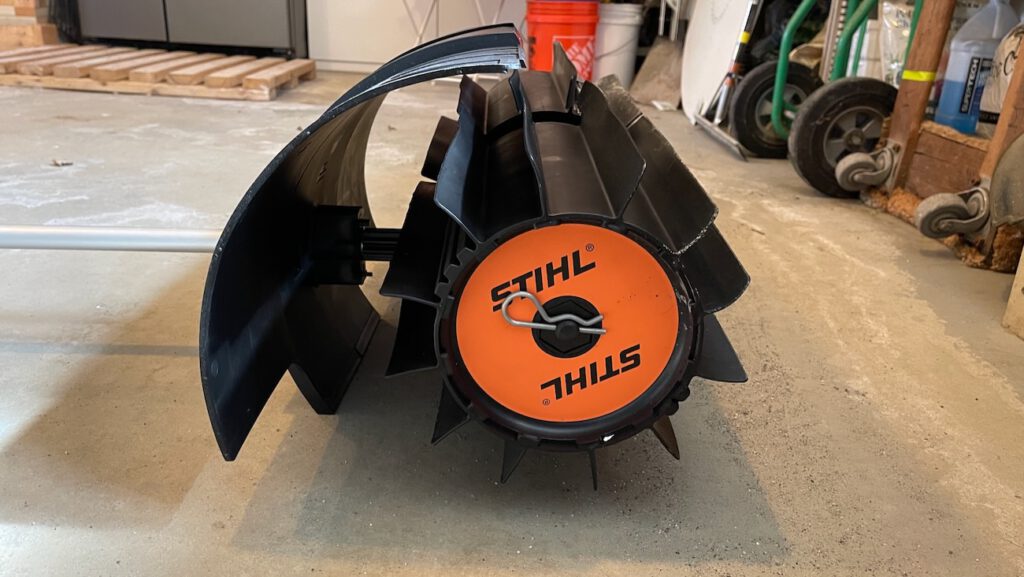
Other buyers on Scheels echo this directly: “Deep snow no go” and “generally poor at removing snow” are real quotes from real buyers. One reviewer specifically called out EGO’s side-casting power shovel design as a better-engineered snow solution — and I think that’s a fair point. At least one buyer is openly calling on STIHL to build a proper KombiSystem snow thrower, and given how the electric lineup is selling, I don’t think that’s an unreasonable ask.
The turbo mode helps in bursts. I found a practical trick for uphill snow: drop to the lowest setting and drag the unit behind you — it pushes forward enough to help with footing. It’s a small thing that turned out to matter more than I expected.
Where It Actually Shines
Step outside the snow scenario and my opinion changes. Gravel, sand, and caked-on dirt on a hard surface is what the rubber flaps were built for. Post-winter cleanup — pulling sand and rocks off grass after a season of plowing — is where multiple buyers on Scheels landed their five-star reviews.
One customer bought it for exactly that job and called it the best tool they’d ever owned. Another said it cut a full day of raking down to a few hours. I think that tracks. The rotating rubber flaps handle a wide range of debris across all four seasons — everything from sweeping driveways in summer to clearing lighter layers of snow in winter.
My deck is a real use case too, though a tempered one. Light to moderate snowfall on a flat surface? The PowerSweep handles it well. A heavy, wet accumulation after a nor’easter? That’s where I hit the limits.
The System Argument
My stronger argument for this purchase isn’t the PowerSweep alone — it’s what else the KombiSystem can do. The KMA 80 R is compatible with up to 14 optional attachments, including a string trimmer, brushcutter, hedge trimmer, pole pruner, lawn edger, bed redefiner, leaf blower, and mini-cultivator. One powerhead, one battery, one storage footprint. For a Maine property with four genuine seasons of outdoor work, I think that math starts making real sense.
The reviews across Ace Hardware and STIHL’s own site back this up consistently. One KMA 80 R owner called it “phenomenal and uncompromised in power and battery life” after swapping out their old gas Kombi. Another said landscapers have stopped to ask about the system while they were using it in the yard.
A longtime KombiSystem user on the Ace Hardware feed put it plainly: “One of the best products I have bought to maintain my property.” The recurring theme across hundreds of reviews is the same — quiet operation, no gas hassle, and attachment versatility that makes the upfront cost feel justified over time. The one consistent con across all three sources? Weight.
If the KombiSystem concept appeals but the STIHL ecosystem isn’t already in the garage, it’s worth knowing that comparable modular systems exist. The Echo PAS (Power Attachment Series) runs a similar one-powerhead-many-attachments model and is widely available. Husqvarna offers their own multi-attachment system with strong dealer support.
Both are worth pricing out before committing, since attachment ecosystems matter long-term — once you’re in one system, switching costs add up fast.
How It Compares: Power Shovels for Snow Clearing
To be upfront: the PowerSweep isn’t really a power shovel, and comparing it to dedicated snow tools isn’t entirely fair. Snow is just how I’ve been using it — it’s my primary seasonal need right now and the context in which I tested it. That said, if someone is considering this system specifically for winter driveway and deck duty, they deserve to know what else $830 buys.
Here’s how the PowerSweep stacks up against tools actually built for the job.
| Product | Price (Est.) | Snow Method | Max Snow Depth | Weight | Verdict |
|---|---|---|---|---|---|
| STIHL KW-KM PowerSweep (w/ KMA 80 R) | ~$830 | Rubber flap push | 2–3 in. light/dry | 26 lbs. | Best as a multi-season surface tool; weak in real snow |
| Toro Power Shovel (38361) | ~$129 | Auger paddle | 6 in. | 7 lbs. | Cheapest dedicated option; great for decks and walks |
| Snow Joe 24V-SS11 (11 in. Cordless) | ~$99 | Auger paddle | 6 in. | 9.7 lbs. | Lightweight and affordable; best for light, flat surfaces |
| EGO Power+ SS1504 (15 in.) | ~$249 | Auger paddle | 8 in. | 13.2 lbs. | Best cordless power shovel; side-discharge, deeper reach |
| Greenworks 2600702 (12 in.) | ~$179 | Auger paddle | 6 in. | 11 lbs. | Solid mid-range option; good for walks and small decks |
A few things the table makes clear. The PowerSweep is the only product here that isn’t a dedicated winter tool — and I think that’s genuinely its best argument. But it’s also the heaviest option at 26 lbs, costs more than all four alternatives combined in some cases, and is the only one that can’t auger or side-discharge snow.

The Toro Power Shovel at $129 is worth a specific mention: lightweight, purpose-built, and for clearing a deck or sidewalk after a moderate snowfall, I think it would outperform the STIHL on that specific task at a fraction of the price. The EGO SS1504 is the one I’d point most buyers toward if snow is the primary concern — better snow capacity, side-discharge, and at 13.2 lbs it’s half the weight of the full STIHL setup for $249.
If snow is my primary job, the PowerSweep isn’t the right tool. If snow is one of a dozen seasonal tasks and the KombiSystem is already in the garage or on the wish list, the calculus changes considerably.