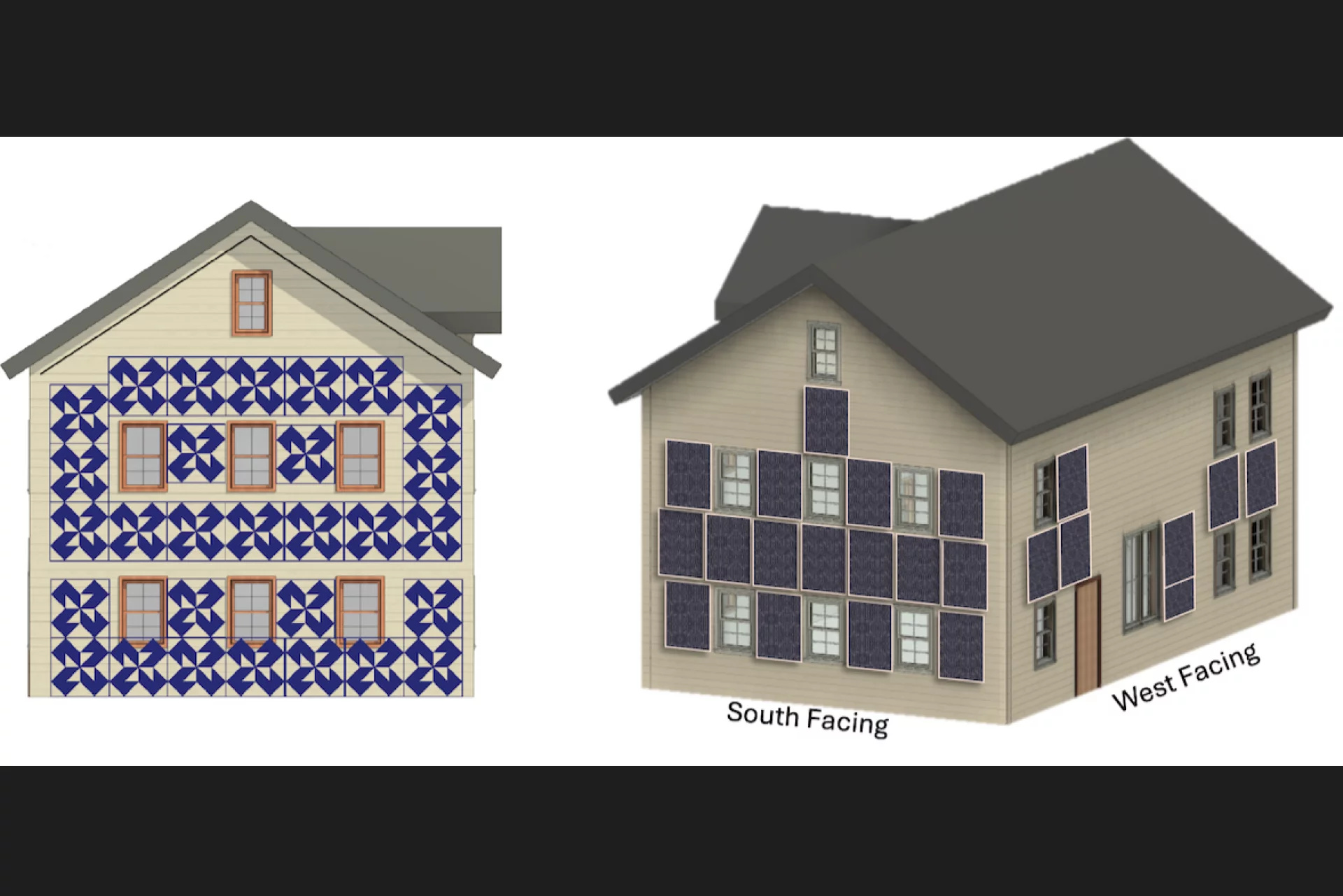
Winter heating bills drain bank accounts faster than a leaky faucet, but researchers at UMass Amherst just cracked a clever solution. Their removable fabric panels work like a giant sweater for buildings, capturing sunlight and boosting indoor temperatures while slashing energy costs by 15% for homes and up to 23% for apartments.
Solar-Powered Fabric That Actually Works
Special coating transforms ordinary umbrella material into heat-capturing technology.
The secret lies in PEDOT-Cl, a conductive polymer that acts like a heat magnet for your walls. This photothermal coating absorbs sunlight across multiple wavelengths, converting rays into warmth that raises indoor temperatures by up to 8.6 degrees Fahrenheit daily. Think of it as solar panels for heating instead of electricity—except these panels are made from the same waterproof fabric that keeps you dry under umbrellas.
The technology captures and converts sunlight efficiently while providing insulation that reduces heat loss through building exteriors. Unlike traditional solar installations, these fabric panels require no electrical connections or complex mounting systems.
Installation Easier Than Assembling IKEA Furniture
Wooden frames and afternoon setup make this renter-friendly and portable.
Forget calling contractors or begging landlords for permission. These panels mount on simple 2×4 wooden frames that attach to any building exterior without permanent modifications. You can install the entire system in an afternoon, then pack it up when you move. The umbrella fabric handles weather like a champ while delivering consistent performance through winter months.
The removable design solves a major problem for renters who face high heating costs but cannot invest in permanent building improvements. You get the benefits of enhanced insulation without violating lease agreements or losing your security deposit.
Traditional Insulation Gets Schooled
Removable panels outperform invasive renovation methods.
Standard insulation typically saves 10-50% on bills but requires tearing into walls and major construction work. Professor Carolina Aragón, who led the research, asked a simple question: “What would a building do if it could wear something to stay warmer?” Her answer beats conventional methods while avoiding the mess, expense, and permanence that keep most renters stuck with high heating costs.
The fabric panels also offer aesthetic customization options, allowing you to match your building’s architectural style rather than settling for generic insulation materials hidden behind drywall.
Still Waiting for Real-World Proof
Promising simulations need full-scale testing before you can buy them.
These impressive numbers come from computational models rather than actual buildings wrapped in fabric sweaters. While the physics checks out, real-world performance could vary based on climate, building orientation, and installation quality. The team plans to commercialize through hardware store rolls eventually, but you’ll need patience before this technology hits store shelves.
The researchers acknowledge that full-scale field testing remains necessary to validate the simulation results and determine optimal installation methods for different building types and climate conditions.