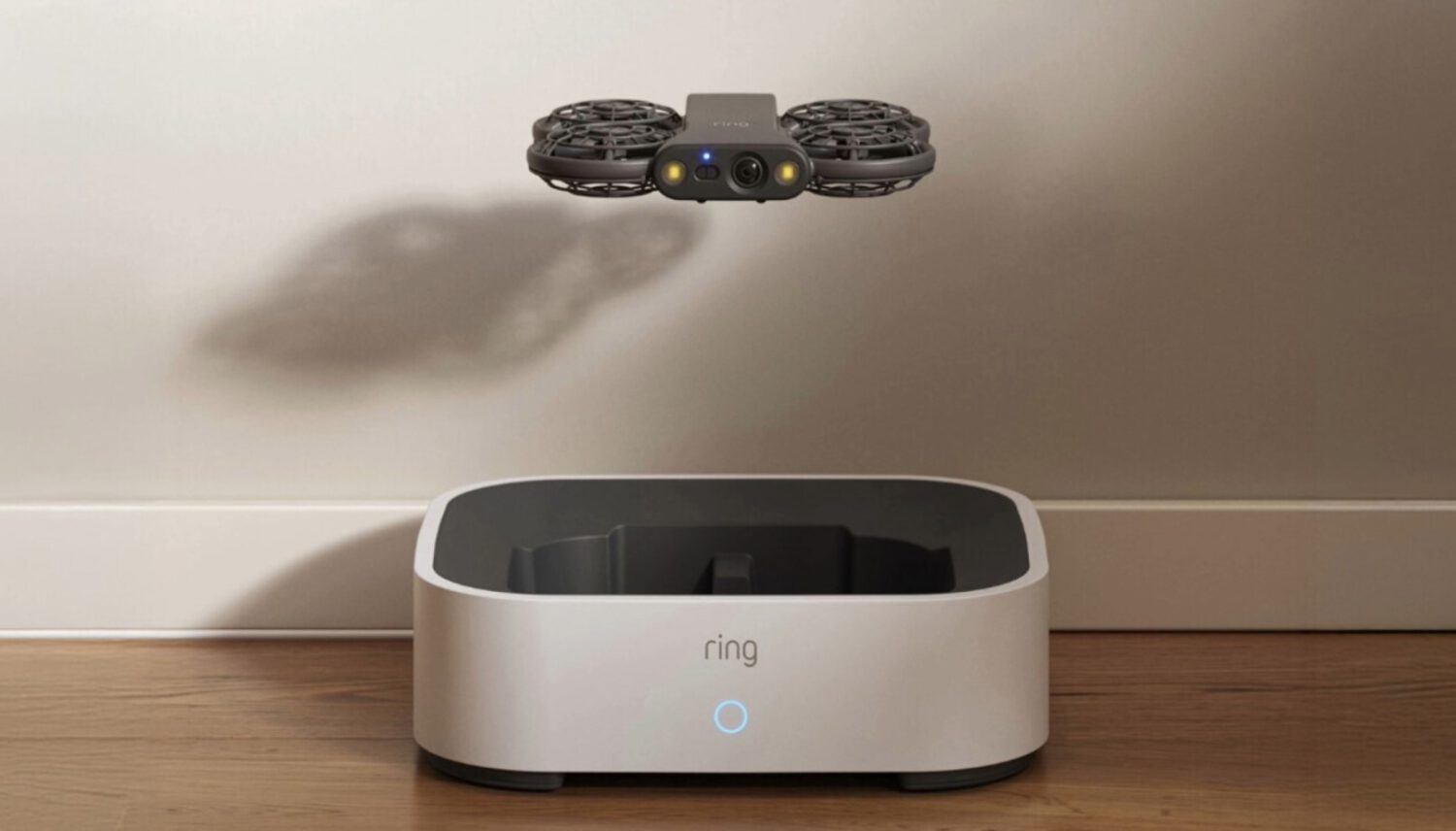
Homes and businesses have long relied on fixed cameras to watch specific spots. Ring’s latest products are built to move through those spaces instead. Amazon’s Ring announced two autonomous security devices under a new Ring Robotics brand: the $249.99 Ring Drone Cam for indoor home security monitoring and the $999.99 Ring Rover Cam for business security. Both are designed to patrol, respond to sensor alerts, and stream footage, according to Ring’s product materials.
The Drone Cam: Eight Minutes at a Time
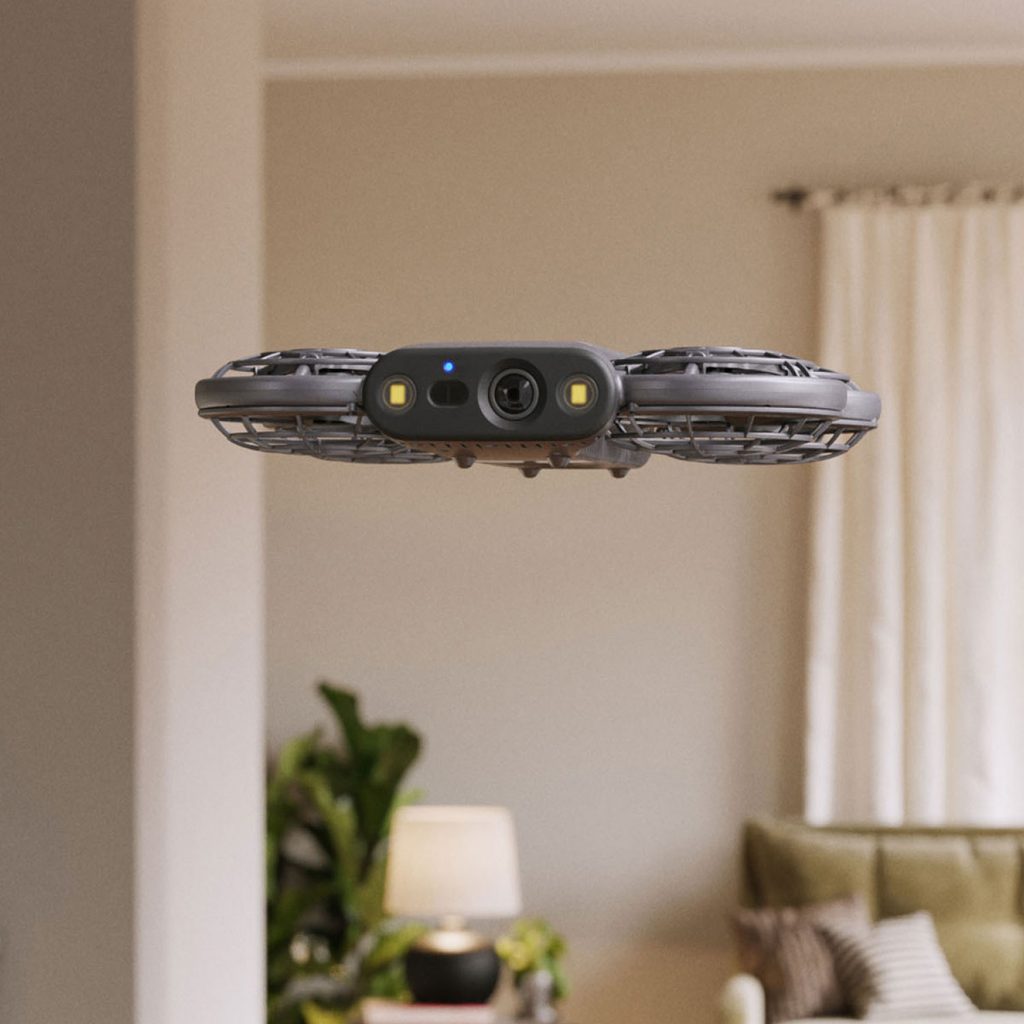
Roughly textbook-sized, the Drone Cam flies between rooms and records during day or night conditions.
Ring says its AI Pilot navigation system maps interior spaces and steers around furniture and other obstacles. Attribution belongs to Ring; independent navigation reliability has not been established.
Users can configure patrol routes and schedules, deploy the drone on demand, or have it launch automatically when a compatible Ring alarm, door sensor, or window sensor fires. The device records only while airborne, according to Ring, and returns autonomously to its charging dock after approximately eight minutes of flight.
A visible LED signals when recording is active. The enclosed propellers produce an audible buzzing sound during flight.
Ring positions that noise and the visible lights as potential deterrents. No independent evidence has been provided that the device reduces criminal activity. The Drone Cam is scheduled to ship January 27, 2027, pending required regulatory authorization.
The Rover Cam: Warehouse Patrol on Wheels
At $999.99, the Rover Cam is Ring’s business-tier offering, built for offices, warehouses, and retail spaces.
A periscope-style camera lets the Rover see over counters and shelving. Ring says it streams video at up to 4K resolution, supports two-way audio, activates a built-in siren, and advertises coverage of spaces up to 5,000 square feet.
Scheduled to ship December 16, 2026, the Rover shares design concepts with Amazon Astro for Business. That product launched in 2023 but, as reported by CNBC and GeekWire, had a short commercial life and received limited updates.
Subscriptions and Cloud Processing Required
Both devices depend on Ring’s AI Pilot system and, for certain features, a paid subscription plan.
Scheduled patrols and some video-review features require a Ring Protect subscription, according to reporting on the products’ terms. AI Pilot combines onboard cameras, sensors, computer-vision models, and cloud processing to map environments and navigate around obstacles, Ring says.
Regulatory Status Is Not Fully Resolved
The Drone Cam is restricted to indoor use, and its regulatory clearance remains uncertain ahead of its January 2027 ship date.
Ring’s official announcement states that the Drone Cam had not received required Federal Communications Commission authorization and could not be sold or leased until that authorization was obtained. WIRED noted that the device’s sub-250-gram weight could also affect Federal Aviation Administration registration requirements, though that interpretation should be verified independently before purchase.
The eight-minute flight window and preset patrol routes set real limits on the drone’s ability to respond to fast-moving situations. Ring’s deterrence-focused marketing does not address those constraints directly.
Privacy Questions Follow a Mobile Camera Anywhere It Goes
Ring carries existing scrutiny about law-enforcement data sharing into a product category that raises new questions about mobile surveillance.
The company has faced criticism for sharing footage with law-enforcement agencies and previously canceled a partnership with license-plate-reader firm Flock Safety, as reported by CNBC. Mobile cameras that move through homes and workplaces, react to sensor events, and send data to the cloud raise additional open questions. How long footage is retained, who can access it, and whether employees have meaningful notice or consent options remain unanswered.
Ring’s LED recording indicator and inactive-recording modes address some concerns at the hardware level. They do not resolve questions about cloud retention, access controls, or third-party data sharing.
Amazon Pushes Deeper Into the Smart Home
The Ring Robotics launch extends Amazon’s smart-home reach into autonomous mobile devices, a category neither the company nor its rivals have fully proven out.
The launch adds autonomous mobile security to a portfolio that already includes speakers, routers, doorbells, and fixed cameras. That positions Ring closer to the broader security and smart-home ecosystems associated with Apple and Google, though that competitive framing reflects analysis rather than a formally established market relationship.
Whether consumers and small businesses will accept a camera that moves through their spaces on its own is the central question both products now face. Whether they will trust the company behind it may matter just as much.