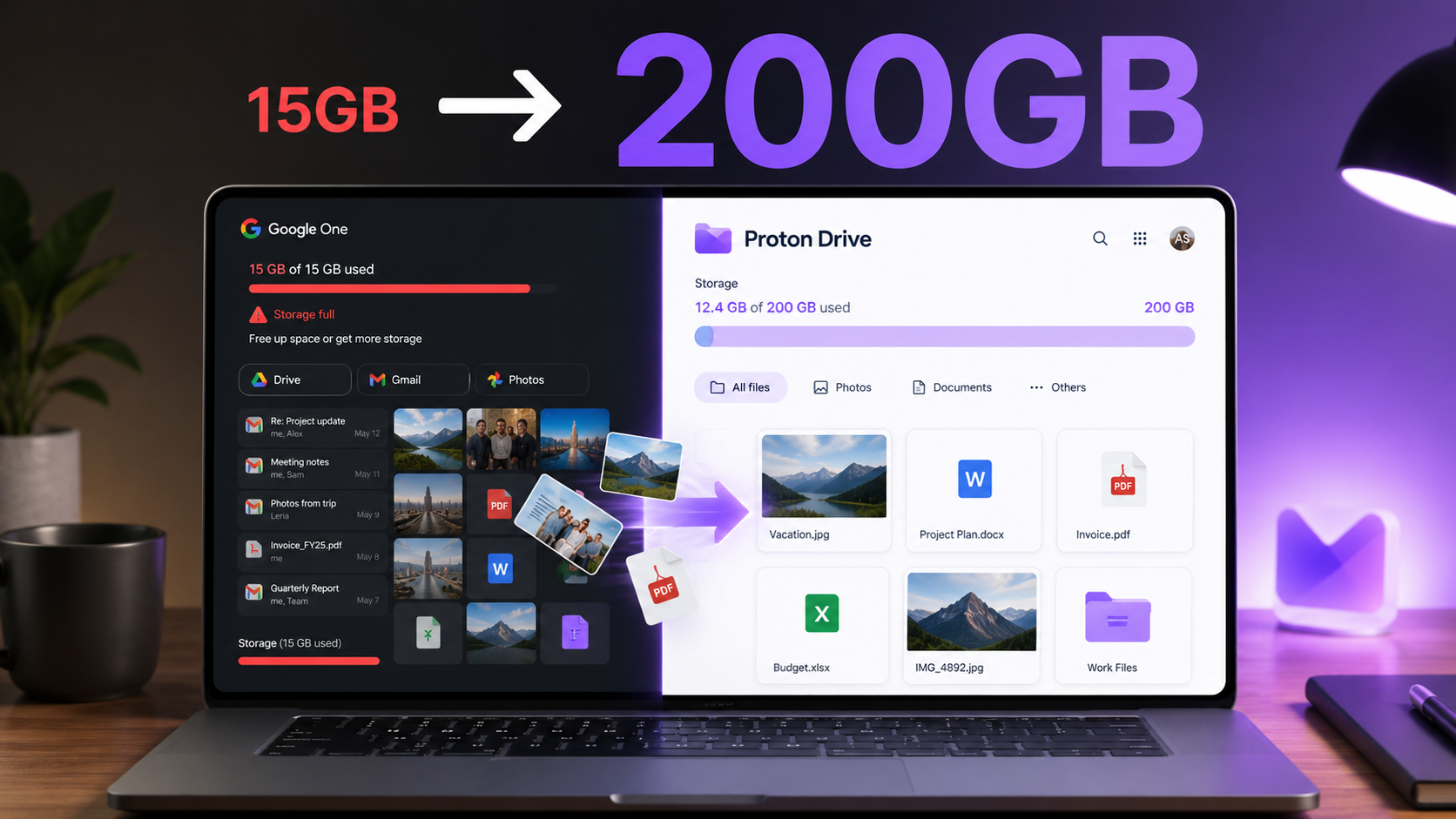
Somewhere around the third time Google tells you your storage is full, you start doing math you never expected to do. Fifteen gigabytes sounded like plenty back when you signed up but, now it’s gone, and you’re staring at a $1.99 upgrade prompt wondering how a “free” account got this small this fast.
The Fix Isn’t Another Google Plan
There’s a fix for it, though, and it’s not another Google plan. Proton Drive gives you 200GB for $1 for the first month, and $2.99 a month on the annual plan, more room than most people will ever come close to filling. Before getting into the offer itself, it’s worth understanding exactly how the free version got you here.
Where Your 15GB Actually Went
Google doesn’t give Gmail, Photos, and Drive their own unique storage. They share one pool, which includes attachments in any email you’ve ever received, every photo your mom has ever sent you, and the photos you probably backed up without meaning to the moment you plugged your phone in. Ten years of newsletters and group chats pile up in silence, and by the time you notice, half your storage is gone before a single vacation photo made it up there. That free storage limit is also just the cherry on top of the trade-offs you’re already making in privacy and control over your data compared to a privacy-first paid service.
People often blame their phones, but their phones aren’t the problem. Their inbox has been hoarding space since day one, and no one sends out a warning until it’s too late.
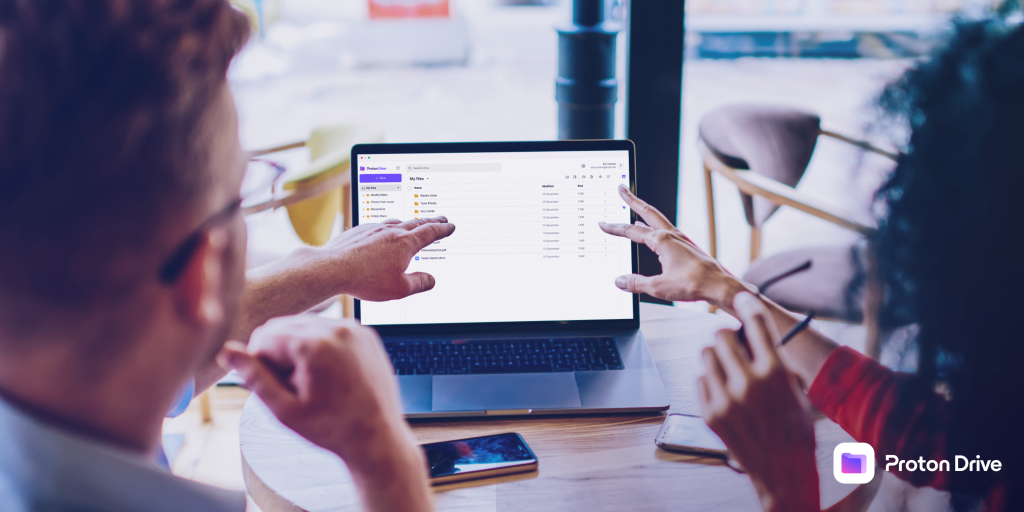
What $2.99 Actually Buys
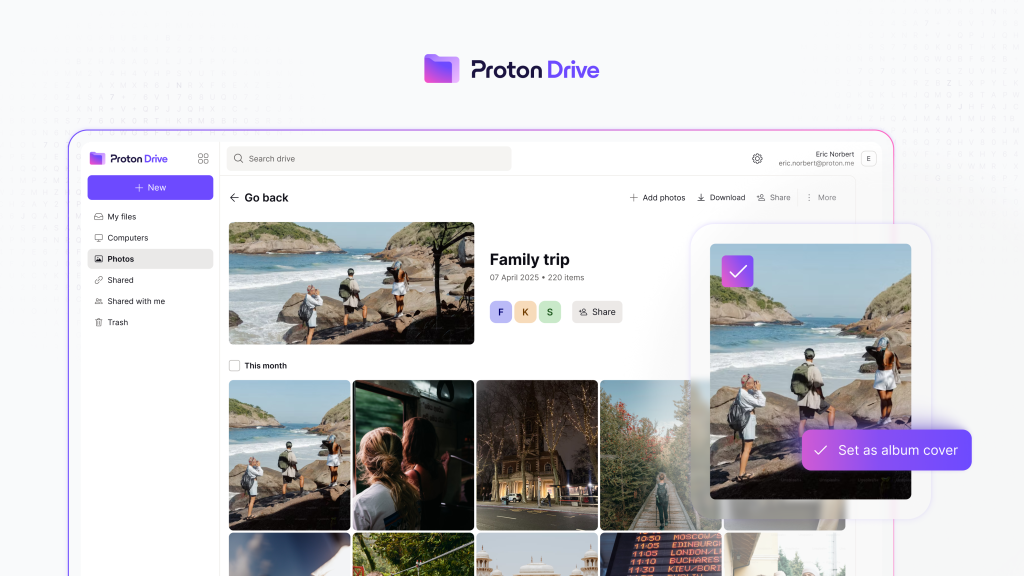
That’s where Proton comes in. $1 to get started for the first month, and $2.99 a month on the annual plan buys 200GB, more than 13 times what Google gives away for free, from a company based in Switzerland under privacy law stricter than what governs most U.S. tech firms. Files are end-to-end encrypted, so Proton itself can’t see what you store even if it wanted to.
Here’s what that $3.99 actually includes:
- 200GB of storage: More than 13 times Google’s free tier
- Automatic photo backup for Android and iOS, with iOS uploads working best when the app gets opened every so often, since Apple limits how long apps can run in the background
- End-to-end encryption on every file, so even Proton can’t read them
- Swiss-based servers, governed by privacy law stricter than U.S. standards
- No ad business behind the product, meaning nothing to gain from scanning your files
- Zero-access architecture, meaning your encryption keys stay with you, not the company
The storage is the hook that gets you in the door, but not having to wonder who’s reading your files is the biggest reason to stay.