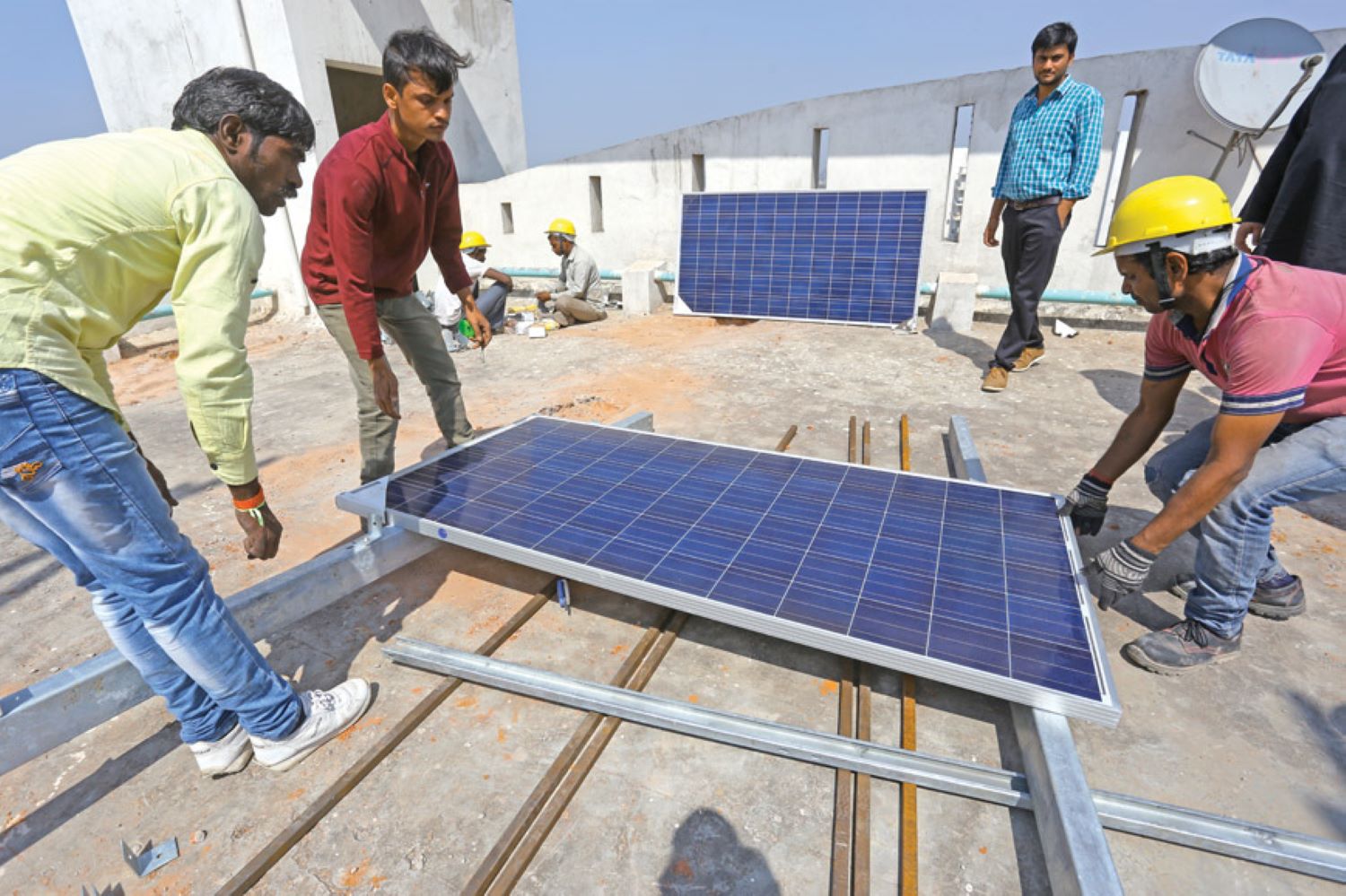
Twenty-seven gigawatts of consumer-owned solar capacity. Installed in two years. That figure, according to a joint report by energy think tanks Ember and Renewables First, equals the combined capacity of every coal, gas, and oil plant Pakistan has ever built. Not through a government megaproject. Not across a decade of policy planning. Through ordinary households, farmers, and factory owners deciding they’d had enough of blackouts and electricity bills that doubled overnight.
What Actually Happened
The numbers are robust enough to silence skeptics — three independent methodologies point to the same historic shift.
Between fiscal years 2023 and 2025, Pakistan’s distributed solar fleet ballooned to roughly 38 GW. Ember tracked Chinese customs data showing 47 GW of panels shipped to Pakistan — an upper bound on deployment. TransitionZero applied satellite imagery nationwide, arriving at a central estimate of 27.5 GW. PRIED surveyed 5,300 households and businesses, scaling responses to a national figure of about 33 GW. Renewables First then triangulated all three alongside market data and national statistics.
The impact is hard to overstate. Solar’s share of electricity generation leapt from 10% to 28% — closer to 32% once you account for the roughly 22% of grid electricity lost to transmission and theft. Distributed solar generation tripled, from 15 TWh to 51 TWh, absorbing a 21% surge in total electricity demand while grid-based generation actually fell 3%. Pakistan’s electrification rate climbed from 17.0% to 21.7%, nearly matching the global average of 22.0%. As Ember and Renewables First assess it, “no other electricity source could have achieved what distributed solar achieved.”
Faced with chronic blackouts and electricity bills that doubled overnight, millions of households and farmers made the same calculation independently — and acted on it.
Who Drove It
Four sectors powered the boom, each with its own forcing mechanism.
- Residential (44% of capacity, ~16.9 GW): Seven million households, 73% of them rural, installed typical 2.4 kW systems. Grid reliability in rural areas is worse, and in some cases nonexistent — solar wasn’t a lifestyle upgrade, it was an infrastructure workaround.
- Agriculture (21%, ~8.1 GW): Around 80% of agricultural solar is off-grid, powering irrigation tubewells. Diesel tubewells collapsed from 79% to 28% of all installations between 2022 and 2025, avoiding an estimated 1.9 billion litres of diesel annually.
- Industry (26%, ~10 GW): Factories deployed roughly 10 GW behind the meter, cutting grid electricity use by 6% even as industrial electricity demand rose 22%.
- The math that made it obvious: Solar with battery storage runs about PKR 20 per kilowatt-hour. Grid power costs PKR 40. Diesel backup hits PKR 120. That spread doesn’t require a spreadsheet to understand.
Why Speed Was the Secret Weapon
Consumer-led deployment did in 24 months what centralized infrastructure couldn’t do in two decades.
Pakistan’s large central power plants — Nandipur, Neelum-Jhelum — took 8 to 21 years from approval to first electrons. These 27 GW materialized in two years, installed directly at consumer premises and requiring zero grid reinforcement. The macroeconomic payoff is substantial: Ember calculates that distributed solar avoided more than $12 billion in fossil fuel imports through early 2026, meaningful relief for a country spending close to 10% of GDP on energy imports annually.
Only 17% of Pakistan’s estimated 310 TWh annual rooftop potential is currently tapped. Recent shifts toward net-billing over net-metering may push solar households toward battery storage rather than back toward the grid — deepening energy independence rather than reversing it. The blueprint demonstrably works. The remaining question is how far it travels, both across Pakistan and across the Global South countries watching closely.