Tech companies are building physical spaces to combat the very screen fatigue their products helped create.
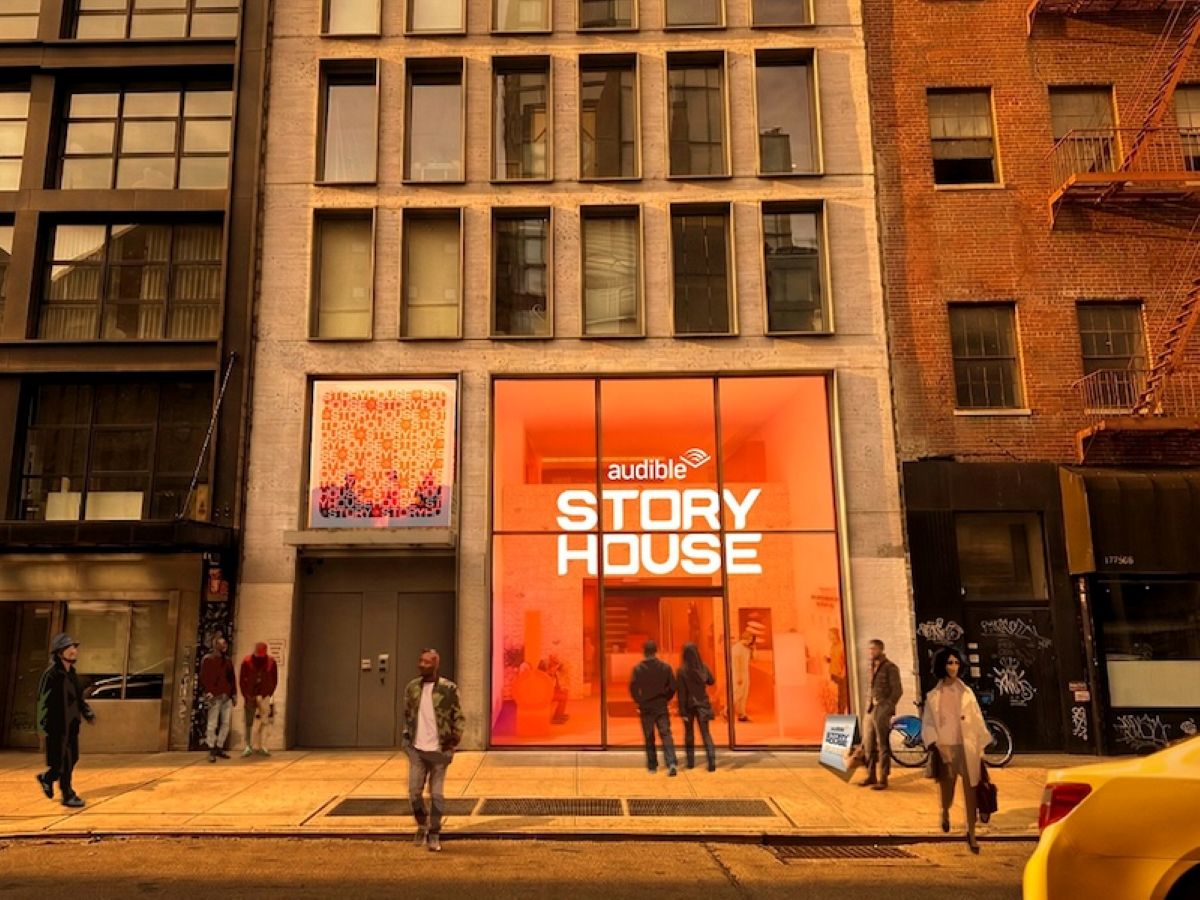
Walking into a bookstore with zero books feels like entering a fever dream. Yet Audible’s “Story House” on Manhattan’s Bowery makes perfect sense once you witness the crowds sampling audiobooks through interactive “Story Tiles”—physical tablets that let you browse 300+ titles across three floors of carefully designed listening environments.
The 6,000-square-foot space operates like a record store crossed with a meditation center. Instead of vinyl, shelves display touchscreen tablets. Instead of album covers, you get audiobook artwork.
The Dolby Atmos lounge wraps listeners in spatial audio that makes thriller narrations feel genuinely immersive. “Story Tenders” (Audible’s term for staff) guide visitors through personalized recommendations at the “Listening Bar.”
This isn’t just clever marketing. Audible CEO Bob Carrigan called it a “wild idea” that required “quite a bit of imagination,” designed to bring “audiobooks to life in this environment where you can browse, you can connect with people.” Translation: Amazon recognizes that purely digital experiences aren’t enough anymore.
The $2.2 Billion Bet on Physical Connection
Audiobook sales doubled in five years, but growth means nothing without community engagement.
The numbers justify the experiment. Audiobook sales hit $2.22 billion in 2024, nearly doubling over five years as commuters and multitaskers embraced audio storytelling. But raw growth doesn’t explain why the market leader needs a physical space.
The answer lies in generational shift. Younger consumers increasingly crave offline experiences and real-world connections—the exact opposite of what tech companies spent decades pushing. Story House attempts to bridge this gap, creating tangible community around inherently solitary consumption.
The venue’s programming reflects this strategy:
- Live music
- Creator panels
- Crafting activities
- An on-site café
Free admission signals Audible’s recognition that the value isn’t immediate sales but long-term brand loyalty through community building.
The Future of Digital-Physical Retail
One month in Manhattan could reshape how subscription services think about customer engagement.
Story House runs through May 2026, operating Wednesday through Sunday as a proof-of-concept. Success could spawn similar venues in other cities, potentially inspiring Netflix screening rooms or Spotify listening lounges.
The broader implication transcends audiobooks. When digital-first companies invest in physical experiences, they’re admitting that screens alone can’t satisfy human connection needs.
You might find yourself wondering which subscription service will be next to recognize that community beats convenience every time. This bookless bookstore might just be the beginning of post-digital retail—where the most innovative move is stepping back into physical space.