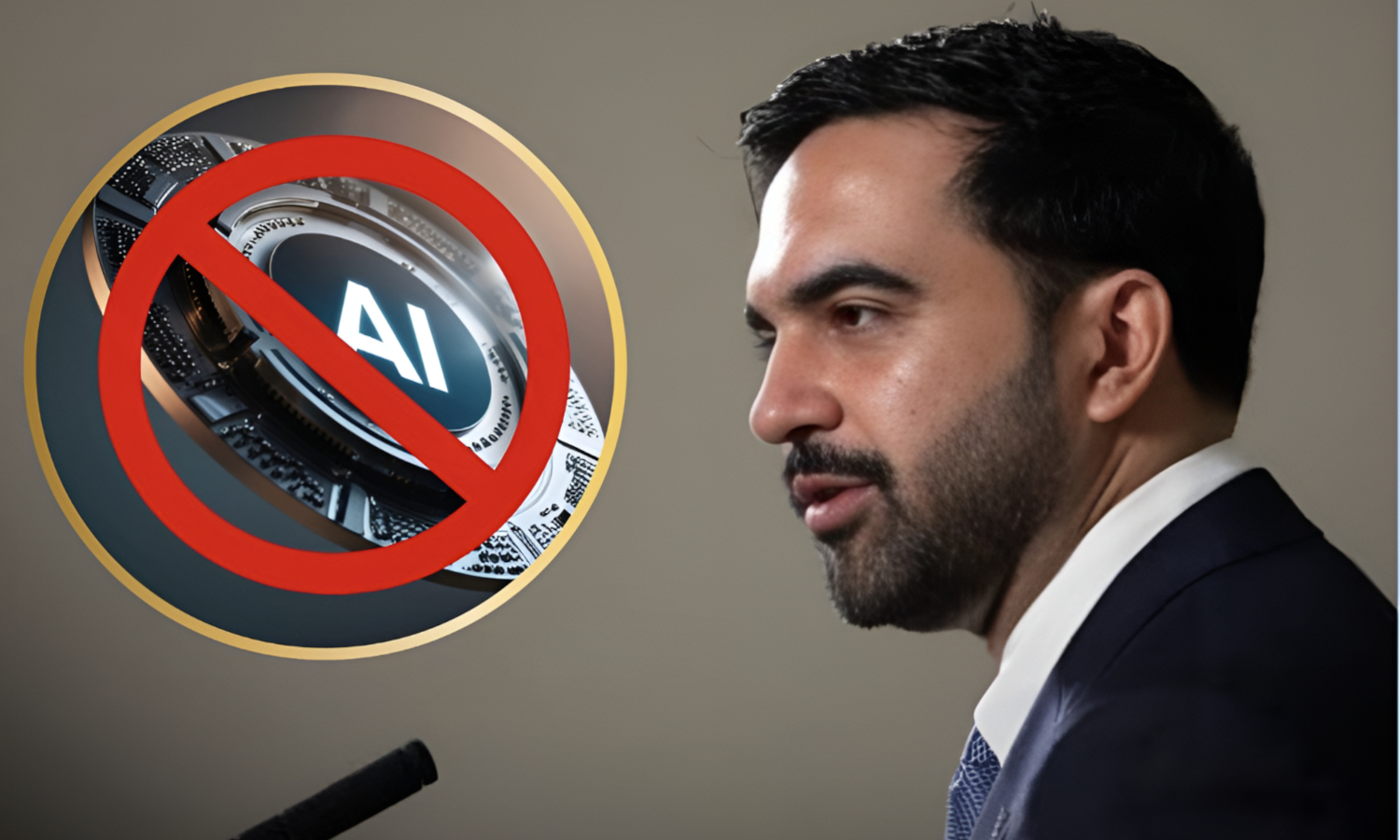
Nearly 600,000 students in New York City public schools are beginning the 2026–27 school year without access to student-facing generative AI tools. New York City Public Schools describes the measure as the nation’s broadest student-facing AI moratorium, covering every grade from 2-K through eighth. Other districts watching from the sidelines now have a live policy experiment to follow.
What the Moratorium Actually Covers
Student-facing generative AI is prohibited through eighth grade, and companion chatbots are off-limits for every student in the district.
The moratorium prohibits student-facing generative AI software for grades 2-K through 8 for the full 2026–27 school year, according to NYCPS policy guidance. The district also prohibits companion chatbots across all grade levels, including high school. Screen-time guidance accompanies these restrictions: no daily one-to-one screen time for students in 2-K through second grade, a recommended maximum of 30 minutes per day for grades 3–5, and a recommended maximum of 45 minutes for grades 6–8.
Teachers are not locked out entirely. NYCPS-approved AI tools remain available for lesson planning and operational tasks, according to the mayor’s office announcement. The policy draws a firm line, however: AI may not be used for grading, behavior monitoring, or any decision involving student placement, promotion, or graduation.
Two categories of technology stay protected. The policy exempts assistive tools required under Individualized Education Programs or 504 Plans. Language-access technology for English-language learners is also protected under federal and state requirements, per NYCPS guidance.
We’re standing firmly in our belief that innovation does not mean more technology.
Kamar Samuels, NYC Schools Chancellor, per the mayor’s office announcement
High School and What Comes Next
Older students get supervised pilots and literacy instruction rather than an outright prohibition.
High school students are not subject to the same moratorium. The city is planning limited, supervised pilots for older students, with official materials confirming direct teacher supervision and a maximum of 45 minutes per week per participating student. The intent is structured exposure, not open access.
Two 45-minute AI-literacy modules are also planned annually for high schoolers, designed to help students assess the technology critically before relying on it. Mayor Zohran Mamdani said the city intends to spend the year studying generative AI’s effects rather than accepting the premise that early adoption is inevitable or necessary. Chancellor Kamar Samuels framed the policy as an effort to ensure students develop the critical-thinking skills they need before graduating, per ABC News.
A One-Year Pause With National Weight
What New York decides after its evaluation year could shape how districts across the country approach generative AI in classrooms.
The district frames this explicitly as a one-year moratorium, with a formal evaluation period before any decision on whether to extend, narrow, or replace the policy. New York City Public Schools is the nation’s largest school district, according to ABC News, and policy decisions at this scale tend to draw attention beyond the city’s own classrooms. Whether this moratorium becomes a model for other districts or a reference point for a different approach will depend largely on what that evaluation finds, and on broader conversations about child safety in the age of generative AI.