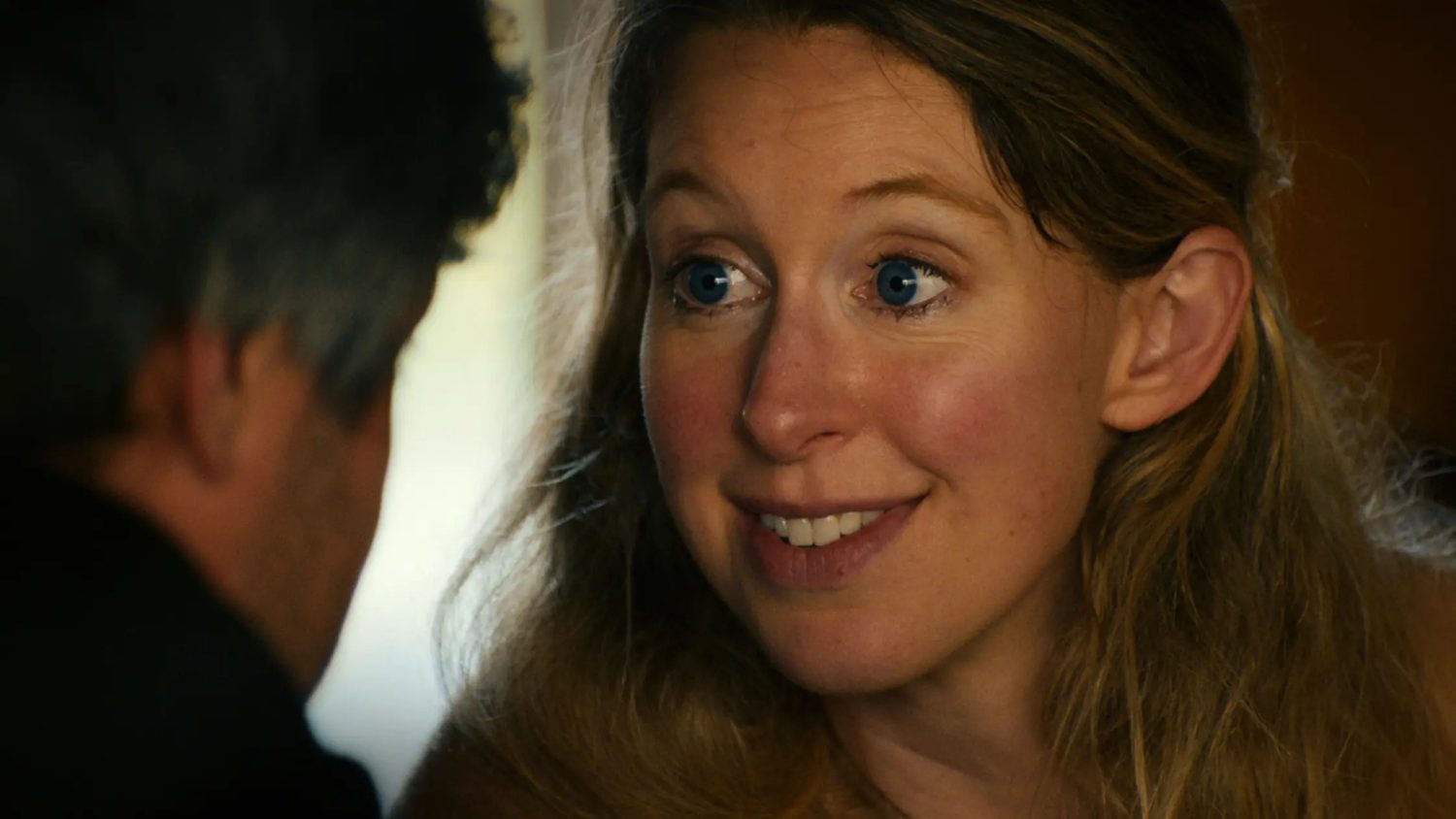
Phones confiscated into locking pouches. Title withheld. A near-three-hour runtime announced to an audience that had no idea what they were about to watch. When the Herzog Theatre lights dropped at the 53rd Telluride Film Festival, the subject revealed herself: Elizabeth Holmes, 34 days before federal prison. The film is You Can See Everything, co-directed by Nathan Fielder (The Rehearsal) and Lance Oppenheim, distributed by A24. Holmes is currently serving an 11-year fraud sentence — and has a clemency petition pending. This documentary is her most visible reframing attempt yet.
A Three-Year Odyssey That Starts at the Edge of a Prison Door
What began as 34 days of radical transparency” became a multi-year reckoning with narrative control.
Holmes and partner Billy Evans invited Fielder and Oppenheim’s crew to essentially move in before she reported to Texas federal prison in May 2023. The film then stretches across three years across her rejected appeals in 2024, ongoing legal maneuvering, and her insistence, directly on camera, that she never lied about Theranos. Fielder interrogates that claim in real time. The film interrogates whether any documentary can escape manipulation when its subject desperately wants redemption.
Fast Facts
Everything you need to know before October 16.
- Runtime: Approximately 174 minutes
- Theatrical release: October 16, 2026, via A24
- Premiere: Secret TBA screening, September 6, 2026, Herzog Theatre, Telluride
- Screening protocol: Smartphones locked in pouches; title withheld until the film began
- Holmes’ legal status: 11-year sentence; appeals rejected in 2024; clemency petition to the U.S. Office of the Pardon Attorney pending as of early 2026
Audiences Left the Herzog Stunned
Early reactions suggest the film dismantles Holmes-fatigue rather than feeding it.
One reviewer at Awards Radar called it “one of the most jaw-dropping documentaries ever made.” A critic at The Sunbreak admitted they “could not imagine wanting to hear another second about Elizabeth Holmes” before the screening — and left proven dead wrong. That’s the trick: the same pull that drags you into a prestige drama’s third season on a story you swore you’d abandoned, except here nobody’s acting and the stakes were already decided in a federal courtroom. According to Variety, the film lands as a succession of twists, intimate close-ups, and ethical quandaries that leave audiences stunned across its nearly three-hour runtime — early critical consensus framing it as formally radical and culturally explosive.
Fielder Steps In Front of the Camera – And Into Ethical Quicksand
The director becomes a central character, and the film’s hardest question deliberately stays unanswered.
Fielder isn’t hiding behind the lens. He’s on screen, pressing Holmes through intense conversations and extreme close-ups, visibly wrestling with his own skepticism. The approach extends the uncomfortable intimacy that made The Rehearsal appointment viewing — except this time his subject has a federal prison number. The unresolved tension: does giving Holmes this platform re-center her redemption arc over the investors and patients her company defrauded? Early reviews raise the question but leave it deliberately unanswered — and that ambiguity appears to be the film’s thesis. With a clemency petition still pending, You Can See Everything arrives as the most high-profile vehicle yet for Holmes’ public image strategy.
You Can See Everything opens October 16. Holmes remains incarcerated. Her clemency petition sits pending. Fielder spent three years asking whether a camera finds truth when the subject sets the terms. That question doesn’t resolve when the credits roll.