Your flight lands at Miami International. You step off the jet bridge into “Welcome to Vice City” signage, pass baggage carousels wrapped in GTA 6 artwork, and walk under columns plastered with Vice City logos. That’s not a fever dream — it’s a 19-page pitch deck that Miami-Dade County officials submitted to Rockstar Games, dated June 29, 2026. Journalist Francisco Alvarado of The Miamian obtained it via public records request. Miami pitched Rockstar. Not the other way around. These kinds of controversies are nothing new for video games navigating the boundary between entertainment and public life.
From Baggage Claim to Brickell: What the County Actually Proposed
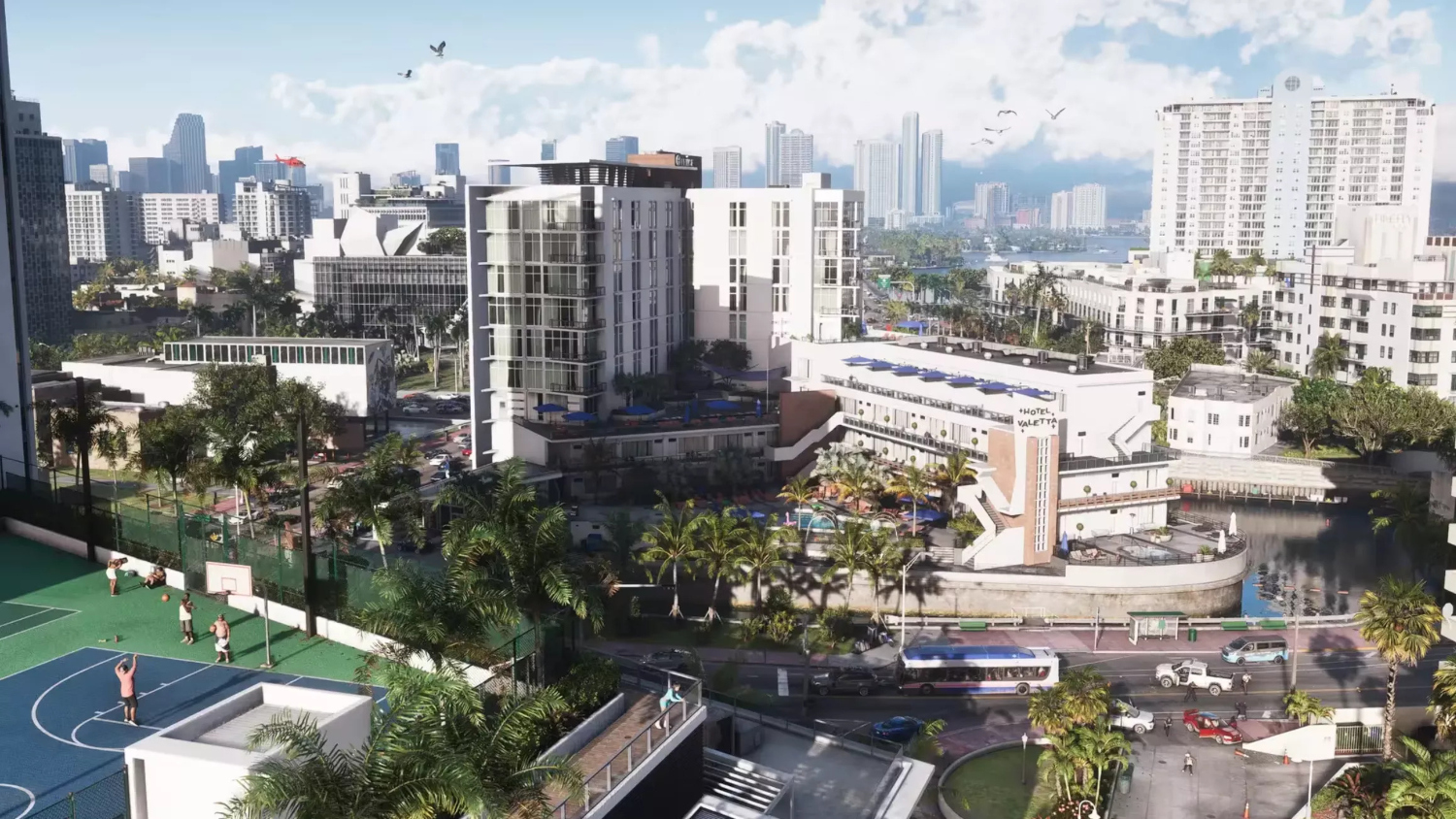
The “GTA VI × MDC – Vice City” deck proposes turning county-owned public spaces into immersive GTA-branded experiences across Miami-Dade.
- Miami International Airport: a display aircraft in Vice City livery, GTA 6-themed baggage claim, customized carousels, and “Welcome to Vice City” arrival signage
- PortMiami Terminal J: a Port Gellhorn-style installation mimicking GTA 6’s dockyard imagery with cargo containers and cranes
- Metromover cars wrapped in Vice City branding; custom Vice City manhole covers in Brickell and downtown
- Tropical Park “Vice City Motor Fest”: a family-friendly event with lowriders, DJs, and food vendors — explicitly without in-game criminal behavior
- “Vice City Radio Lab”: a community media space for music production, podcasting, and game development
Mayor Daniella Levine Cava’s office framed all of it as a tourism and revenue opportunity tied to GTA’s enormous global reach — the kind of exposure most destination marketing budgets couldn’t buy. County spokesperson Carlos Suarez confirmed that discussions with Rockstar occurred, while stressing that the proposal remains conceptual and subject to formal review.
“Nothing has been formally agreed to or approved, and any idea would have to go through the appropriate review and approval process.” — Carlos Suarez, Miami-Dade County spokesperson
The Sheriff Has Opinions. Strong Ones.
Law enforcement and the judiciary have drawn a clear line between economic opportunity and institutional messaging.
On September 3, 2026, Sheriff Rosie Cordero-Stutz and Commissioner Juan Carlos Bermudez issued a joint statement calling on the county to reject the plan — including the proposed temporary renaming of MIA as “Vice City Airport.” Chief Judge Ariana Fajardo and Clerk Juan Fernandez-Barquin separately wrote to Mayor Cava asking that courthouses be excluded, while acknowledging the deal could bring “significant” economic opportunities to the county. The economic upside wasn’t lost on anyone — the objection is about what the branding says, not what it earns.
“Miami-Dade County is not Vice City.” — Sheriff Rosie Cordero-Stutz
That line functions as both policy statement and bumper sticker.
Political Theater With a 2028 Expiration Date
The GTA opposition lands inside a broader fight over the sheriff’s budget and Bermudez’s political future.
The moral argument against branding public manholes with a carjacking simulator’s logo is straightforward enough. The political calculus is worth unpacking, too. Bermudez is a Republican and a reported 2028 mayoral candidate. He and Cordero-Stutz are simultaneously competing for county commission votes on the sheriff’s office 2027 budget. Opposing this plan keeps their messaging consistent and their coalition intact — think of it as the political equivalent of a two-for-one deal, where the moral high ground and the electoral math happen to point in the same direction. The tension between law enforcement priorities and municipal branding decisions is playing out in cities across the country.
No deal exists as of early September 2026. Rockstar has not publicly responded. Financial terms were never disclosed in the pitch. If Miami pulls this off, it becomes a template for cities willing to co-brand public infrastructure with controversial entertainment IP.
If it collapses, the sheriff’s office gets to say “told you so” — and will likely do so, loudly, through 2028.