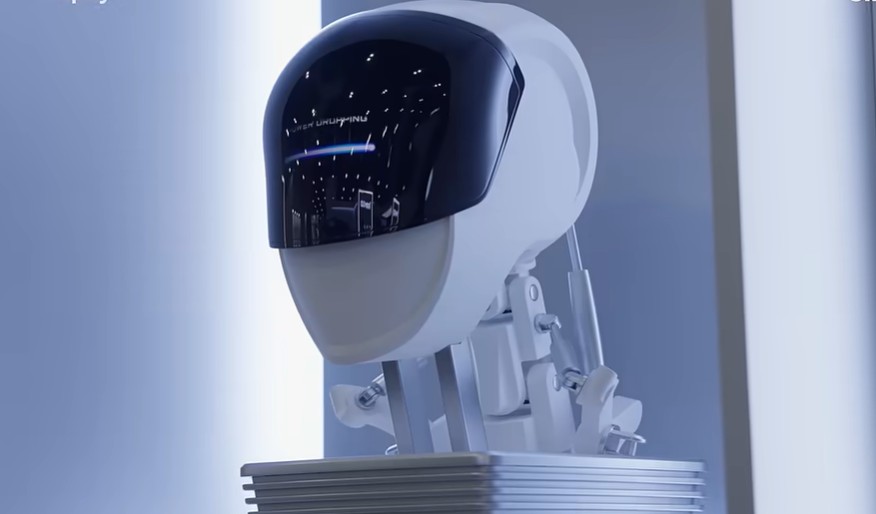
Your future robot companion just got a serious upgrade. LG Display unveiled a curved 7.2-inch OLED face for humanoid robots at SID Display Week 2026, marking the first time anyone’s built displays specifically for robot expressions. Think of it as giving your smart home assistant the ability to actually look at you while delivering the weather forecast.
This isn’t some sci-fi concept demo. The flexible P-OLED panel uses automotive-grade durability standards, operating from -30°C to 85°C with over 15,000 hours of lifespan. That polyimide plastic substrate bends naturally around robot head contours while delivering 1,000 nits of brightness.
The third-generation Tandem OLED display technology cuts power consumption by 18% compared to previous versions—crucial when your robot needs to manage heat buildup during household tasks.
Smart displays that actually conserve battery
OLED’s per-pixel lighting delivers efficient communication for battery-powered robots.
The demo interface showcases exactly what you’d want from a household robot:
- Greeting animations
- Battery status
- Weather updates
- Sleep mode indicators
- Calendar reminders
OLED’s per-pixel lighting means black screen areas stay completely off, dramatically extending battery life. Your robot’s face only illuminates the central color area showing relevant information, like a digital mood ring that actually serves a purpose.
LG isn’t working alone here. The display connects directly to LG Electronics’ CLOiD humanoid robot, which debuted at CES 2026 with dual 7-degree-of-freedom arms for household tasks.
Meanwhile, Samsung Display showcased their competing 13.4-inch circular OLED for smaller “AI OLED Bot” applications, proving this technology race is heating up fast.
Beyond the uncanny valley
Curved displays provide psychological benefits that make robot interactions feel more natural.
Both companies recognize that flexible OLED beats rigid LCD displays for robot applications, offering superior image quality and the form factor flexibility robots demand. An LG representative explained this represents a “third-generation Tandem OLED foundation, with a different optimization for humanoid robot applications.” The specs mirror automotive display standards because robots face similar environmental challenges.
Your smart home is about to get significantly more expressive. These OLED robot faces bridge the uncanny valley by providing clear, efficient communication that feels natural rather than creepy. When your household assistant can actually show you its battery level through facial expressions, robot adoption suddenly makes a lot more sense.