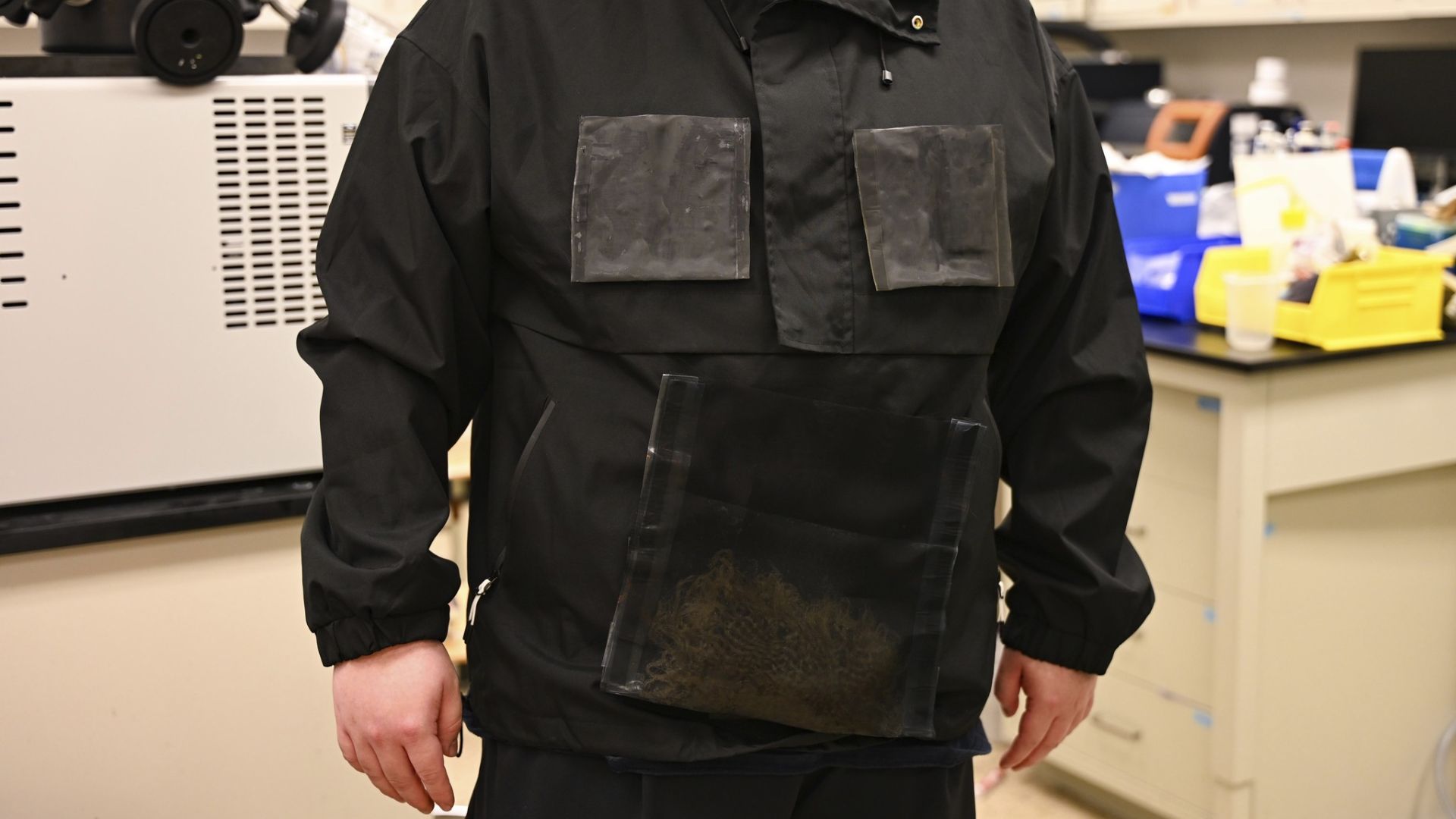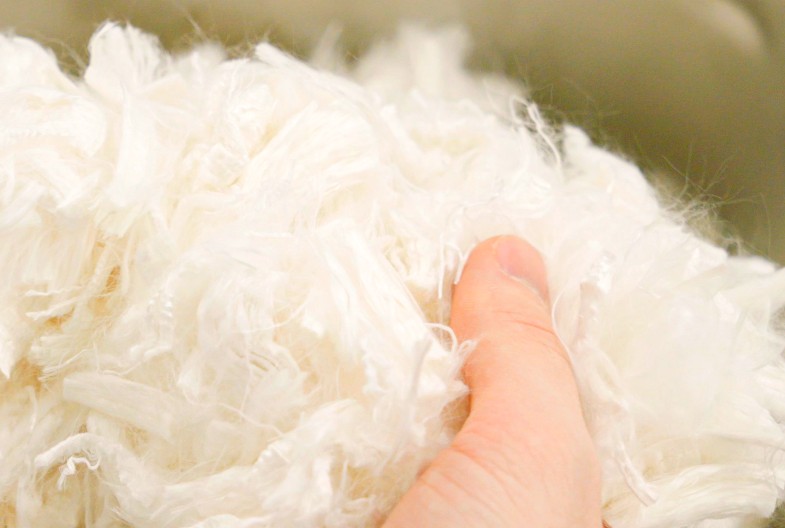
Shopping for sustainable clothes usually means choosing between expensive organic cotton and plastic-adjacent synthetics that shed microfibers like a golden retriever in summer. But Keel Labs just dropped a third option that sounds like science fiction: Kelsun fiber, spun entirely from seaweed.
You read that right. The same kelp forests that marine biologists obsess over are now being harvested to make your jeans.
The Science Behind Sea-to-Shirt
This isn’t your grandmother’s textile innovation — it’s ocean farming meets industrial spinning.
Keel Labs extracts alginate biopolymer from kelp, then puts it through a traditional wet-spinning process that any textile mill can handle. The genius lies in compatibility: Kelsun runs on standard knitting and weaving equipment, making it a plug-and-play replacement for cotton or synthetic fibers.
The environmental math is staggering:
- Kelsun production uses 70 times less water than cotton while eliminating pesticides entirely
- No farmland required
- The fiber biodegrades completely in 61 days under proper composting conditions, unlike synthetic alternatives that break down into microplastics
Even better? The stuff actually feels like fabric you’d want to wear. Third-party testing describes Kelsun textiles as soft, smooth, and comfortable — not the scratchy hair shirt you might expect from ocean vegetables.
From Lab to Luxury Brands
Stella McCartney and Outerknown are already weaving seaweed into high-fashion collections.
Real products are hitting real closets. Stella McCartney featured Kelsun in her collections, highlighting its dramatically reduced environmental footprint. Outerknown launched an entire seaweed-fiber line showcasing the material’s versatility across different garments.
Keel Labs even produced a demonstration T-shirt blending 70% Kelsun with 30% cotton, printed with algae-based ink. CEO Tessa Callaghan called it proof that “biomaterials are ready to revolutionize the industry at large,” according to company statements.
The shirt runs on standard knitting machines, proving that mills won’t need massive equipment overhauls to adopt ocean-based fibers.
The Bigger Wave
This isn’t just about clothes — it’s about reimagining where materials come from.
Sustainability advocate Aditi Mayer noted that “material choices alone” account for over half of fashion brands’ emissions, making Kelsun’s renewable, plastic-free approach “incredibly promising,” according to Keel Labs press materials.
The company earned USDA Biobased certification and won the RISE 2025 Innovation Award, signaling serious industry recognition. Applications extend beyond apparel into home goods, automotive textiles, and consumer packaging.
Kelsun isn’t broadly available yet — Keel Labs is still scaling production. But the collaborations prove ocean-based fibers have moved from concept to closet, turning kelp forests into the textile industry’s next frontier.
Your sustainable wardrobe just got a lot more interesting.