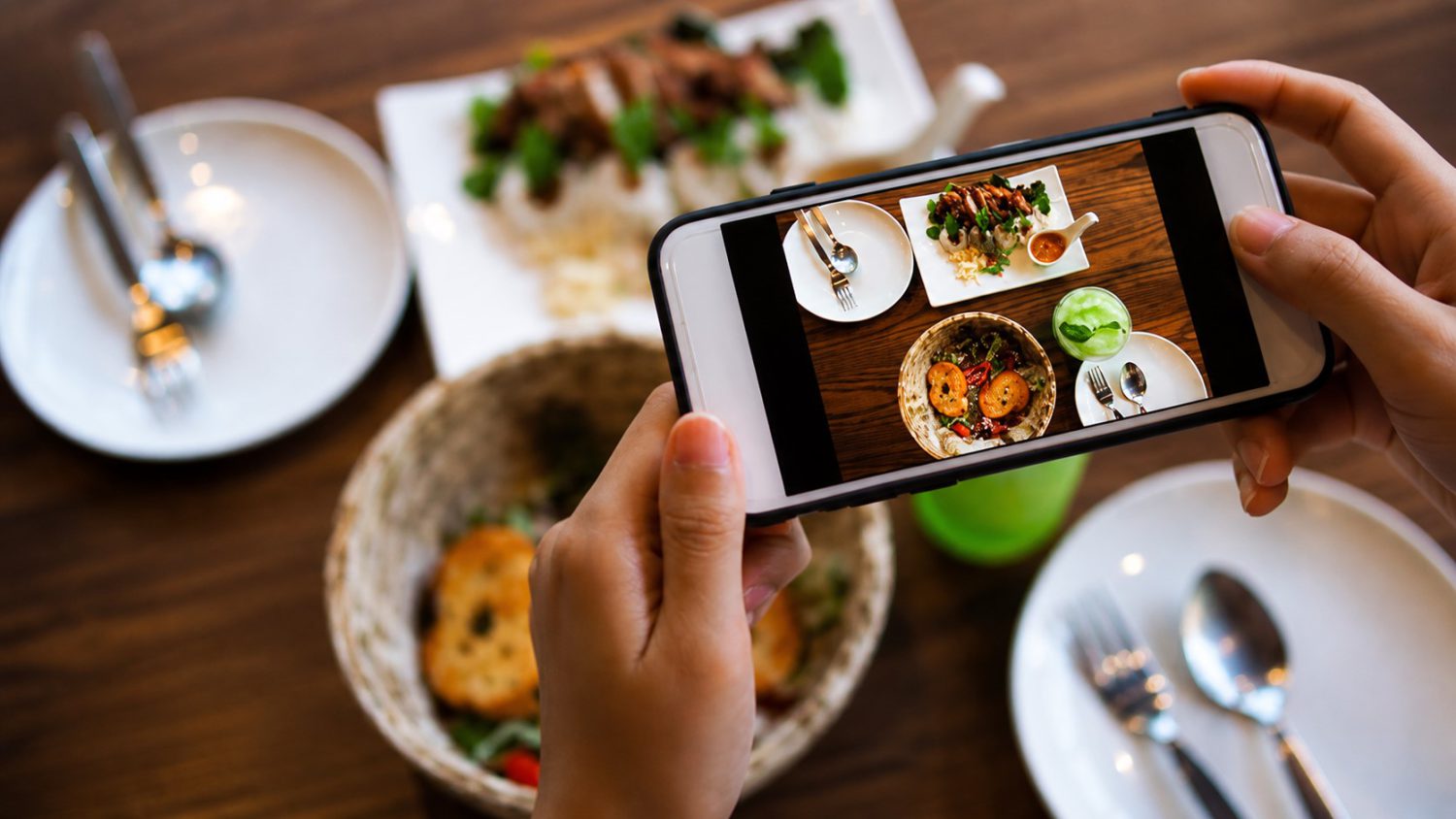
Scroll through dinner. Film your food. Text during the appetizers. These habits are so normalized that most diners barely notice they’re doing it. Restaurants are starting to notice it. Venues across at least 11 U.S. states are now formalizing restrictions on smartphone use. The approach mirrors how a previous generation eventually treated cigarettes: as something that harms the room, not just the person holding it.
How They’re Doing It
Enforcement runs from locked pouches to free wine, depending on how serious the venue is.
At Antagonist Coffee and Cocktails in Charlotte, North Carolina, you hand your phone to the host and watch it get sealed inside a Yondr-style lockable pouch. You carry the sealed pouch with you all evening, and staff unlock it when you leave.
Co-owner Mike Salzarulo put the intent plainly. Axios Charlotte and country1037fm.com report his words directly: “I want to build a place that kind of forces you to connect.” Board games and card games are on hand for anyone whose hands feel empty.
Guests at Hush Harbor, a bar on H Street in Washington, D.C., get the same pouch system with one practical adjustment. Anyone who genuinely needs a phone for an emergency can step outside and ask staff to unlock the public USB charger pouch, per WJLA and USA Today. The bar calls its mission “presence, connection and community.”
Delilah, the upscale supper club with locations in Las Vegas, Los Angeles, Dallas, and Miami, bans phones and social posts entirely without any physical hardware. Its official Wynn Las Vegas page states: “To protect guest privacy and preserve the intimate atmosphere, Delilah enforces a ‘no phones, no posting’ policy.” The concern there is less about distraction and more about discretion: in a room full of notable guests, nobody wants a stranger’s Instagram story placing them at the table.
Softer approaches exist on the other end of the spectrum. Al Condominio in Verona, Italy offers a free bottle of wine to any table that deposits phones for the meal, according to The Guardian. A Chick-fil-A location in Maryland tested free ice cream for families who kept phones off the table, per the New York Post and Fox News.
Why Now, and How Guests Are Responding
Initial resistance tends to soften once the phone is actually out of reach.
Operators consistently point to the same motive: they want attention on the food, the music, and the person sitting across the table. Privacy is a secondary driver, particularly at nightlife venues where filming other guests without consent has become a routine irritant.
Guest reactions follow a predictable arc. Patrons often balk at first, then emerge saying the evening felt different, more focused. NPR coverage from March 2026 captured the sentiment directly, with guests describing the experience as feeling like “life needs to be more like this.”
Critics argue phone bans are paternalistic, especially for parents or anyone who might receive an urgent call. Most venues have built in safety valves for that reason, allowing pouch unlocks on request or brief exits to check in.
The geographic footprint is wide and growing. Venues span states including California, Illinois, Tennessee, New York, and Texas, with Washington, D.C. showing one of the highest concentrations, according to Axios. In the UK, PizzaExpress has trialed phone-free hours, a signal that the concept is moving beyond independent venues into mainstream chains.
Phone-free dining has crossed from novelty into deliberate brand strategy. Whether a locked pouch reads as an imposition or a relief probably depends on one thing: how badly you needed the break.