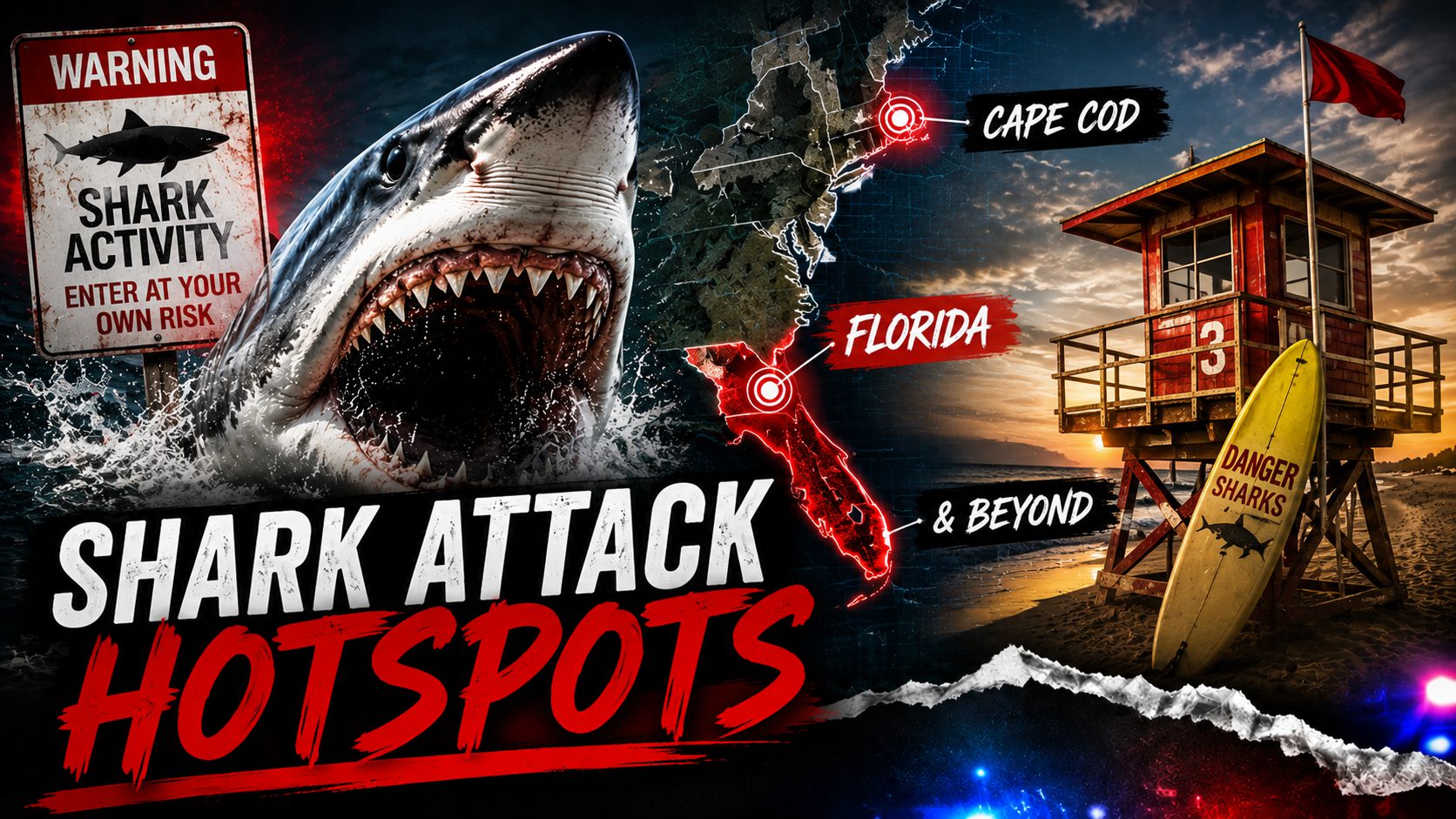
The place with the most great white sharks isn’t the place with the most bites. That distinction belongs to Florida, which racked up 15 of at least 28 U.S. shark encounters in 2025, according to USA TODAY. Cape Cod, meanwhile, hosts one of the densest seasonal concentrations of adult white sharks on the planet — yet hasn’t recorded an attack in five years. Forget everything Jaws taught you. The actual geography of shark risk looks nothing like the movie — and if you’re heading to the coast, brushing up on your camping essentials is as smart as knowing your shark stats.
Florida Bites, Cape Cod Lurks
The shark-bite capital and the shark-density capital are two very different places with two very different risk profiles.
Florida has logged 101 attacks since 2020 — none fatal. Most involve smaller coastal species, blacktips clipping surfers at crowded breaks. Cape Cod tells a different story: only three confirmed white-shark attacks since 2016, including the 2018 Wellfleet fatality that was Massachusetts’ first shark death since 1936, per National Geographic. Fewer incidents, but considerably bigger animals.
Here’s how the rest of the map breaks down:
- Florida: 101 attacks since 2020, zero fatalities; 15 incidents in 2025 alone
- Hawaii: 32 bites, four deaths since 2020, mostly tiger sharks near reef zones
- California: 21 attacks, four deaths since 2020; one fatal unprovoked white-shark bite confirmed in 2025 by ISAF
- Northeast/New York: 13 attacks since 2020; one fatality off Maine in 2020
“We believe that the appearance of white sharks over the last 15 to 20 years is in direct response to the number of seals along the shoreline. It amounts to a new restaurant — or maybe a favorite restaurant reopening.”— Greg Skomal, Massachusetts Division of Marine Fisheries
Why Great White Alley Exists — and What That Means for You
Conservation worked remarkably well, and now roughly 800 great whites show up for dinner along the outer Cape every summer.
A peer-reviewed study in Marine Ecology Progress Series estimated around 800 individual great whites visited Cape Cod between 2015 and 2018. California’s central coast, by comparison, hosts about 300. These sharks spend roughly half their time in water shallower than 15 feet, cruising sandbars where gray seals haul out. Peak season runs September through October.
Long Island is the emerging subplot. A nine-foot shark was spotted off Point Lookout this past summer. Bull sharks have turned up near Rockaway Beach. Hammerheads — once uncommon this far north — now appear with regularity as ocean temperatures climb. ABC News reports at least 30 shark species migrating northward along the Eastern Seaboard. Scientists describe the trend as “normal and isn’t anything to worry about,” reflecting healthy, recovering populations rather than any coordinated move toward beachgoers.
Before hitting any Atlantic beach this summer, downloading the Atlantic White Shark Conservancy’s Sharktivity app is one of the most practical steps a beachgoer can take — essentially Waze for apex predators, mapping real-time sightings and acoustic detections along the coast. Packing the right travel gadgets alongside that app can make your coastal prep even more complete.
Beyond the app, the guidance is straightforward:
- Avoid swimming near seals or schools of baitfish
- Stay in waist-deep water or shallower
- Always swim near lifeguards
ISAF puts the odds of dying from a shark bite at 1 in 3.7 million. The ocean isn’t getting more dangerous. It’s getting more alive.