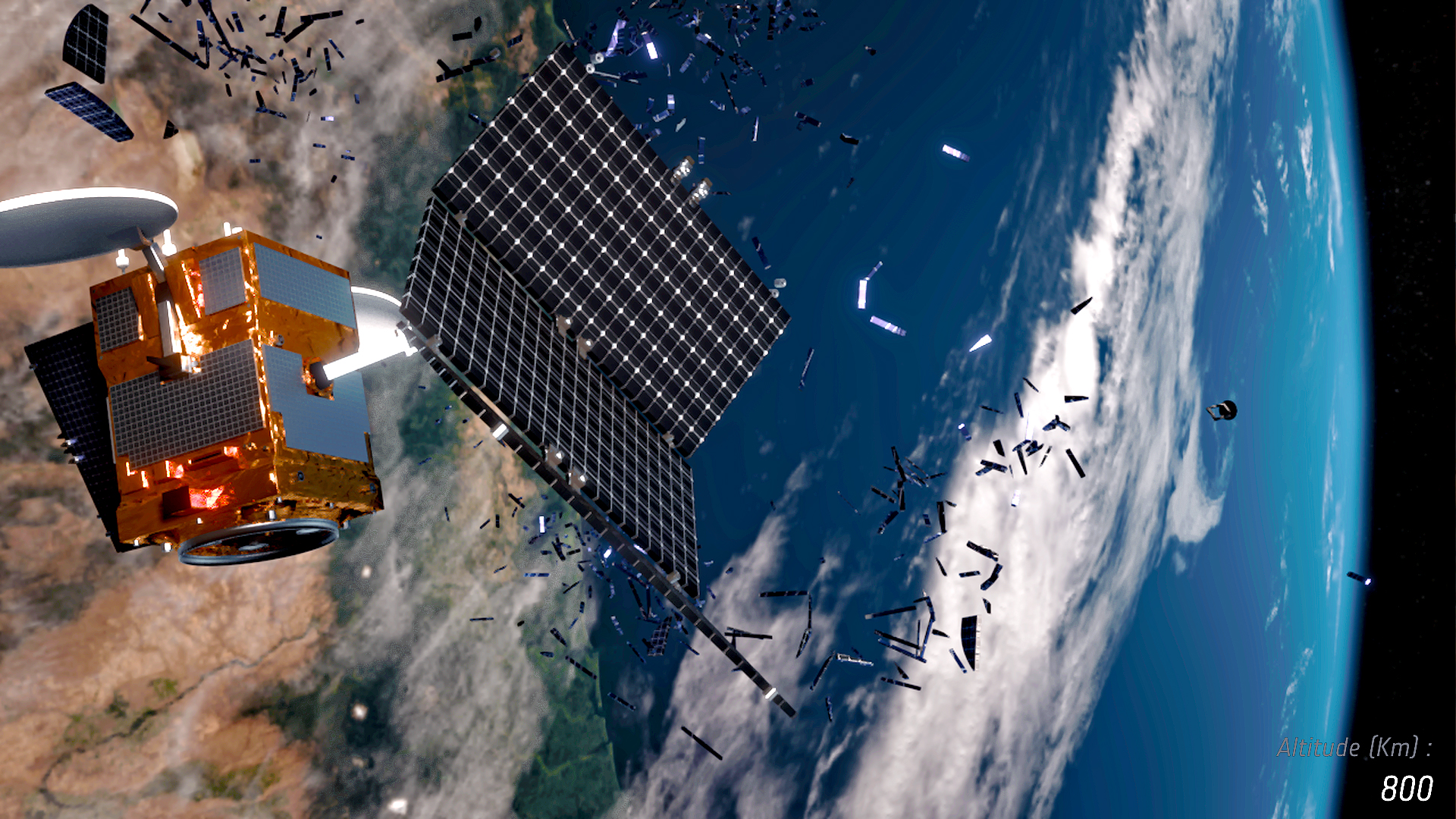
AI’s appetite for electricity is devouring power grids faster than utilities can expand them. Data centers already consume 4% of U.S. electricity, with projections hitting 12% by 2028 according to Department of Energy reports. Google’s answer? Project Suncatcher—literally shooting for the stars to harvest solar energy where Earth’s atmosphere can’t block it. Your cloud computing costs and service reliability hang in the balance of this orbital gamble.
The Moonshot Timeline
Google plans to launch prototype space data centers by early 2027, testing TPU-equipped satellites with laser communication.
CEO Sundar Pichai announced that Google will begin construction of extraterrestrial data centers in early 2027, partnering with satellite firm Planet to deploy “tiny racks of machines” equipped with Tensor Processing Units. These prototype satellites will communicate via laser links rather than fiber optics, creating a proof-of-concept for networked orbital computing. Pichai envisions this becoming “a more normal way to build data centers” within a decade.
The Physics Reality Check
Pichai’s claim of “100 trillion times more energy” from space faces serious engineering constraints that no amount of Silicon Valley optimism can overcome.
Pichai claimed Google aims “to better harness the energy from the sun that is 100 trillion times more energy than what we produce on all of Earth today.” While this appears to be rhetorical emphasis on solar abundance in space, physicists point out capturing energy at that scale would theoretically require a Dyson sphere—a megastructure encircling the sun that demands more material than exists in our entire solar system. According to technical analyses and Project Suncatcher documentation, real orbital data centers face:
- Radiation tolerance challenges
- Thermal management without water cooling
- Bandwidth bottlenecks for transmitting results back to Earth
The Space Race Heats Up
Google faces competition from Y Combinator-backed Starcloud and China’s state-sponsored orbital computing initiative.
Google isn’t alone in this cosmic computing race. Starcloud, backed by Y Combinator and Nvidia, deployed its first AI-equipped satellite in December 2025, claiming 10 times lower carbon emissions than terrestrial alternatives, even accounting for launch emissions. China launched the Three-Body Computing Constellation in June 2025, focusing on processing space-sourced data in orbit rather than beaming power to Earth. Amazon founder Jeff Bezos has also predicted space-based solar data centers will become cost-effective within 20 years.
Ground Truth
Despite orbital ambitions, Google continues massive terrestrial investments while emissions rise 51% amid mounting environmental concerns.
Here’s the reality check: Google simultaneously announced a $40 billion investment in Texas data centers, suggesting orbital AI infrastructure remains supplementary rather than replacement strategy. Despite pursuing climate-conscious initiatives like Project Suncatcher, Google’s emissions have risen 51% over recent years, prompting UN Environment Programme chief Golestan Radwan to warn: “We need to make sure the net effect of AI on the planet is positive before we deploy the technology at scale.” Your AI-powered search results might get faster, but the environmental cost keeps climbing whether those servers orbit Earth or sit in Texas.