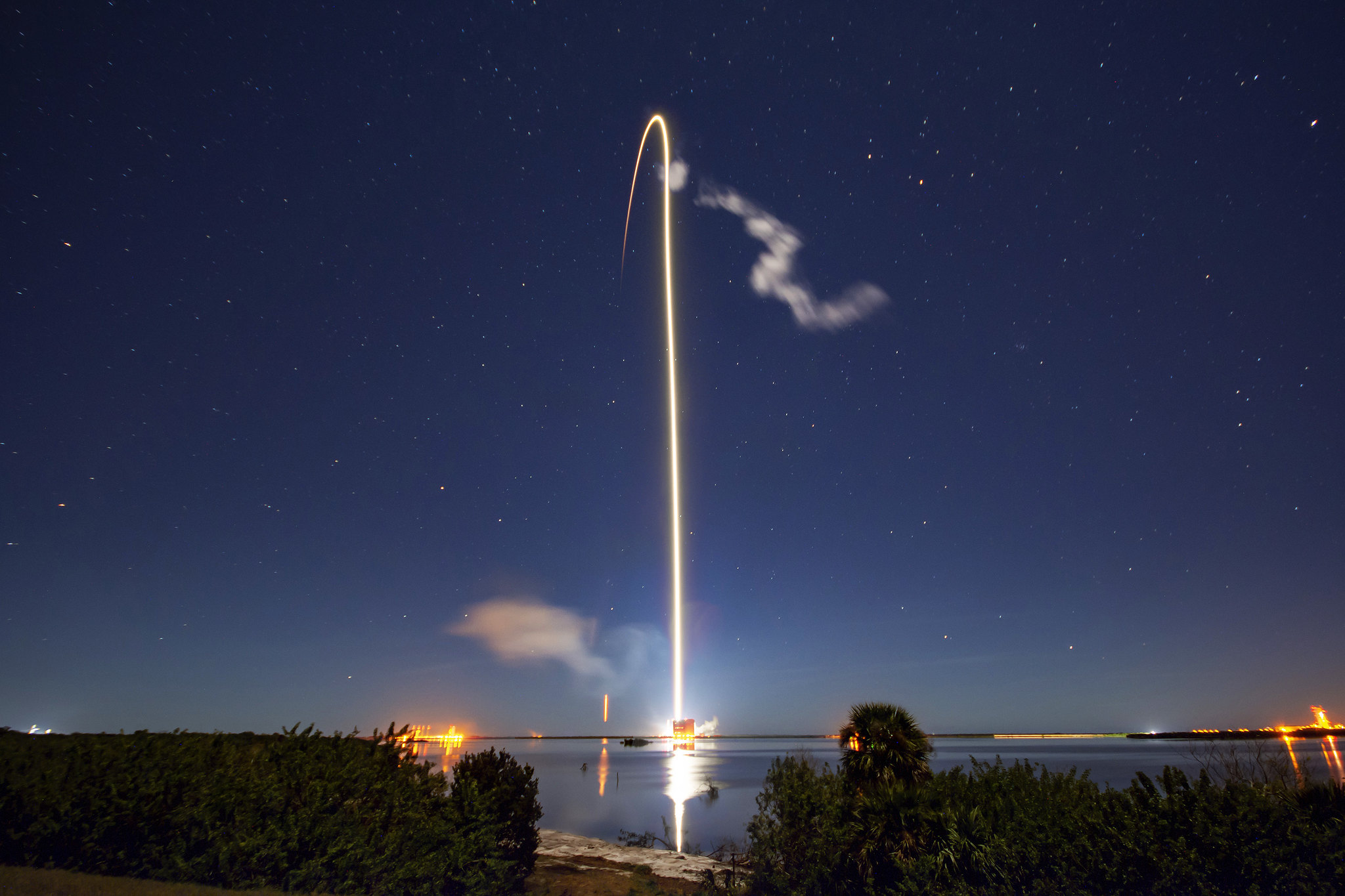
The math is staggering in the worst possible way. SpaceX just filed with the FCC to launch one million satellites as orbital AI data centers—turning Earth’s already crowded orbital space into a computational grid that would dwarf today’s 12,000 active satellites by a factor of 80. If you’ve ever spotted those bright Starlink trails streaking across the evening sky like cosmic ticker tape, prepare for thousands more dominating every clear night.
The Atmospheric Gamble Nobody Asked For
Launch emissions and satellite reentries dump unknown pollutants into the stratosphere while bypassing environmental review.
Black carbon and metallic nanoparticles don’t sound apocalyptic until you realize they’re accumulating in the stratosphere with every SpaceX launch and satellite burnup. Atmospheric scientist Eloise Marais warns, “It’s daunting because we’re doing this sort of experiment with the atmosphere when we don’t really know what the result will be.” Each 550-pound satellite releases roughly 70 pounds of aluminum oxide during reentry—multiply that by potential daily deorbits from a million-satellite constellation, and you’re looking at industrial-scale atmospheric modification. The FCC sidesteps environmental reviews that would normally scrutinize such impacts.
Your Stargazing Days Are Numbered
Thousands of illuminated satellites will dominate night skies, effectively ending amateur astronomy and disrupting professional telescopes.
Remember trying to spot constellations through city light pollution? Now imagine thousands of satellites creating their own light show every night. John Barentine’s simulations predict that thousands of these orbital data centers would be “bright enough for people to see” simultaneously. Professional observatories like Hubble already struggle with satellite interference—scaling up to a million units would essentially blind ground-based astronomy. Your kids might grow up thinking a “natural” night sky includes more moving lights than stars.
Traffic Jams at 17,500 MPH
Orbital debris and collision risks multiply exponentially as satellite density approaches dangerous thresholds.
Over 140 million debris pieces already race through Earth’s orbit, and adding a million more active satellites transforms space into a high-speed demolition derby. Aaron Boley from UBC’s Outer Space Institute calls it a “bad idea for long-term use of space” that “blows right past” any reasonable orbital capacity. Your GPS navigation and mobile payments depend on satellites surviving this increasingly chaotic environment—but collision-generated debris could cascade into service-killing chain reactions.
The million-satellite proposal exposes the fundamental tension between technological ambition and environmental stewardship. While SpaceX promises eco-friendly space-based computing, the real question is whether we’re trading our planet’s atmospheric stability and celestial heritage for marginal improvements to AI processing power.