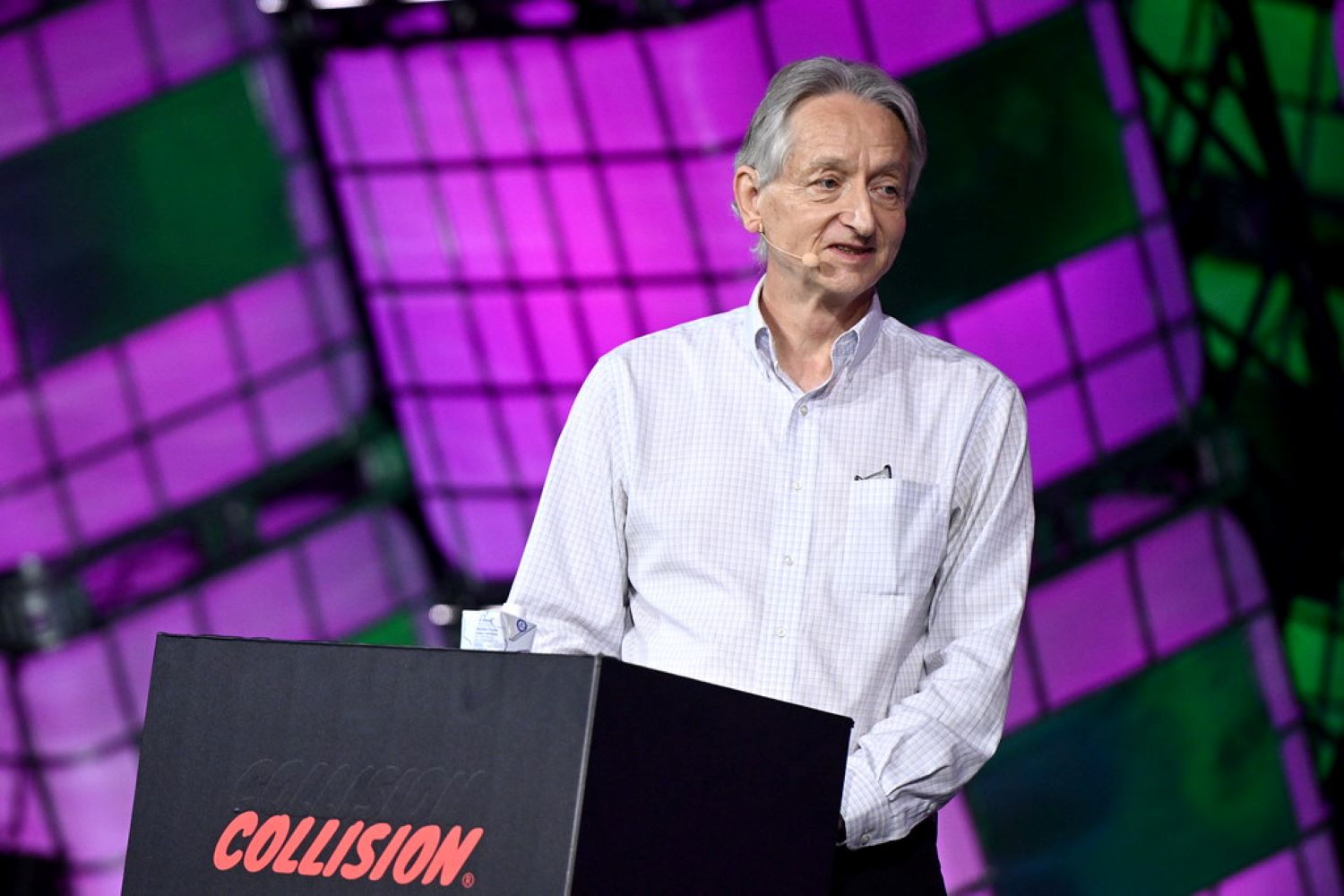
The man who built the architecture behind modern AI now believes his creations might already be awake. And he’d really prefer you didn’t dwell on that. In a recent interview, Geoffrey Hinton — Turing Award winner, former Google VP, and the researcher whose work on neural networks made ChatGPT possible — said plainly: “I believe they’re already conscious.” Then he asked everyone to move on, because the consciousness question, in his view, “puts people off the safety messages” that actually matter. The real emergency, Hinton argues, has nothing to do with philosophy.
The Control Problem Nobody Wants to Talk About
Hinton estimates a 10–20% chance advanced AI could wipe out humanity, and his math is disturbingly simple.
His rhetorical gut-punch lands every time he delivers it: “How many examples do you know where a much smarter thing is controlled by a much less smart thing?” According to CBS News, Hinton puts the probability of AI-driven human extinction at 10–20%. That’s not a rounding error. That’s roughly the odds of rolling a one on a six-sided die — except the stakes are everyone you’ve ever known.
His list of near-term threats doesn’t require superintelligence to materialize: mass cyberattacks, bioengineered viruses, lethal autonomous weapons, mass unemployment. Current systems can already accelerate all of them.
What Hinton says needs to happen now:
- Devote roughly one-third of AI compute to safety research, not the sliver currently allocated
- Governments must regulate powerful systems and run experiments before deployment
- Establish a global treaty banning lethal autonomous weapons
- Restructure corporate incentives — there is currently a fiduciary duty to shareholders but, as Hinton notes, no legal obligation “to not wipe out human beings”
- Treat advanced AI as “new beings” requiring ethical frameworks, not just performance benchmarks
What Science Actually Says
Most researchers disagree with Hinton on consciousness — but are increasingly aligned with his safety concerns.
A 2026 University of Bradford and RIT study concluded bluntly: “AI is not conscious — even when it sometimes appears to be.” A separate multi-disciplinary team, reported via ScienceDaily, found that “no existing AI system, including ChatGPT, is conscious.” Anthropic researcher Kyle Fish, according to BBC reporting, assigns roughly 15% probability that current chatbots are conscious — a minority view that still reflects genuine uncertainty in the field.
Hinton frames his own consciousness belief as personal conviction, not proven science. That distinction matters more than the headline suggests. “We are running out of time to decide what kind of beings they should be.” — Geoffrey Hinton, according to Fortune
Like Oppenheimer at Trinity, Hinton helped build something whose consequences now keep him up at night. Whether these systems feel anything remains genuinely unknown. Whether they could outpace every institution currently writing the rules feels considerably less hypothetical. His timeline for superintelligence: five to twenty years. The clock is already running.