“If You Haven’t Heard of Flock, Flock Has Probably Heard of You”
That line from Sen. Josh Hawley opened a Senate Judiciary Subcommittee hearing on Sept. 23, 2026, that put AI-powered surveillance cameras at the center of a national privacy debate.
Flock Safety is an Atlanta-based company whose cameras capture vehicle movements and make that data searchable by law-enforcement agencies across the country for up to 30 days. According to reporting by Atlanta News First and InvestigateTV, more than 120,000 of its cameras are operating nationwide.
The Investigations That Started This
Reporting by Atlanta News First and InvestigateTV documented a pattern of alleged misuse that reached from local police departments to a Senate subcommittee room.
Atlanta News First and InvestigateTV documented at least 19 cases in Georgia over one year in which police officers were arrested or relieved of duty for allegedly using Flock’s system for personal reasons, including tracking romantic partners, fellow officers, and civilians.
Flock introduced an AI-powered “audit assistance” tool in 2026 intended to help supervisors flag suspicious searches. The reporting also found that officer names had been replaced with anonymized identification numbers in external network searches. License plate numbers had also been removed from network audit trails. Both changes could make it harder for the public to determine whether their vehicle was searched improperly. The broader use of surveillance app technologies to monitor individuals without public knowledge has drawn scrutiny well beyond U.S. borders.
Four Empty Chairs
Sen. Josh Hawley, R-Mo., invited the chief executives of four surveillance technology companies to testify, and none of them came.
Hawley invited Garrett Langley of Flock Safety, Rick Smith of Axon Enterprise, Greg Brown of Motorola Solutions, and Filip Kaliszan of Verkada. None attended, according to Atlanta News First’s reporting.
Hawley said the hearing was intended to determine “what is going on” with modern surveillance cameras and whether Americans should have to accept being recorded and tracked whenever they leave home.
Who Did Show Up
The witnesses who appeared before the subcommittee included a wrongfully arrested driver, a cybersecurity researcher, a county sheriff, a legal advocate and a senior ACLU policy counsel.
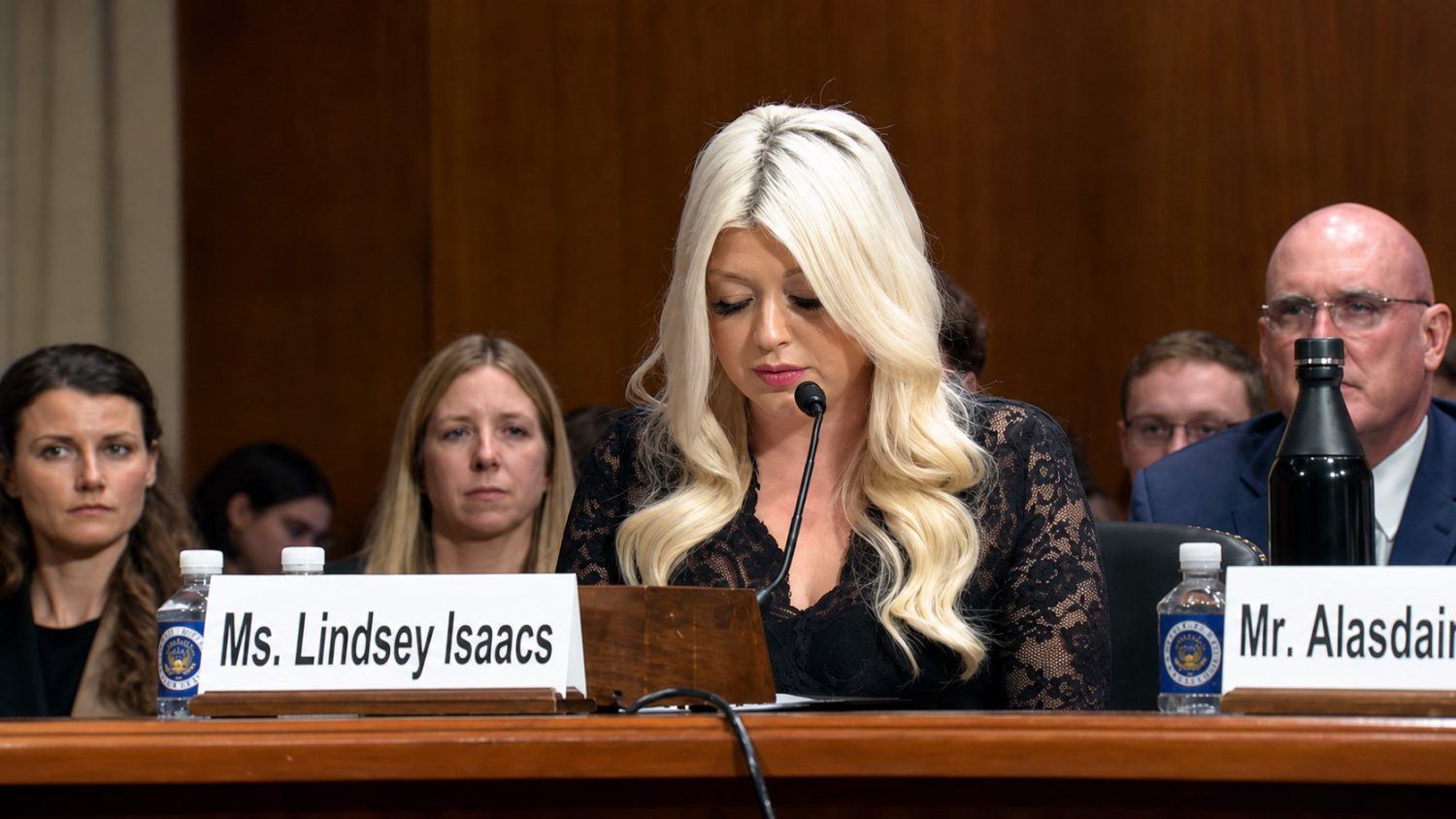
Lindsey Isaacs was sent to jail for nearly two weeks after a Flock camera match. She testified that a camera placed her vehicle near a fatal crash she was not involved in, and a second investigation eventually determined that law enforcement had targeted the wrong vehicle.
Cybersecurity researcher Benn Jordan told the subcommittee he had found dozens of Flock cameras streaming openly online. He urged Congress to apply any future regulations to all ALPR vendors, not only Flock.
Alasdair Whitney, legislative counsel for the Institute for Justice, argued that police should need a warrant before searching historical license-plate databases. “Alasdair Whitney” , the Fourth Amendment is a floor, not a ceiling,” Whitney said in his testimony.
Pinal County, Arizona, Sheriff Ross Teeple acknowledged constitutional risks but described a case in which camera data helped authorities apprehend a driver who allegedly caused a serious crash, offering a direct public-safety counterpoint to the hearing’s concerns.
Chad Marlow, senior policy counsel for the ACLU, called on Congress to prohibit federally funded law-enforcement agencies from using ALPRs altogether. He attributed the network’s growth partly to venture-capital investment in mass surveillance. That represents the ACLU’s policy position, not enacted federal law.
A Bipartisan Record, an Unresolved Question
Senators from both parties signaled concern, though the hearing produced no legislation.
Sen. Dick Durbin, D-Ill., said Congress must seek a balance between privacy and security. Sens. Katie Britt, R-Ala., and Raphael Warnock, D-Ga., entered a joint letter into the record expressing concern about potential civil-liberties violations.
Whether Congress acts on warrant requirements, audit-log transparency, or data-retention limits remains an open question. Concerns about government-linked tools secretly tracking users have surfaced in other contexts as well. The executives who could have addressed those questions did not appear.