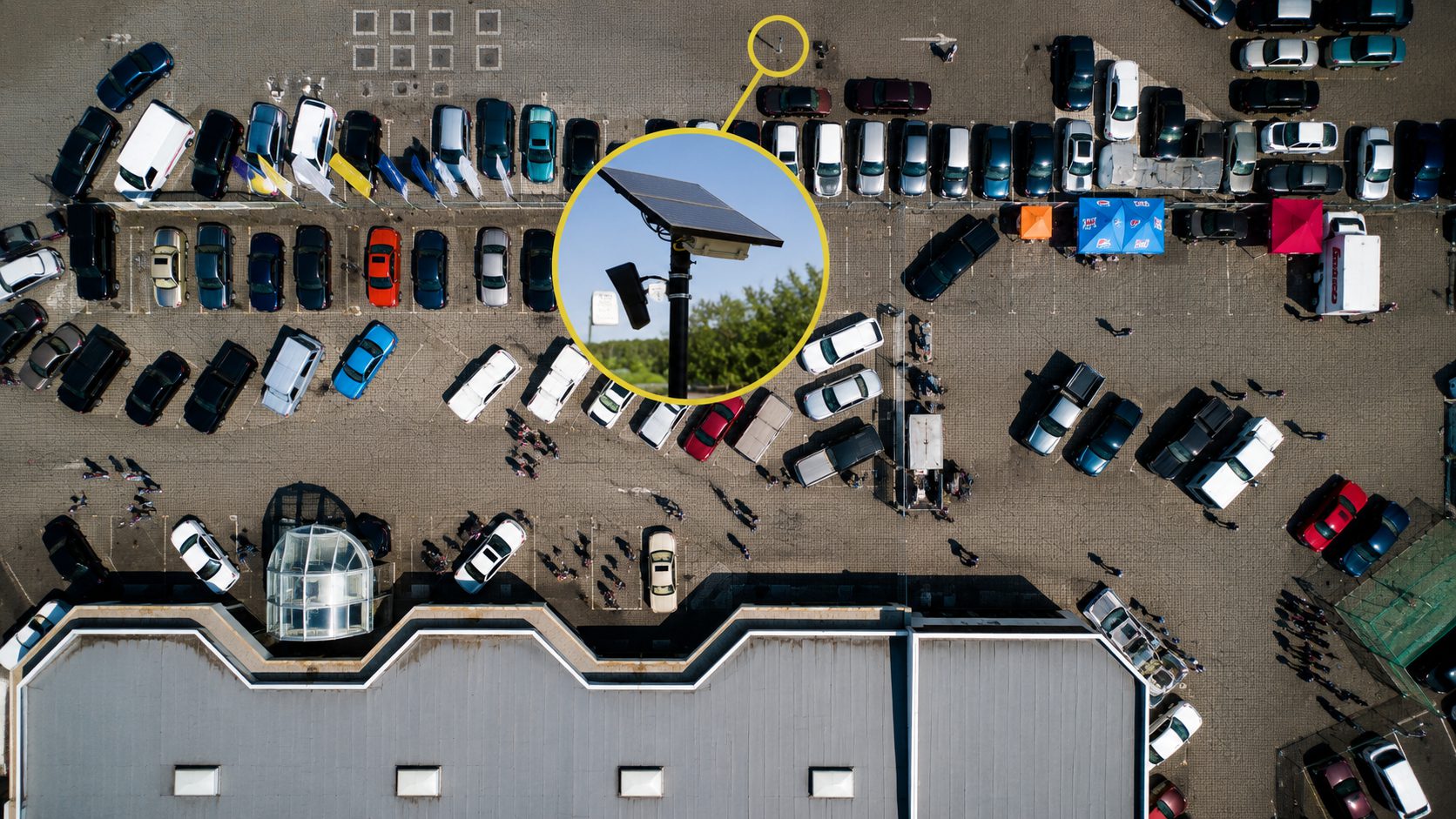
When Oshkosh Council Member Brad Spanbauer asked whether Flock Safety‘s license plate reader system could generate heat maps tracking a vehicle’s movements, the Flock representative answered flatly: “No, that is not available.” The next morning, Police Chief Dean Smith’s staff showed him the system doing exactly that — mapping vehicle locations over up to a month. Smith pulled his recommendation.
Deputy Mayor Joe Stephenson told the room, “I don’t know how this body can govern if someone tells untruths, mistruths, exaggerated truths,” according to the ACLU. The contract was dead within 24 hours. Flock later dismissed the false statement as “one small misconception.” That framing might hold up if Oshkosh were an isolated case. It wasn’t.
The Lies on the Record
Federal agencies were never out of the picture, despite Flock’s repeated assurances to local governments that no such access existed.
Loveland, Colorado Police Chief Tim Doran raised concerns that federal agents were tapping into local plate reader data. Flock’s response: those agencies no longer had access, and the company held no federal contracts. Both claims proved false. Flock had maintained pilot contracts with U.S. Customs and Border Protection and the Department of Homeland Security. The CEO later conceded the company had “inadvertently provided inaccurate information.”
When investigative reporting by NPR and others revealed ICE accessed Flock data indirectly through local police departments, the company published a blog post titled “Does Flock Share Data With ICE? No.” The ACLU argues the post was deliberately misleading — engineered to emphasize direct contracts while ignoring the access that actually mattered. Flock’s CEO eventually acknowledged the system is used for immigration enforcement but called it “not Flock’s problem.” Like a landlord insisting the building is structurally sound while tenants report flooding — technically not their pipe, practically their infrastructure.
The company also claimed in a 2021 Urbana, Illinois council meeting that it had designed its surveillance app with “groups like the ACLU.” The ACLU states unequivocally: no partnership has ever existed at any level — national or affiliate. “What happened in Oshkosh was not an isolated incident… Flock’s lies are not just directed at the general public; they often specifically target Flock’s potential government customers.” — ACLU
The Safety Net That Wasn’t
Flock’s compliance tool, designed to prevent surveillance misuse, was defeated by officers typing “hehehe” as their official search justification.
After Flock data was reportedly used in Texas in May 2025 to secretly tracking users seeking abortion care in Illinois, the company announced a Proactive Search Term Tool to block impermissible searches. An ACLU of Massachusetts audit found the tool performed about as well as a screen door on a submarine. One Oregon police department logged “investigation” 111 times and “hehehe” 20 times as search justifications in September 2025 alone, according to ACLU findings. Any keyword filter meant to catch sensitive terms like “abortion” was effectively useless when officers could type anything — and did.
Flock had also falsely claimed on LinkedIn, through a senior director, that it partnered with the ACLU of New Mexico to craft a state ALPR bill. The ACLU says this characterization is simply untrue. Both organizations supported the legislation — for different reasons. That is not a partnership.
States like California and Washington are now legislating hard limits:
- 21-day data retention caps
- Explicit bans on sharing plate data with immigration authorities
- Narrow authorized-use lists
For cities still weighing Flock contracts, the question isn’t whether the cameras work. The question is whether you can trust what the company tells you about them — and the documented record suggests you probably shouldn’t.