A presidential proclamation signed October 28, 2026, declares that imports of industrial robots, industrial machinery, and related parts and components threaten U.S. national security. The legal basis is Section 232 of the Trade Expansion Act, a statute that allows the president to impose trade restrictions when imports are found to impair national security.
No new tariff takes effect because of this proclamation alone. Commerce Secretary Howard Lutnick and the U.S. Trade Representative are instead directed to pursue or continue negotiations with trading partners, with a progress report due within 180 days.
What Could Come Next
Tariffs, quotas, and domestic-investment incentives are all on the table, but none is certain.
Depending on how those negotiations proceed, Trump may later impose tariffs, duties, quotas, or fees on covered imports. The administration could also create incentives designed to expand domestic production of robots and industrial machinery.
Specific rates, affected product codes, country-by-country treatment, and any exemption framework are not yet determined. All remain subject to negotiations and further executive decisions.
The Administration’s Case
The proclamation cites both defense readiness and cybersecurity risk as justification.
The proclamation argues that industrial robots and machinery are essential to producing military weapon systems and to supporting critical infrastructure across the broader economy. It also asserts that foreign-sourced technologies could introduce significant cybersecurity vulnerabilities with severe consequences for U.S. operations.
The Commerce Department investigation that preceded the proclamation found dependence on foreign suppliers poses risks to the U.S. industrial base. It also cited long-term competitiveness in a strategically important sector as a concern.
Who Faces Exposure
Major manufacturers and foreign robot suppliers could feel the effects of any future restrictions.
Major users of industrial robots stand in the path of any future restrictions. According to Ars Technica reporting, that group includes automakers General Motors, Ford, and Tesla, as well as aerospace and defense manufacturers Boeing and Lockheed Martin.
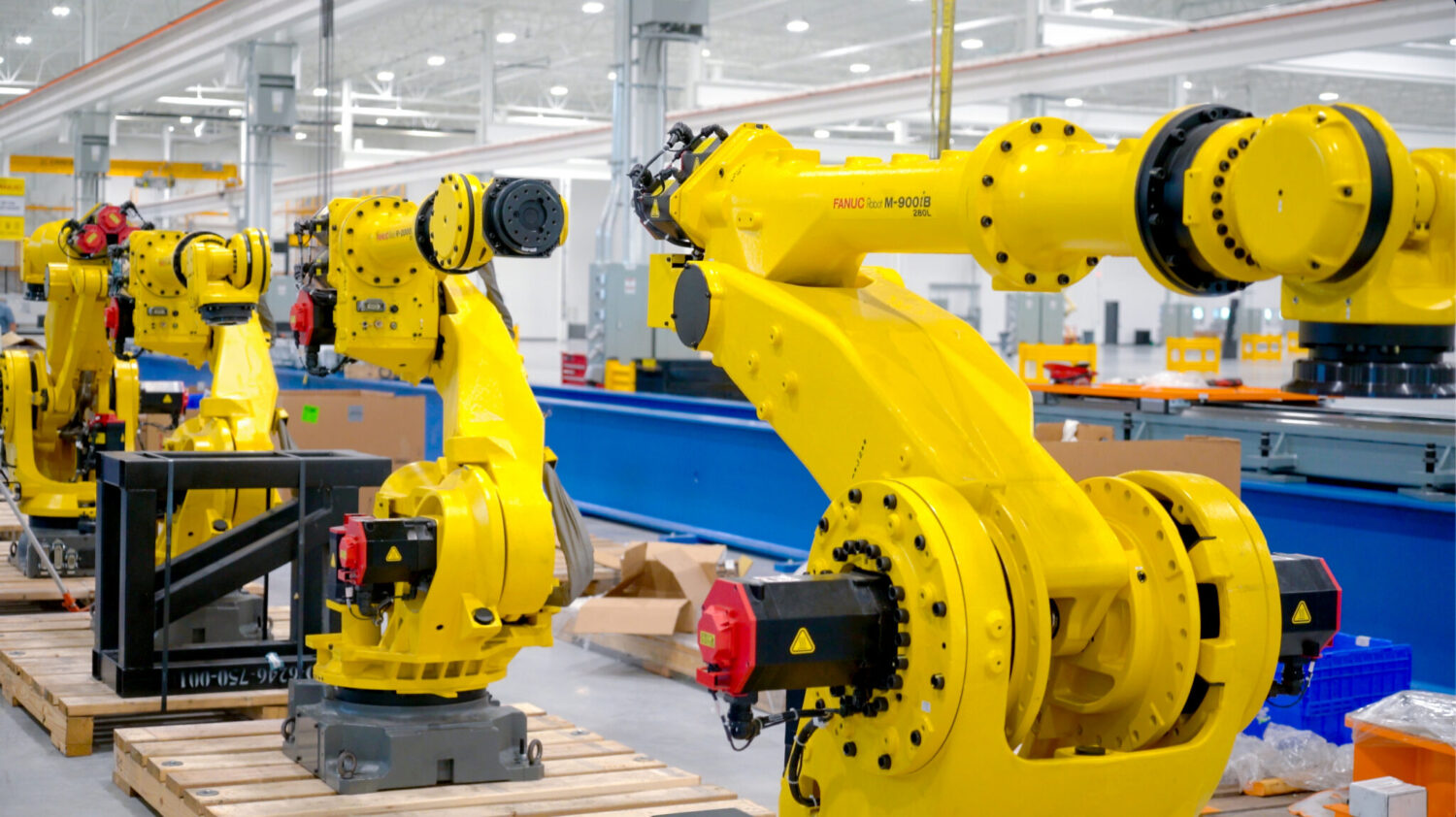
The foreign suppliers most closely associated with large industrial robotic arms include FANUC of Japan, ABB of Switzerland, Yaskawa of Japan, and KUKA of Germany.
A Direct Policy Conflict
The proclamation acknowledges the very supply-chain dependence it seeks to reduce.
The order itself acknowledges that U.S. companies do not currently produce enough industrial robots to meet domestic demand, including national-security requirements. Tariffs intended to encourage domestic manufacturing could simultaneously raise costs for companies that have no immediate domestic alternative for heavy-duty equipment.
Amazon illustrates the tension. The company has expanded in-house robot development but still relies on imported FANUC robotic arms, according to Ars Technica, showing how deeply embedded foreign equipment is across U.S. industrial operations.
Scope Extends Beyond Robotic Arms
The covered category includes a broad range of computer-controlled manufacturing equipment.
The proclamation covers far more than the factory-floor robotic arms that dominate headlines. It also extends to CNC machining centers, turning and milling machines, grinding and deburring equipment, and industrial stamping and pressing machines, according to reporting on the Commerce investigation.
That scope pulls a wide industrial-technology supply chain into the potential reach of any future trade action.
Scale of U.S. Dependence
The United States ranks second globally in industrial-robot installations, behind China.
The United States is the world’s second-largest market for industrial-robot use. The International Federation of Robotics reported approximately 38,400 new robot installations in the U.S. for 2025, a figure that underscores how much domestic manufacturing relies on imported systems.
The proclamation sets a process in motion. The actual costs, restrictions, and remedies remain to be determined.