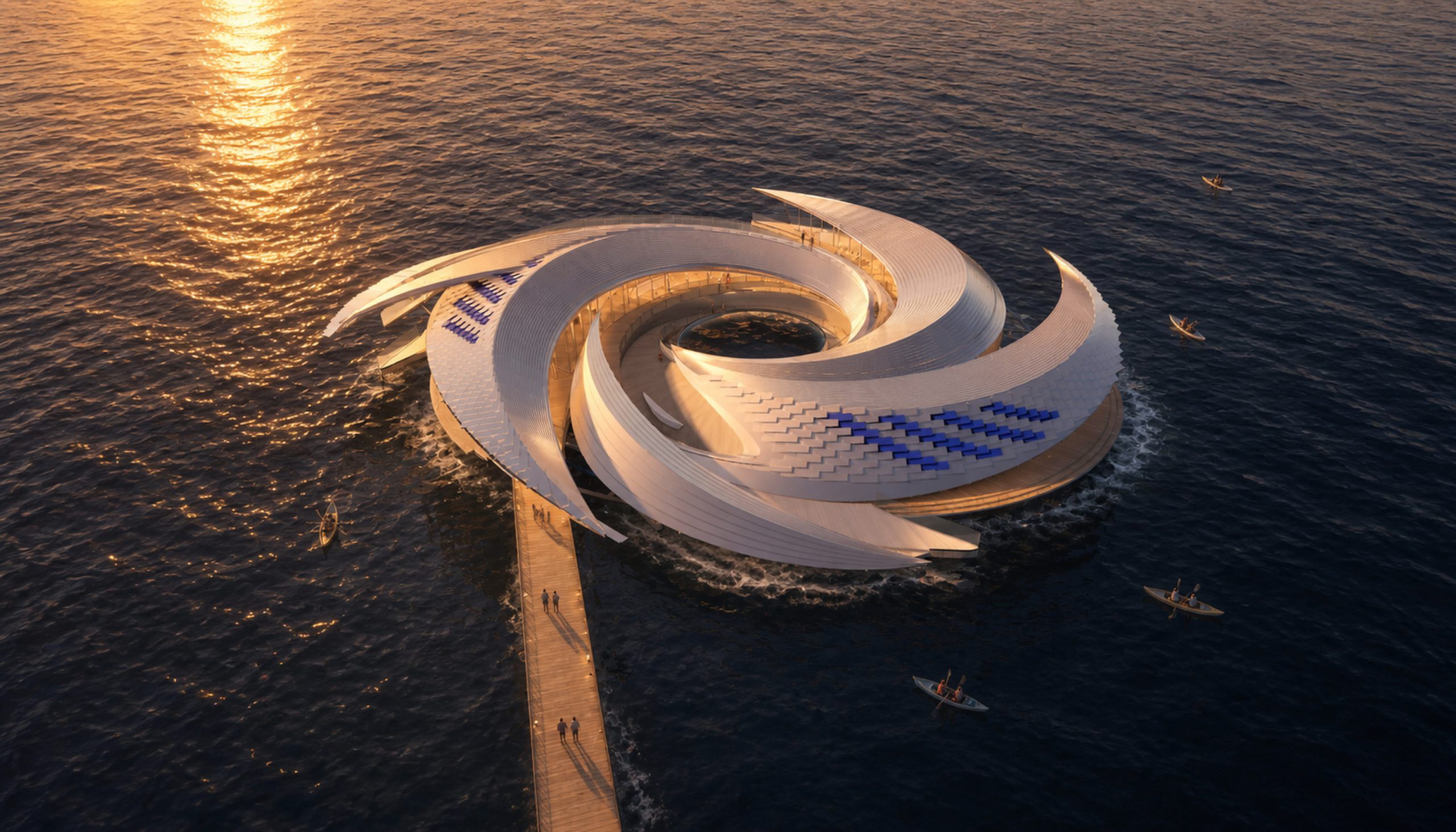
The Great Pacific Garbage Patch stretches across 1.6 million square kilometers — twice the size of Texas, roughly 1.8 trillion pieces of plastic spinning in a slow, massive gyre. Architect Yufeng Tu looked at that catastrophe and proposed something absurd enough to be brilliant: build a parliament on it. Ocean Vortex, his spiraling, floating civic complex, just made finalist in the 2026 YAC Ocean Parliament competition. Tu, a UC Berkeley graduate now working at Nikken Sekkei in Tokyo with stints at MAD and UNStudio on his résumé, designed what amounts to a government building made from the ocean’s own wreckage. It’s speculative architecture. That’s entirely the point.
Trash as Load-Bearing Structure
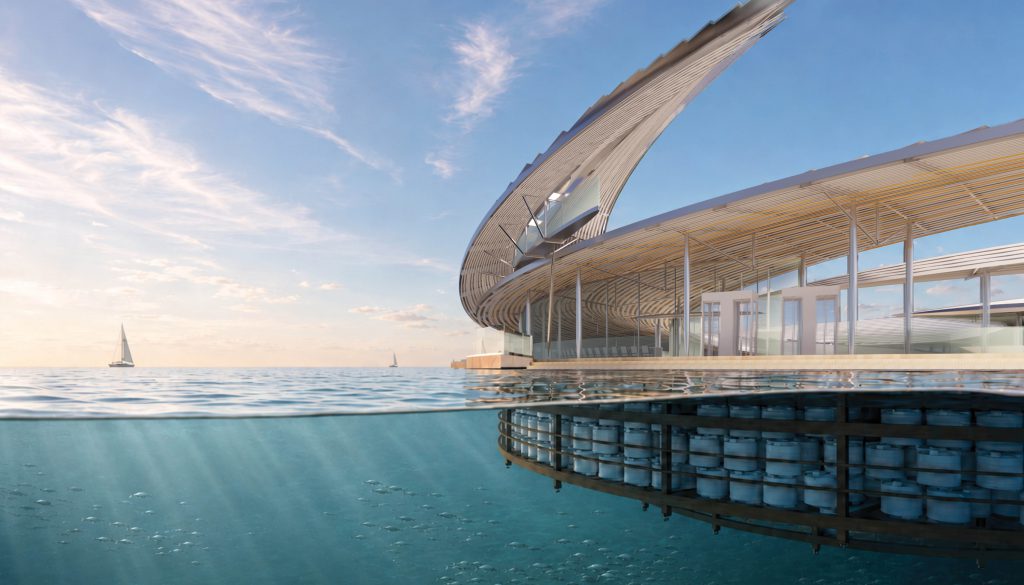
Recycled plastic barrels aren’t decoration here — they’re what keeps the building afloat.
The material logic is the sharpest part. A steel frame carries the structure. Recycled plastic barrels and salvaged marine waste containers provide buoyancy — the trash literally holds the building up. As Tu told Newsweek, recycled marine waste is “not treated as a symbolic afterthought but as part of the architectural logic.” That distinction matters. This isn’t a recycled-bottle art installation at a music festival. It’s upcycled waste doing load-bearing structural work.
The spiral form mirrors ocean gyres — the same circulating currents that trap plastic in garbage patches in the first place. Visitors move along continuous ramps coiling around a central water courtyard. The structure combines:
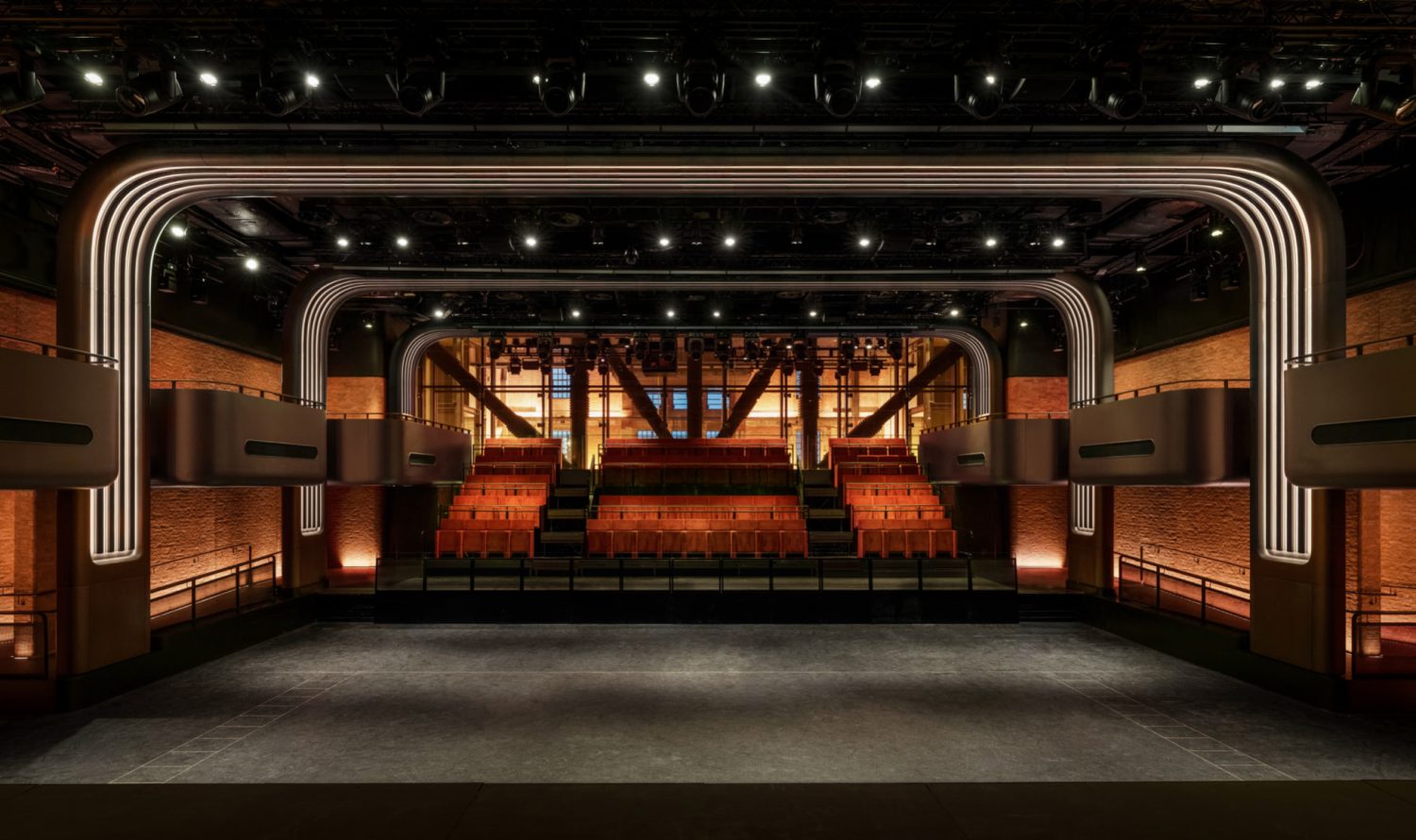
- Parliamentary chambers, exhibition spaces, and offices
- Submerged hydroponic farms and desalination equipment
- Rooftop solar panels for power
Separate circulation routes keep public visitors in the museum and exhibition zones while parliamentary delegates follow their own paths through the interconnected spiral. Flexible seabed anchoring adapts to tides and wave movement, and the entire structure is conceived as a traveling platform capable of moving between coastal cities.
Manifesto First, Blueprint Second
This is a competition entry making a pointed argument — not a funded construction project — and that framing is exactly what gives it force.
Honesty check: no cost estimates exist, no engineering certifications, no construction timeline. Real-world translation would mean answering hard questions about:
- Recycled plastic durability in saltwater
- Jurisdictional nightmares in international waters
- The environmental impact of anchoring massive platforms in sensitive marine zones
Tu acknowledges the symbolic weight directly: “The vortex was intended to carry a warning — the pollution humans release into the ocean will ultimately draw us into the same vortex we create,” he told Newsweek.
Ocean Vortex joins a lineage stretching from Buckminster Fuller’s floating city proposals to the UN-Habitat-backed Oceanix City concept — visionary work that reshapes discourse before, or sometimes instead of, becoming buildings. Think of it as a provocation in built form: closer to a policy manifesto staged as architecture than a construction site.
What the project does best is convert abstract statistics into something spatially legible. Between 1.15 and 2.41 million tons of plastic enter the oceans via rivers every year. The image of lawmakers debating marine policy while floating inside the wreckage, their decisions failed to prevent hits harder than any infographic ever could.