Your greatest fear about aging might soon become preventable. Duke University researchers have cracked the code on detecting Alzheimer’s disease using nothing more than a gentle nasal swab—years before your first memory lapse.
Published March 18, 2026 in Nature Communications, the breakthrough study analyzed cells from 22 participants using a procedure that takes just minutes. Unlike current blood tests that catch Alzheimer’s after protein damage accumulates, this nasal approach identifies immune system changes happening at the disease’s earliest stages. “If we can diagnose people early enough, we might be able to start therapies that prevent them from ever developing clinical Alzheimer’s,” says Dr. Bradley Goldstein, the study’s corresponding author at Duke University School of Medicine.
How It Actually Works
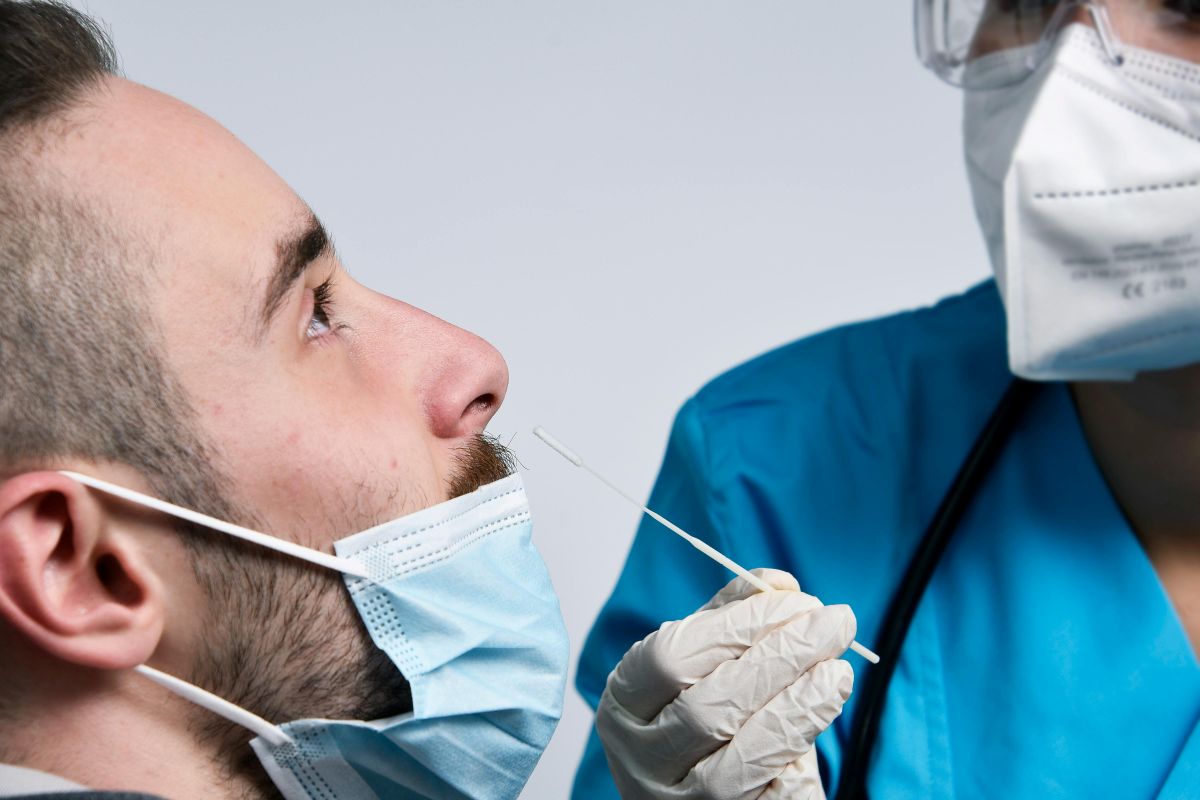
The procedure feels less invasive than a COVID test but reveals more than brain scans.
A thin camera guides a small brush inside your nose to collect surface cells from the olfactory cleft—the tissue responsible for smell. The entire collection takes minutes with only topical numbing spray. Researchers then analyze these cells using single-cell RNA sequencing, technology sensitive enough to read individual cell activity.
Across all participants, the team examined 220,509 cells and millions of data points. Compare that to spinal taps or $3,000 brain imaging sessions, and you understand why this matters.
What Your Nose Reveals About Your Brain
Immune cells in nasal tissue mirror the inflammation brewing in your brain.
The most striking discovery involved immune cell activation patterns. CD8 T cells—inflammation drivers—showed 13.4% activation in preclinical Alzheimer’s subjects versus just 4.1% in healthy controls.
Neuronal genes also shifted: AKR1B1 increased (linked to brain tissue inflammation) while CERT1 decreased (involved in cellular stress response). Approximately 40 genes showed differential expression between healthy and diseased groups. The combined genetic signature achieved 81% accuracy in distinguishing Alzheimer’s from healthy subjects—better than chance but not perfect.
The Reality Check
This 22-person study proves the concept works, but your doctor won’t offer it tomorrow.
Before celebrating, remember the limitations. Twenty-two participants make this proof-of-concept research, not a clinical diagnostic ready for your annual physical. Larger trials pairing nasal biopsies with brain imaging and long-term follow-up must happen first.
Duke has filed a U.S. patent and is expanding research with the Duke & UNC Alzheimer’s Disease Research Center, but FDA approval remains years away.
The implications still stagger: routine nasal screening could identify Alzheimer’s candidates for preventive treatment before irreversible brain damage occurs. Instead of managing decline, you might prevent it entirely. That’s not revolutionary hype—that’s the difference between catching cancer at stage one versus stage four, applied to your most precious cognitive functions.