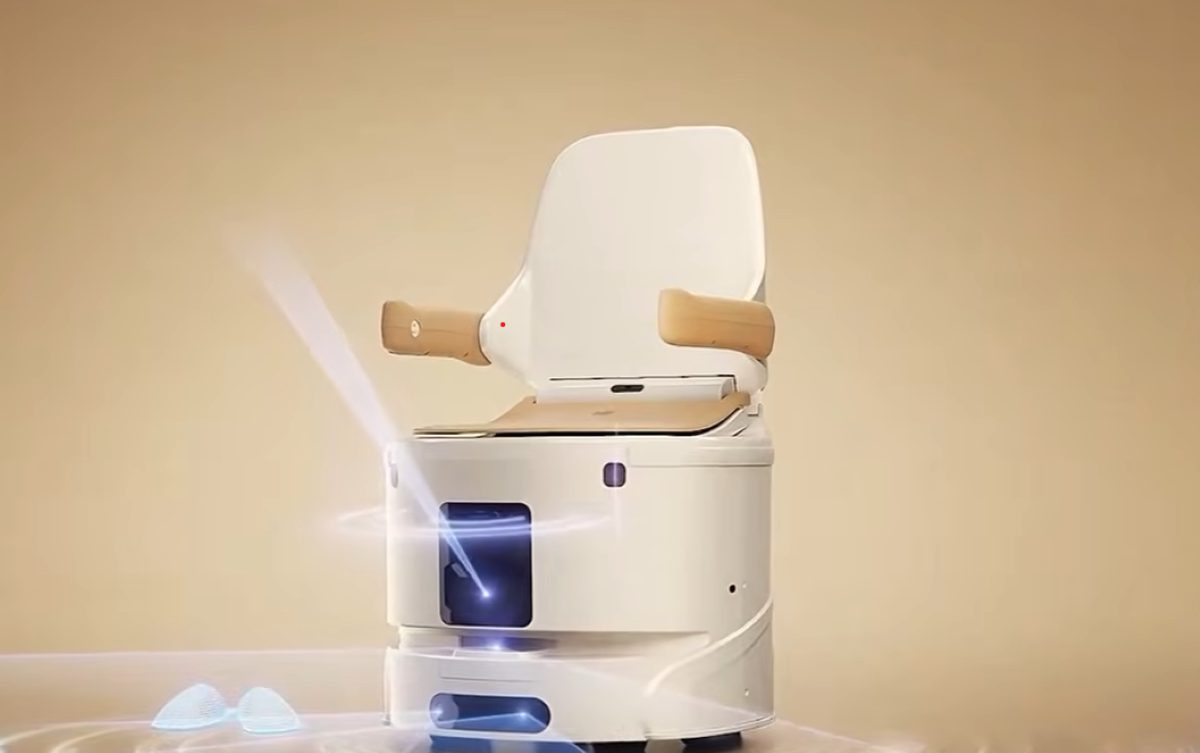
It’s 3am. You’re 82, your hip replacement is six weeks old, and the bathroom is twenty feet away in the dark. That walk — the one most people never think about — is where falls happen, where dignity erodes, where independence dies quietly. Chinese company Yueban built Xiaoban to eliminate that walk entirely. This autonomous toilet robot drives itself to your bedside, handles everything, then returns to its dock. No caregiver knocking on the door. No bedpan.
How It Actually Works
Xiaoban combines robot-vacuum-style navigation with a full sanitation system — all in one mobile unit.
Think robot vacuum, but for a fundamentally different kind of mess:
- LiDAR and ultrasonic sensors map indoor spaces, dodging furniture, doorways, and stairs
- Summoned by voice command or remote — no smartphone app required
- Integrated bidet with warm-water wash, warm-air dryer, sealed waste chamber with UV disinfection and odor filtration
- Returns to its plumbing-connected dock, grinds waste internally, flushes through household pipes, runs a full self-cleaning cycle, and recharges
- Built-in armrests and backrest for stability; some users will still need help transferring onto the seat
At ¥28,999 — roughly $4,000–$4,300, as reported across multiple tech outlets — Xiaoban costs about what one month of full-time in-home care runs in many markets. (One viral YouTube video floated a $13,000 figure, but that sits well outside the range confirmed by written reporting and appears inconsistent with the yuan price.) For families or care facilities weighing long-term costs, that math matters.
Honesty check: Xiaoban doesn’t replace caregivers, and it doesn’t pretend to. Transfer assistance remains necessary for many users, and battery specs haven’t been disclosed publicly. No independent reliability data or smart-home platform integration has been confirmed yet, and plumbing-connected dock setup will add complexity to installation. These aren’t dealbreakers — they’re just the gaps that come with any first-generation assistive device. For a look at how other wearable assistive hardware is tackling mobility challenges, the robotic knee exoskeleton from the University of Michigan offers an interesting parallel. Yueban positions Xiaoban as a tool to “preserve dignity and reduce caregiver workload,” according to the company’s stated messaging around the product launch.
The Viral Problem
The internet turned this into a gaming-chair joke — the real story is considerably less funny and considerably more important.
TikTok predictably spun this into a “never leave your gaming chair” bit — the WALL-E comparisons practically wrote themselves. Fair enough. But Xiaoban debuted at the 2026 Shanghai International Elderly/Aged Care Expo, not a gaming convention. It sits alongside China’s accelerating push into service robotics: humanoid police bots, rideable mechs, companion robots built for emotional support.
No international release has been confirmed, and no regulatory approvals outside China currently exist. But the direction this points is clear. Aging populations are growing, caregiver workforces are shrinking, and the unglamorous work of daily toileting assistance falls on fewer people every year. Xiaoban is an early, imperfect answer to a problem that isn’t going away — and that’s worth taking seriously, memes and all.